Facile assembly of flexible, stretchable and attachable symmetric microsupercapacitors with wide working voltage windows and favorable durability
Xiangguang Han, Xiaoyu Wu, Libo Zhao, Min Li, Chen Jia, Zhikang Li, Jiaqi Xie, Guoxi Luo, Ping Yang, Rabah Boukherroub, Yurdanur Türker, Mert Umut Özkaynak, Koray Bahadır Dönmez

TL;DR
This paper introduces a new type of flexible and stretchable microsupercapacitor that can store energy efficiently and perform well over long periods.
Contribution
The novel contribution is the development of symmetric microsupercapacitors using laser-direct-writing graphene electrodes and a PA-NI LC gel electrolyte for enhanced flexibility and performance.
Findings
Symmetric MSC devices can operate in a large voltage range of 0–1.5 V.
The device with a 300 μm electrode width achieved an areal capacitance of 2.3 mF cm−2 and an energy density of 0.72 μWh cm−2.
The device retained ~93.6% of its capacitance after 5000 charge-discharge cycles and showed no performance degradation after 12 months.
Abstract
With the increasing development of intelligent robots and wearable electronics, the demand for high-performance flexible energy storage devices is drastically increasing. In this study, flexible symmetric microsupercapacitors (MSCs) that could operate in a wide working voltage window were developed by combining laser-direct-writing graphene (LG) electrodes with a phosphoric acid-nonionic surfactant liquid crystal (PA-NI LC) gel electrolyte. To increase the flexibility and enhance the conformal ability of the MSC devices to anisotropic surfaces, after the interdigitated LG formed on the polyimide (PI) film surface, the devices were further transferred onto a flexible, stretchable and transparent polydimethylsiloxane (PDMS) substrate; this substrate displayed favorable flexibility and mechanical characteristics in the bending test. Furthermore, the electrochemical performances of the…
Genes, proteins, chemicals, diseases, species, mutations and cell lines named across the full text — each resolved to its canonical identifier and authoritative record.
Click any figure to enlarge with its caption.
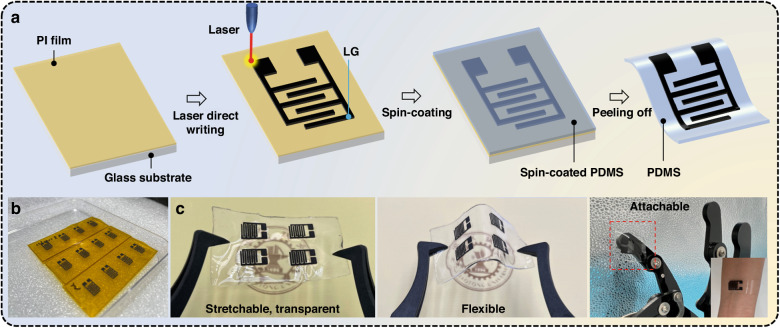 Figure 1
 Figure 2
 Figure 3
 Figure 4
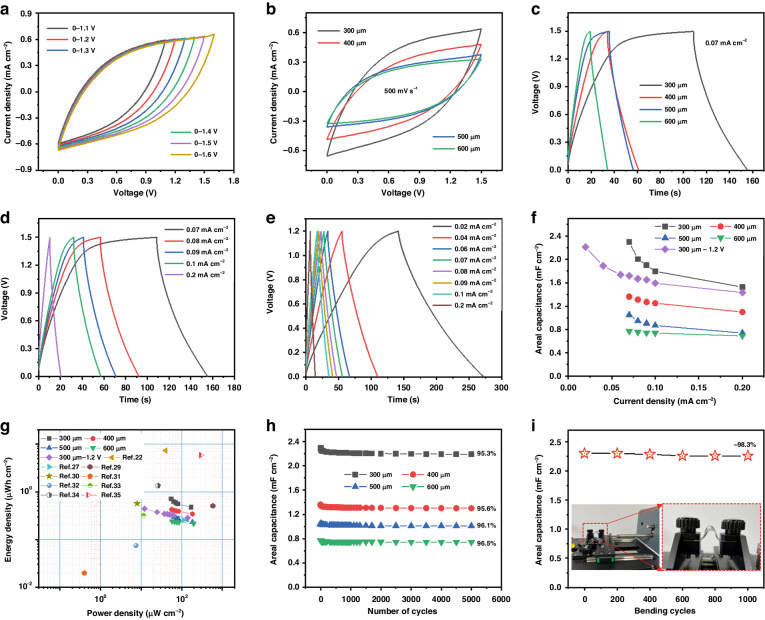 Figure 5
 Figure 6
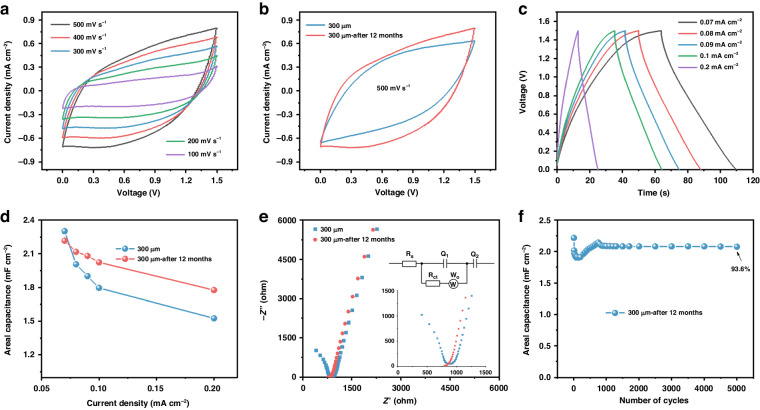 Figure 7
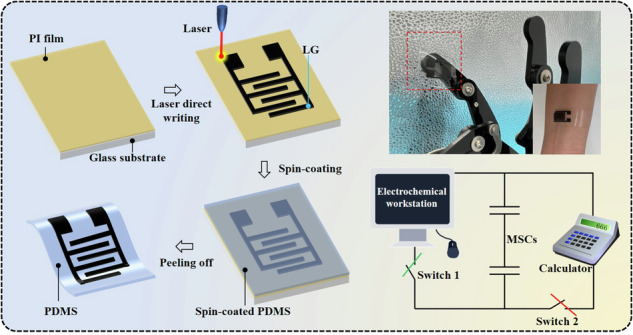 Figure 8
Peer Reviews
No public reviews on file for this paper yet. If you reviewed it on a platform where reviews are public (OpenReview, ICLR, NeurIPS, ICML), you can paste yours below so the community can read it here.
Videos
No videos yet. Explain this paper in a talk, walkthrough, or lecture? Add one.
Taxonomy
TopicsMedieval Iberian Studies · Spanish Literature and Culture Studies · Libraries, Manuscripts, and Books