Impact of ivermectin and vector control on onchocerciasis transmission in Togo: Assessing the empirical evidence on trends in infection and entomological indicators
Natalie V. S. Vinkeles Melchers, Sibabi Agoro, Kwamy Togbey, Koffi Padjoudoum, Ibrahim Gado Telou, Potchoziou Karabou, Touka Djatho, Michel Datagni, Ameyo Monique Dorkenoo, Yao Kassankogno, Rachel Bronzan, Wilma A. Stolk

TL;DR
This study examines how ivermectin and vector control have reduced onchocerciasis transmission in Togo, showing progress toward elimination in many areas.
Contribution
The paper provides empirical evidence on the effectiveness of long-term interventions in reducing onchocerciasis transmission in Togo.
Findings
Vector control and ivermectin mass drug administration significantly reduced onchocerciasis transmission in most areas of Togo.
Epidemiological surveys showed that infection prevalence dropped below 5% in over 88% of surveyed villages since 2012.
Some river basin areas still show relatively high infection levels, indicating a need for intensified interventions.
Abstract
The World Health Organization’s 2021–2030 Road Map for Neglected Tropical Diseases boosted global commitment towards the elimination of onchocerciasis, but the timeline to elimination will vary strongly between countries in Africa. To assess progress towards elimination in the Republic of Togo, we reviewed the history of control and time trends in infection. We collated all available programmatic, entomological, and epidemiological data since the initiation of the Onchocerciasis Control Programme (OCP) in Togo through different data sources. We then visualised data trends over time, to assess the impact of interventions on infection and transmission levels. Vector control was initiated by OCP from 1977 (northern and central parts of Togo) or 1988 (southern regions) up to 2002 (most areas) or 2007 (“special intervention zones” [SIZ], parts of Northern and Central Togo). Between 1988 and…
Genes, proteins, chemicals, diseases, species, mutations and cell lines named across the full text — each resolved to its canonical identifier and authoritative record.
Click any figure to enlarge with its caption.
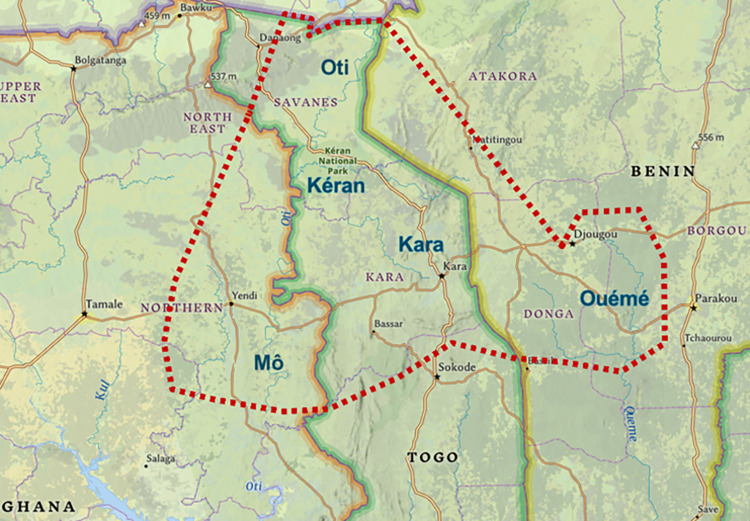 Figure 1
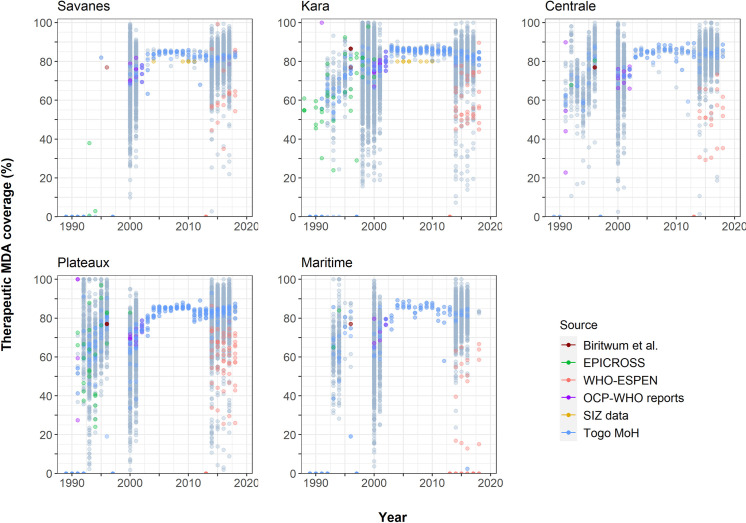 Figure 2
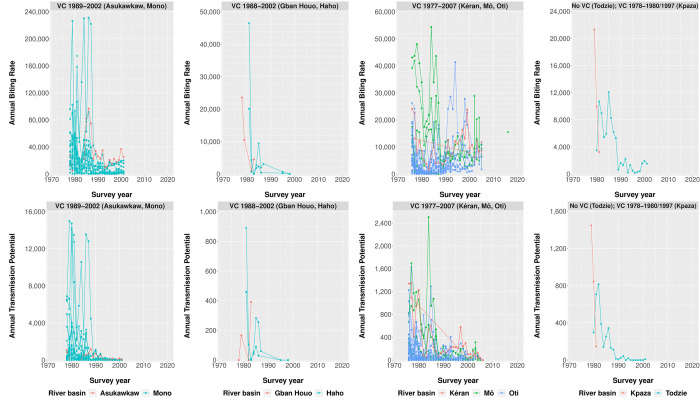 Figure 3
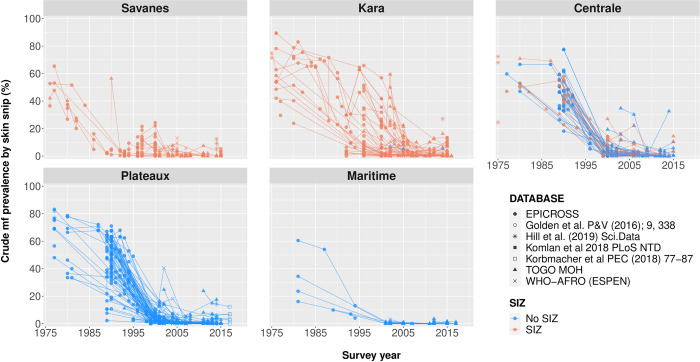 Figure 4
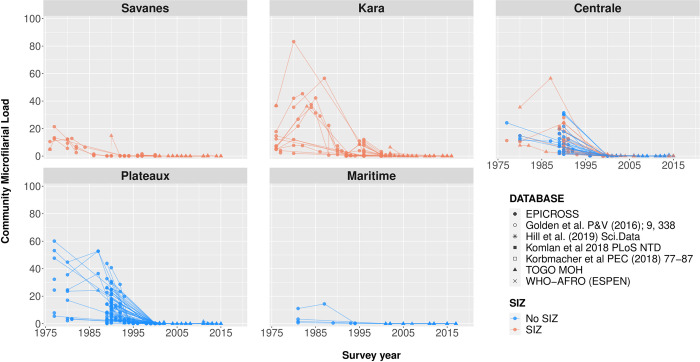 Figure 5
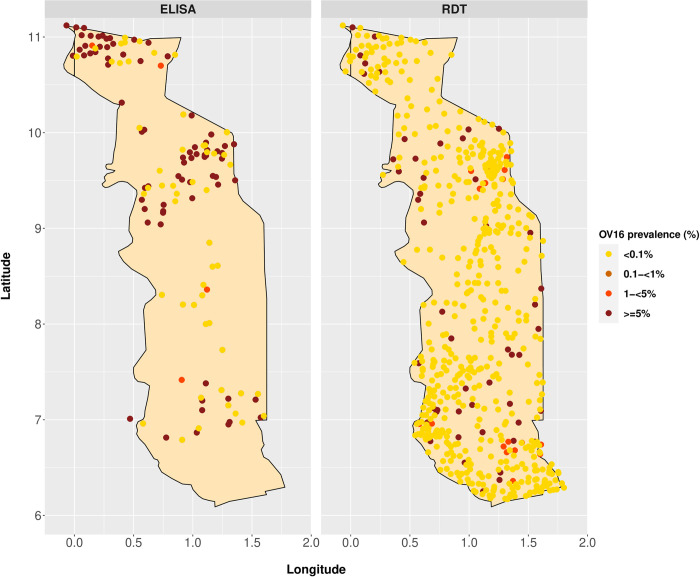 Figure 6
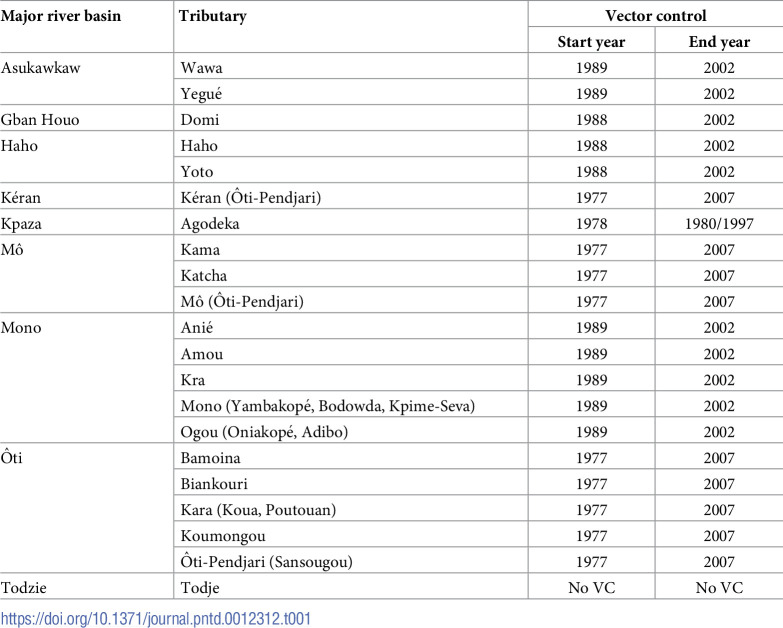 Figure 7
Peer Reviews
No public reviews on file for this paper yet. If you reviewed it on a platform where reviews are public (OpenReview, ICLR, NeurIPS, ICML), you can paste yours below so the community can read it here.
Videos
No videos yet. Explain this paper in a talk, walkthrough, or lecture? Add one.
Taxonomy
TopicsMedical and Health Sciences Research · Diverse Legal and Medical Studies