Effects of moderate doses of ionizing radiation on experimental abdominal aortic aneurysm
Goran Riazi, Chloe Brizais, Imene Garali, Rida Al-rifai, Helene Quelquejay, Virginie Monceau, Guillaume Vares, Lea Ould-Boukhitine, Damien Aubeleau, Florian Gilain, Celine Gloaguen, Morgane Dos Santos, Hafid Ait-Oufella, Teni Ebrahimian, Venkateswaran Subramanian

TL;DR
Moderate radiation reduces abdominal aortic aneurysm in mice, either by changing muscle cell behavior or reducing inflammation, depending on when the radiation is given.
Contribution
The study reveals that moderate radiation can mitigate AAA through distinct mechanisms depending on irradiation timing.
Findings
Radiation before AngII infusion reduces AAA by altering vascular smooth muscle cell phenotype.
Radiation after AngII infusion reduces AAA by increasing anti-inflammatory macrophages.
Radiation significantly reduces aortic dilation and AAA incidence in mice.
Abstract
Exposure to ionizing radiation has been linked to cardiovascular diseases. However, the impact of moderate doses of radiation on abdominal aortic aneurysm (AAA) remains unknown. Angiotensin II-infused Apoe-/- mice were irradiated (acute, 1 Gray) either 3 days before (Day-3) or 1 day after (Day+1) pomp implantation. Isolated primary aortic vascular smooth muscle cells (VSMCs) were irradiated (acute 1 Gray) for mechanistic studies and functional testing in vitro. Day-3 and Day+1 irradiation resulted in a significant reduction in aorta dilation (Control: 1.39+/-0.12; Day-3: 1.12+/-0.11; Day+1: 1.15+/-0.08 mm, P<0.001) and AAA incidence (Control: 81.0%; Day-3: 33.3%, Day+1: 53.3%) compared to the non-irradiated group. Day-3 and Day+1 irradiation led to an increase in collagen content in the adventitia (Thickness control: 23.64+/-2.9; Day-3: 54.39+/-15.5; Day+1 37.55+/-10.8 mm, P = 0.006).…
Genes, proteins, chemicals, diseases, species, mutations and cell lines named across the full text — each resolved to its canonical identifier and authoritative record.
Click any figure to enlarge with its caption.
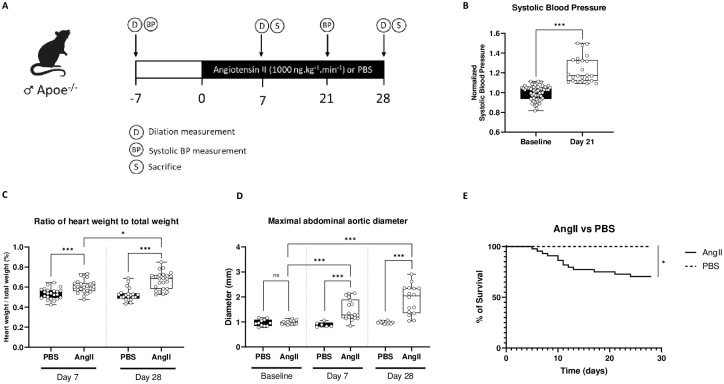 Figure 1
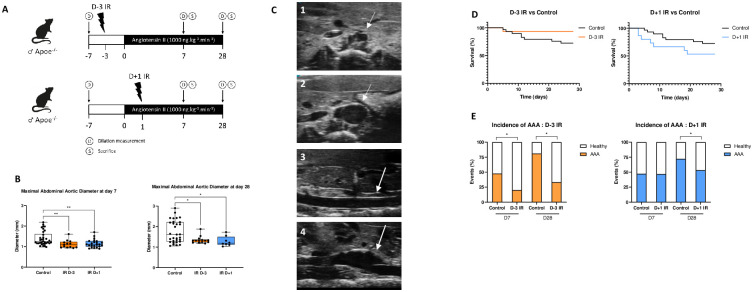 Figure 2
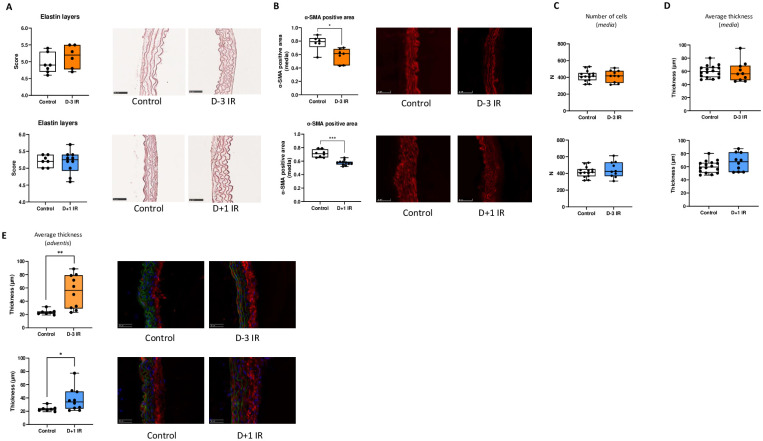 Figure 3
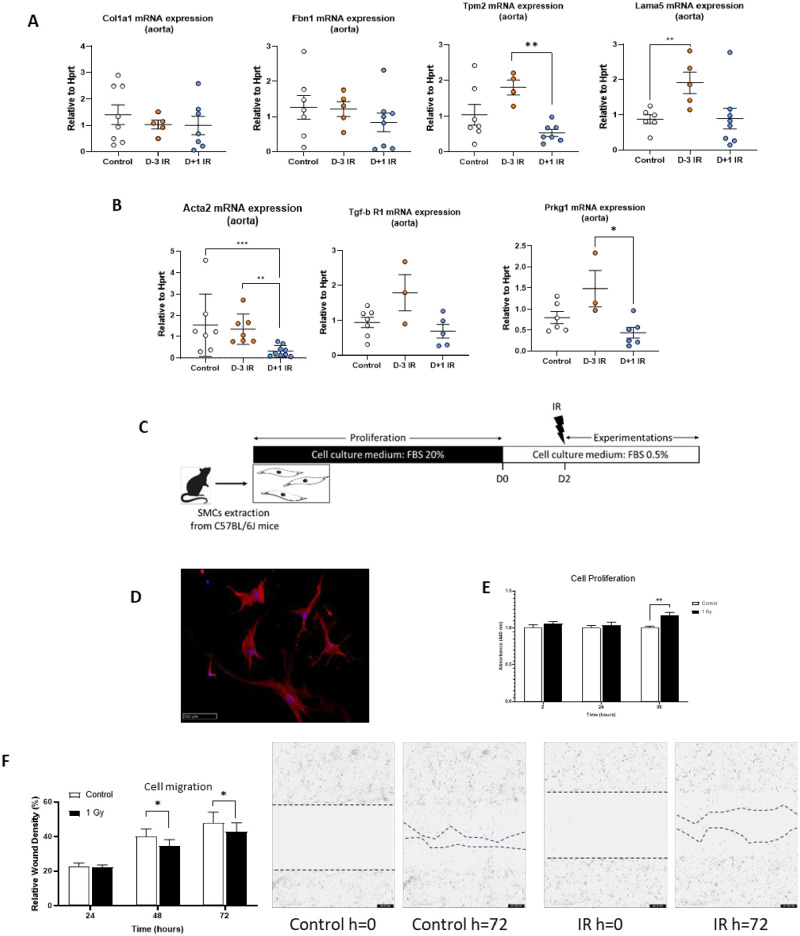 Figure 4
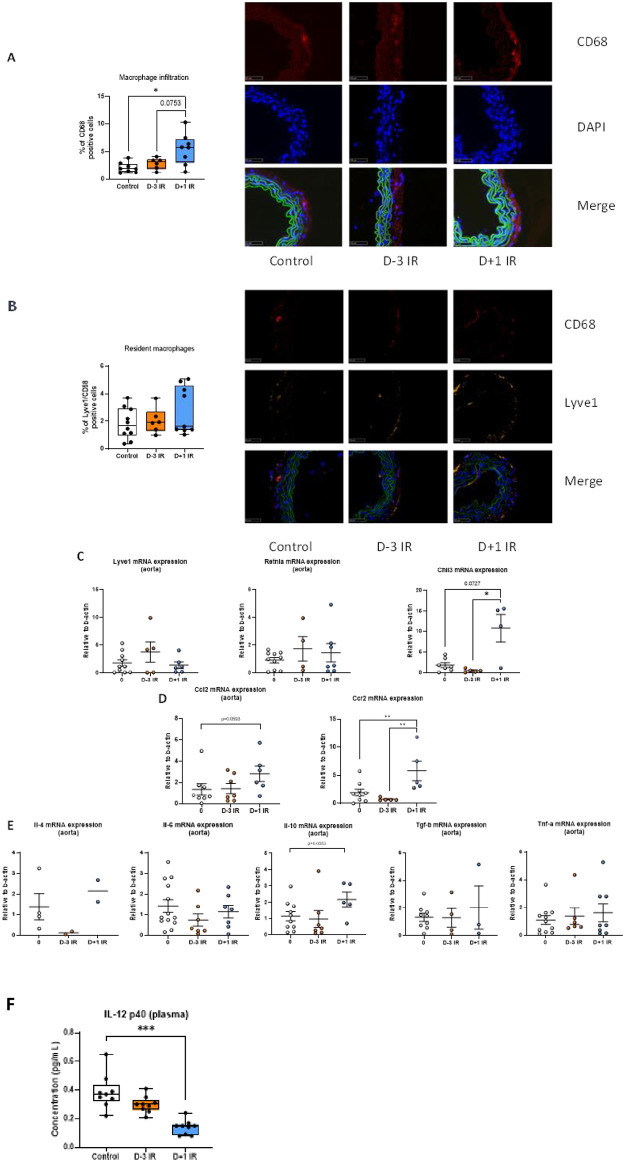 Figure 5
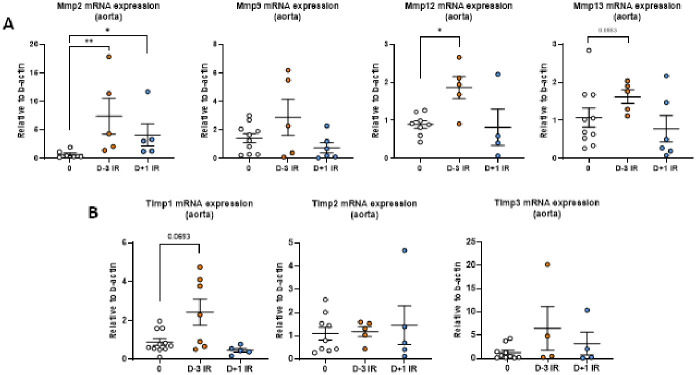 Figure 6
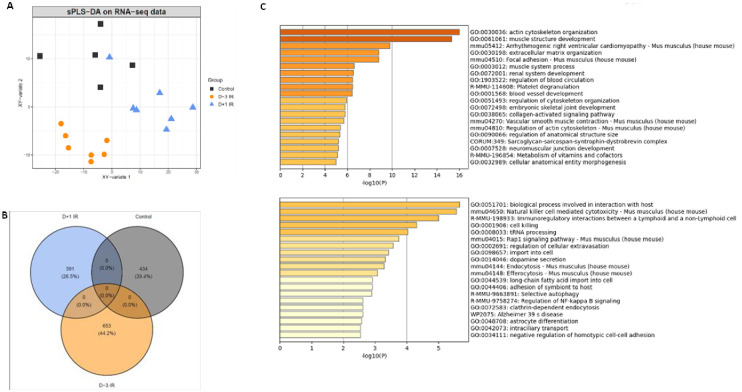 Figure 7
Peer Reviews
No public reviews on file for this paper yet. If you reviewed it on a platform where reviews are public (OpenReview, ICLR, NeurIPS, ICML), you can paste yours below so the community can read it here.
Videos
No videos yet. Explain this paper in a talk, walkthrough, or lecture? Add one.
Taxonomy
TopicsAortic aneurysm repair treatments · Cardiac, Anesthesia and Surgical Outcomes · Aortic Disease and Treatment Approaches