Seasonal life cycle of Pintomyia longiflocosa (Diptera: Psychodidae) under semi-controlled conditions in the Huila state, Colombia
Jennifer Alejandra Vargas Durango, Gelys Igreth Mestre Carillo, Erika Santamaria Herreño, Miguel Angel Beltran Ruiz, Angela Cristina Zapata Lesmes, Astrid Geovana Muñoz Ortiz, Jesús Eduardo Escobar Castro

TL;DR
This study examines how seasonal changes affect the life cycle of Pintomyia longiflocosa, a mosquito linked to spreading cutaneous leishmaniasis in rural Colombia.
Contribution
The study reveals new insights into how environmental factors influence the life cycle and reproductive parameters of Pintomyia longiflocosa in a specific endemic region.
Findings
The life cycle duration varied significantly between two monitored seasons, with Cycle 2 taking longer than Cycle 1.
Environmental factors like temperature and precipitation showed significant correlations with the mosquito's development and reproduction.
Fecundity and fertility were higher in the second cycle, while survival rates were higher in the first.
Abstract
Pintomyia longiflocosa is considered a vector of etiological agents of cutaneous leishmaniasis. The objective of this research was to establish the parameters of the life cycle of Pi. longiflocosa in semi-controlled conditions in a rural area of the Campoalegre municipality, Huila, Colombia. The life cycle of individuals of Pi. longiflocosa, obtained from two cohorts of collected, fed, and individualized females, was monitored during two different times of the year (between February and August 2020 and between July 2020 and January 2021, respectively). Determining parameters associated with the fertility and fecundity, time and attributes of development and survival, and its association with abiotic variables. The average duration of Cycle 1 (C1) and Cycle 2 (C2) was 134.9 and 148.78 days, respectively. The gonotrophic cycle of parental females presented significant differences…
Genes, proteins, chemicals, diseases, species, mutations and cell lines named across the full text — each resolved to its canonical identifier and authoritative record.
Click any figure to enlarge with its caption.
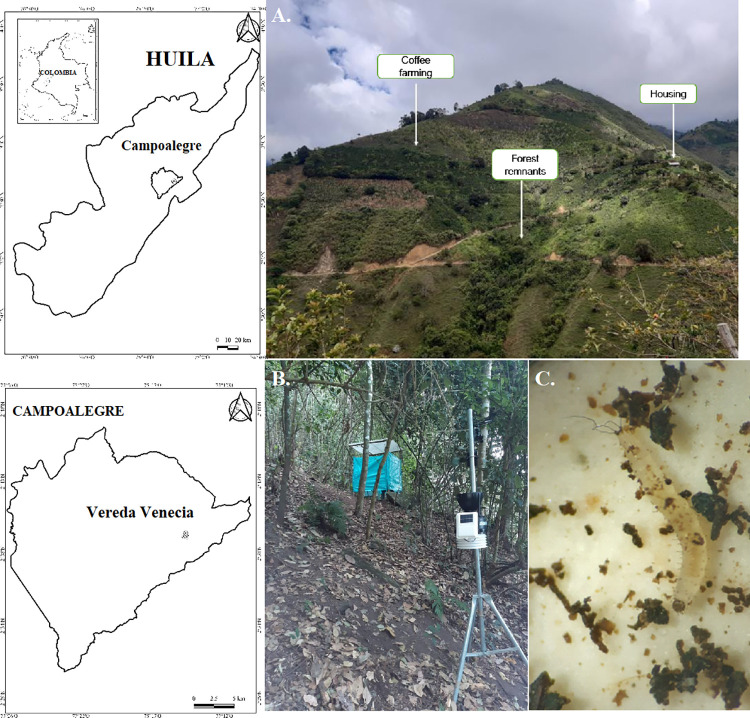 Figure 1
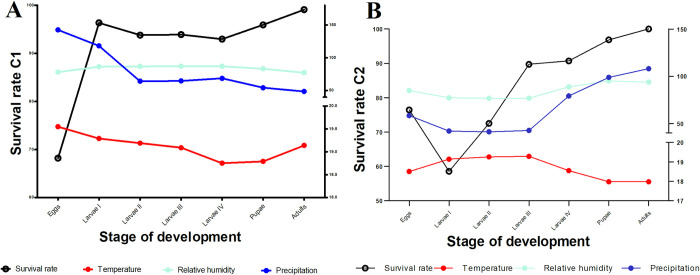 Figure 2
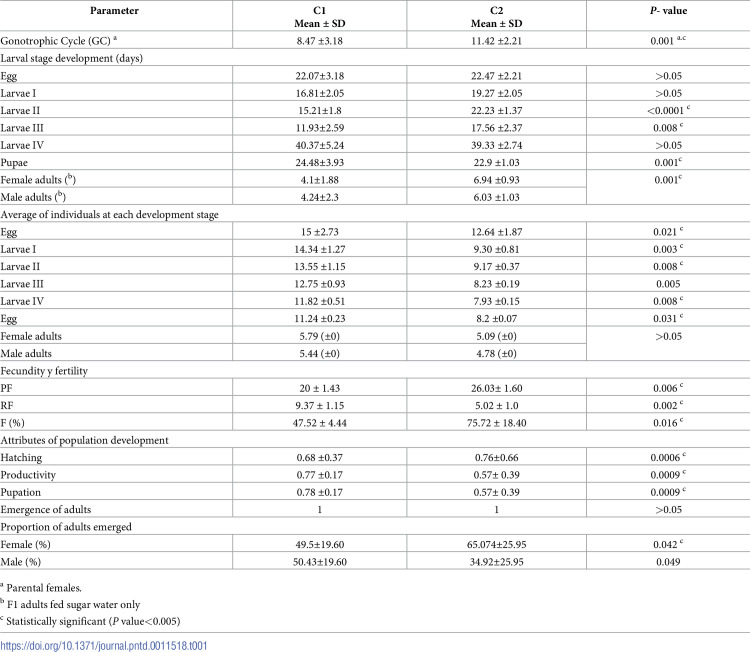 Figure 3
Peer Reviews
No public reviews on file for this paper yet. If you reviewed it on a platform where reviews are public (OpenReview, ICLR, NeurIPS, ICML), you can paste yours below so the community can read it here.
Videos
No videos yet. Explain this paper in a talk, walkthrough, or lecture? Add one.
Taxonomy
TopicsResearch on Leishmaniasis Studies