Serpentine supravenous hyperpigmentation: a rare clinical image
Ashwin Karnan

Abstract
Genes, proteins, chemicals, diseases, species, mutations and cell lines named across the full text — each resolved to its canonical identifier and authoritative record.
Click any figure to enlarge with its caption.
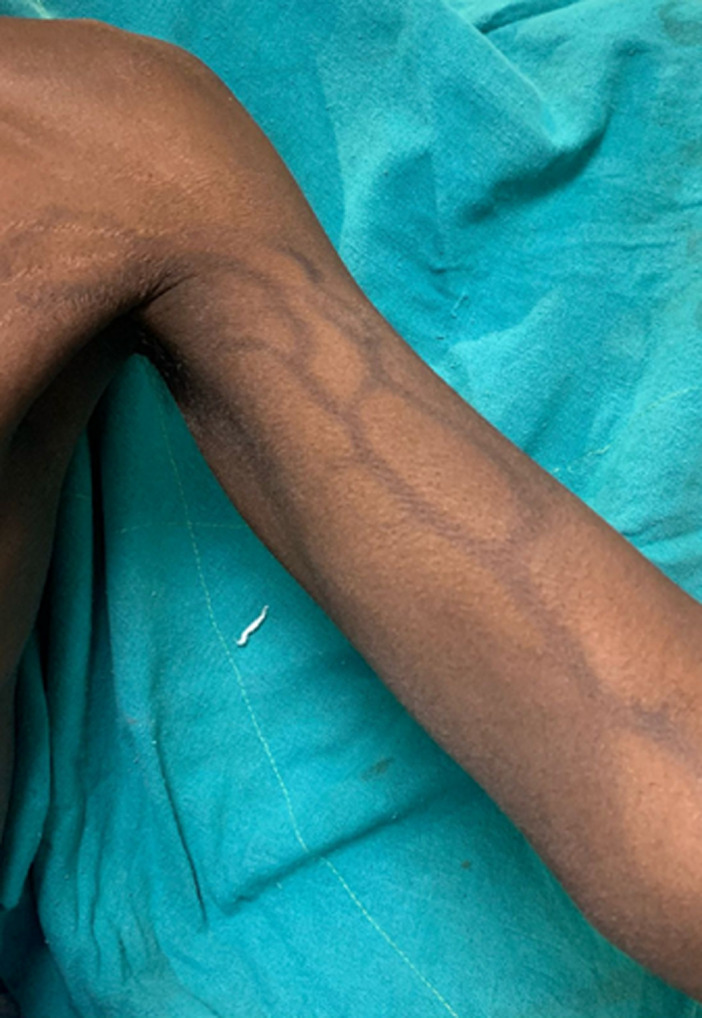 Figure 1
Peer Reviews
No public reviews on file for this paper yet. If you reviewed it on a platform where reviews are public (OpenReview, ICLR, NeurIPS, ICML), you can paste yours below so the community can read it here.
Videos
No videos yet. Explain this paper in a talk, walkthrough, or lecture? Add one.
Taxonomy
TopicsChemotherapy-related skin toxicity · Plant-based Medicinal Research · Botulinum Toxin and Related Neurological Disorders
Image in medicine
A 39-year-old male presented with complaints of left arm skin discoloration associated with itching for the past 2 weeks. The patient has a known case of signet ring cell carcinoma of the stomach for the past 6 months and has completed 6 cycles of intravenous 5-fluorouracil through a peripheral venous catheter. A biopsy of the skin showed melanophages with perivascular mononuclear cell infiltration. A diagnosis of 5-fluorouracil-induced hyperpigmentation was made. The patient was treated with topical steroid application and antihistamine and is currently on follow-up. Serpentine supravenous hyperpigmentation was described by Hrushesky in 1976 which is a cutaneous reaction to intravenous antineoplastic agents. It is seen in 2-5% of patients receiving intravenous chemotherapy drugs but is a benign and self-limiting disease. The chemotherapy agents include cyclophosphamide, actinomycin, bortezomib, doxorubicin, and 5-fluorouracil. The exact mechanism is unclear, but possible hypotheses include endothelial damage leading to extravasation of the drug and interference with melanogenesis, direct stimulation of melanocytes, hyperthermia-related increased expression of melanocyte-stimulating hormone receptor, and hyperpigmentation secondary to increased blood flow. The condition is reversible, usually months to years after cessation of the drug. It can be prevented by using a central chemo port for drug administration.
hyperpigmentation of the left upper arm veins