Modification of the terms of authorisation regarding the additive consisting of liquid l‐lysine base produced with Corynebacterium glutamicum NRRL B‐67439 and NRRL B‐67535 for all animal species (ADM specialty ingredients (Europe) B.V.)
Roberto Edoardo Villa, Giovanna Azimonti, Eleftherios Bonos, Henrik Christensen, Mojca Durjava, Birgit Dusemund, Ronette Gehring, Boet Glandorf, Maryline Kouba, Marta López‐Alonso, Francesca Marcon, Carlo Nebbia, Alena Pechová, Miguel Prieto‐Maradona, Ilen Röhe

TL;DR
The paper evaluates the safety and effectiveness of a new strain of Corynebacterium glutamicum for producing l-lysine, a feed additive for all animal species.
Contribution
The study confirms the safety and efficacy of a new C. glutamicum strain for l-lysine production in animal feed.
Findings
The new strain, C. glutamicum NRRL B-68248, is safe and does not pose risks to animals, consumers, or the environment.
The l-lysine produced is effective for non-ruminant animals but needs protection for ruminants to be equally effective.
The strain does not contain antimicrobial resistance genes and no viable cells remain in the final product.
Abstract
Following a request from the European Commission, the EFSA Panel on Additives and Products or Substances used in Animal Feed (FEEDAP) was asked to deliver a scientific opinion on the safety and efficacy of liquid l‐lysine base produced with a genetically modified strain of Corynebacterium glutamicum as a nutritional feed additive for all animal species. The l‐lysine base liquid produced with C. glutamicum NRRL B‐67535 and NRRL B‐67439 is currently authorised as a nutritional additive for all animal species. The present application is aimed at modifying the current authorisation to include C. glutamicum NRRL B‐68248 as a production strain. The new production strain qualifies for the qualified presumption of safety approach when used for production purposes. It was unambiguously identified as C. glutamicum and was shown not to harbour acquired antimicrobial resistance determinants for…
Genes, proteins, chemicals, diseases, species, mutations and cell lines named across the full text — each resolved to its canonical identifier and authoritative record.
Click any figure to enlarge with its caption.
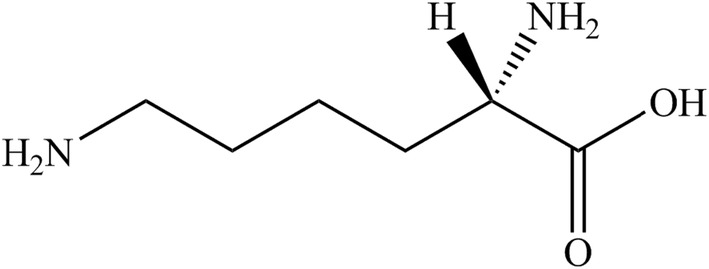 Figure 1
Peer Reviews
No public reviews on file for this paper yet. If you reviewed it on a platform where reviews are public (OpenReview, ICLR, NeurIPS, ICML), you can paste yours below so the community can read it here.
Videos
No videos yet. Explain this paper in a talk, walkthrough, or lecture? Add one.
Taxonomy
TopicsAgricultural safety and regulations · Genetically Modified Organisms Research · Pesticide Residue Analysis and Safety