Chimpanzees (Pan troglodytes) strategically manipulate their environment to deny conspecifics access to food
Stephan P. Kaufhold, Alejandro Sánchez-Amaro, Jingzhi Tan, Sofia Fernandez-Navarro, Rebeca Atencia, Federico Rossano

TL;DR
Chimpanzees can change their environment to block dominant group members from getting food, showing strategic thinking.
Contribution
The study shows chimpanzees flexibly manipulate their environment to deny food access to others, especially when it benefits them.
Findings
Chimpanzees redirected food pathways to monopolize food resources.
They changed the pathway less often when inhibitory control demands were high.
Inhibitory task demands in social contexts influence future planning in chimpanzees.
Abstract
Humans modify their environment to grant or prevent others’ access to valuable resources, for example by using locks. We tested whether sanctuary-living chimpanzees (N = 10) would flexibly modify their environment to either allow or deny a dominant conspecific access to a shared food source by giving them the option to change a food reward’s pathway prior to releasing it. The food could end up in one of two locations: one was accessible to both the subject and a dominant conspecific, the other one was only accessible to the subject. We further manipulated the extent of inhibitory control needed for modifying the pathway by varying the subjects’ starting position. Our subjects reoriented the pathway competitively to monopolize food but changed the pathway less often in trials with high inhibitory demands. We further show how inhibitory task demands in a social context influence…
Genes, proteins, chemicals, diseases, species, mutations and cell lines named across the full text — each resolved to its canonical identifier and authoritative record.
Click any figure to enlarge with its caption.
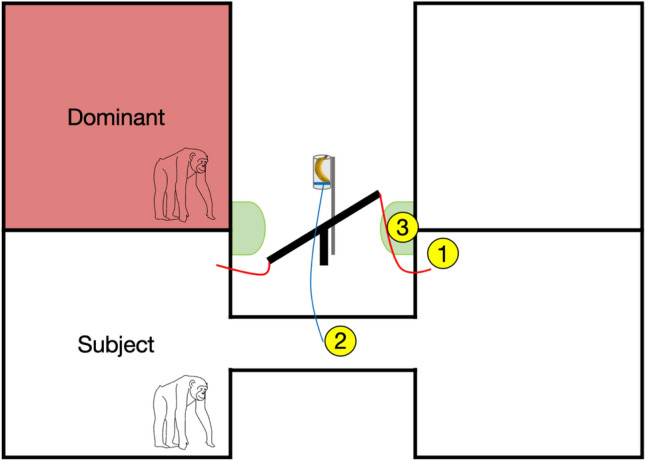 Figure 1
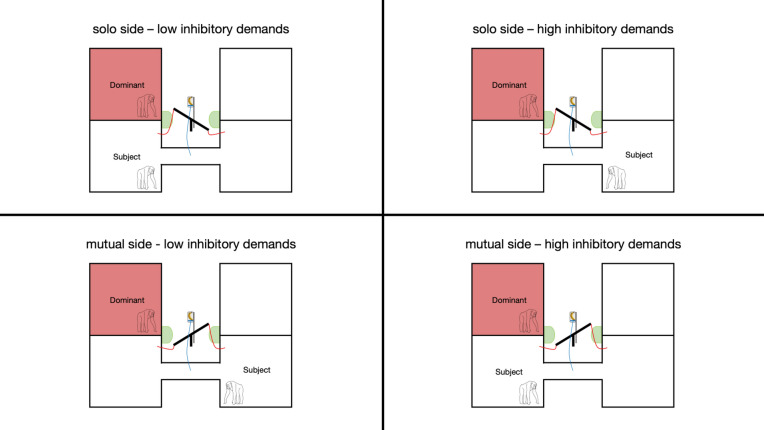 Figure 2
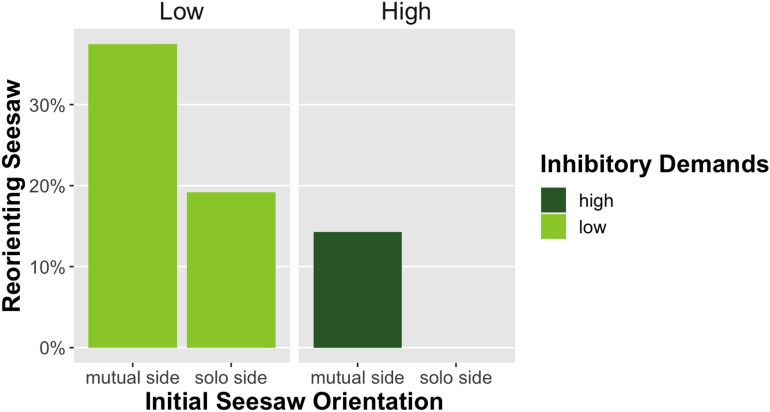 Figure 3
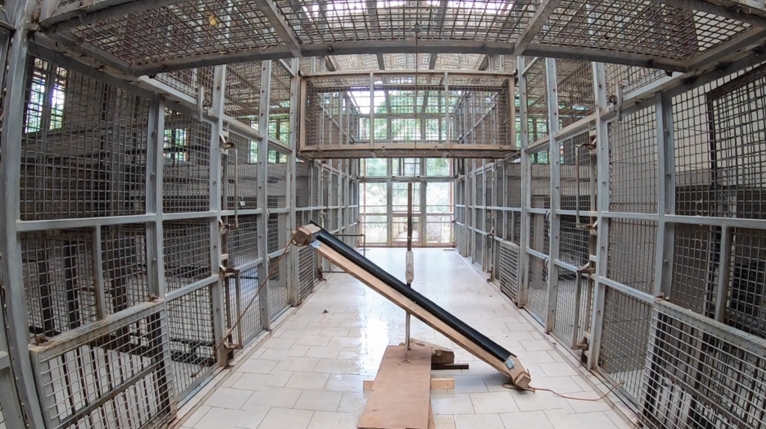 Figure 4
Peer Reviews
No public reviews on file for this paper yet. If you reviewed it on a platform where reviews are public (OpenReview, ICLR, NeurIPS, ICML), you can paste yours below so the community can read it here.
Videos
No videos yet. Explain this paper in a talk, walkthrough, or lecture? Add one.
Taxonomy
TopicsPrimate Behavior and Ecology · Child and Animal Learning Development · Animal Vocal Communication and Behavior