Post-traumatic Total Hip Arthroplasty After Acetabular Fractures: Benefits of the Hardinge Approach
Humza S Shaikh, Saad Mohammad, Tyler D Petersen, Steven Cotman, Peter A Siska

TL;DR
This study shows that using the Hardinge approach for hip replacement after traumatic arthritis reduces dislocation risks in patients with prior hip fractures.
Contribution
The study demonstrates the Hardinge approach's effectiveness in reducing dislocation rates for post-traumatic hip arthroplasty.
Findings
No patient in the study experienced dislocation after THA using the Hardinge approach.
The all-cause revision rate was 9.7%, with no revisions due to implant loosening.
Implants remained stable with no radiographic loosening at final follow-up.
Abstract
Post-traumatic arthritis is a common sequelae after undergoing open reduction and internal fixation (ORIF) of acetabular fractures. This often necessitates conversion to total hip arthroplasty (THA) to help alleviate pain and improve function for these patients. Unfortunately, dislocation rates for post-traumatic THA have been alarmingly high especially when the posterior approach has been used. In the setting of prior soft tissue disruption, the theoretical risk of dislocation is even greater. Conversely, the lateral or the abductor-split approach (Hardinge) is associated with decreased dislocation rates. In this retrospective case series, we evaluated the dislocation rate of the Hardinge approach on patients who underwent THA after developing post-traumatic arthritis after acetabulum ORIF. All patients who matched CPT code 27132 (Repair, Revision, and/or Reconstruction Procedures on…
Genes, proteins, chemicals, diseases, species, mutations and cell lines named across the full text — each resolved to its canonical identifier and authoritative record.
Click any figure to enlarge with its caption.
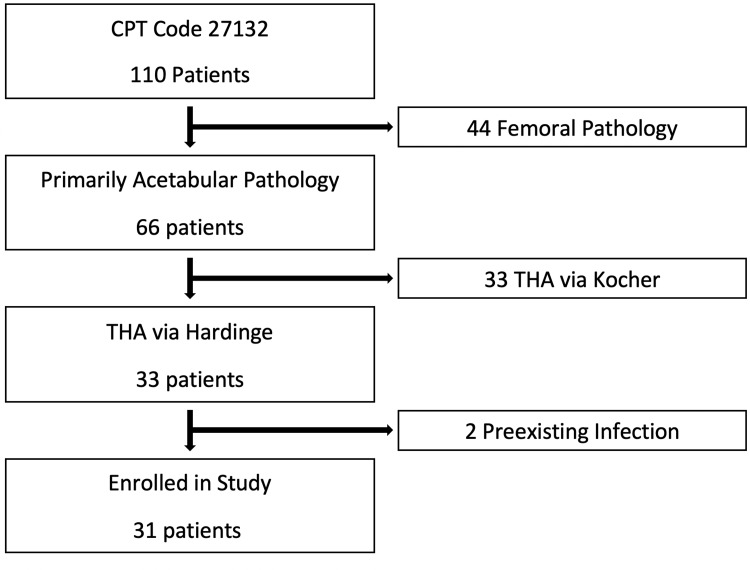 Figure 1
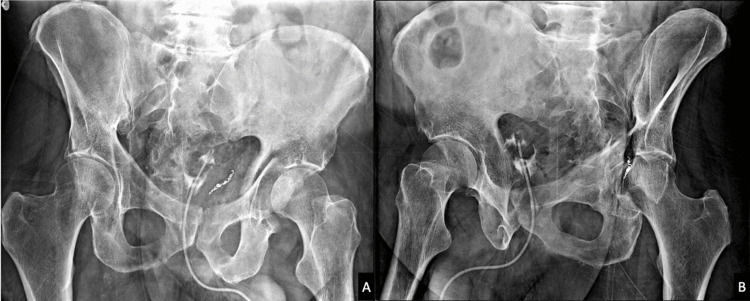 Figure 2
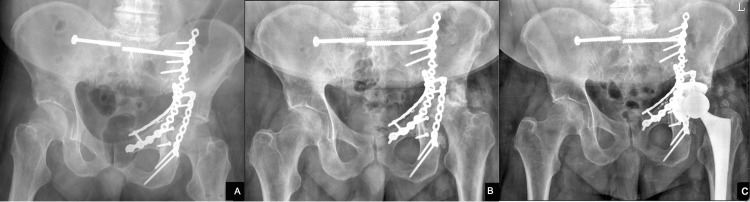 Figure 3
Peer Reviews
No public reviews on file for this paper yet. If you reviewed it on a platform where reviews are public (OpenReview, ICLR, NeurIPS, ICML), you can paste yours below so the community can read it here.
Videos
No videos yet. Explain this paper in a talk, walkthrough, or lecture? Add one.
Taxonomy
TopicsPelvic and Acetabular Injuries · Hip and Femur Fractures · Hip disorders and treatments