Efficacy, safety, and cost-effectiveness of pegylated PEG-rhg-CSF in pediatric patients receiving high-intensity chemotherapy: results from a phase II study
Junting Huang, Jia Zhu, Lian Jiang, Jiaqian Xu, Xiheng Lin, Jian Chang, Xiaohong Zhang, Suying Lu, Feifei Sun, Juan Wang, Yi Que, Zhonglv Ye, Lihua Yang, Xiuli Yuan, Weisong Cai, Chuan Tian, Yanpeng Wu, Xiangling He, Yan-Lai Tang, Yizhuo Zhang

TL;DR
This study shows that a long-acting drug called PEG-rhG-CSF is safe, effective, and cost-effective for children receiving high-dose chemotherapy.
Contribution
The study provides new evidence on the safety and cost-effectiveness of PEG-rhG-CSF in pediatric high-intensity chemotherapy.
Findings
PEG-rhG-CSF caused minimal adverse events, with bone pain being the most common.
The drug reduced the duration of severe neutropenia and febrile episodes in children.
PEG-rhG-CSF was found to be more cost-effective than the standard rhG-CSF.
Abstract
High-intensity chemotherapy can cause life-threatening complications in pediatric patients. Therefore, this study investigated safety and efficacy of long-acting pegylated recombinant human granulocyte colony-stimulating factor (PEG-rhG-CSF; Jinyouli®) in children undergoing high-intensity chemotherapy. Treatment-naive patients received post-chemotherapy PEG-rhG-CSF as primary prophylaxis for two cycles. The primary endpoints were drug-related adverse events (AEs) and bone pain scores. Secondary endpoints included grade 3–4 neutropenia, duration of neutropenia recovery, absolute neutrophil count changes, febrile neutropenia (FN), reduced chemotherapy intensity, antibiotic usage, and AE severity. The cost-effectiveness of PEG-rhG-CSF was compared with that of rhG-CSF (Ruibai®). Here, 307 and 288 patients underwent one and two PEG-rhG-CSF cycles, respectively. Ninety-one patients…
Genes, proteins, chemicals, diseases, species, mutations and cell lines named across the full text — each resolved to its canonical identifier and authoritative record.
Click any figure to enlarge with its caption.
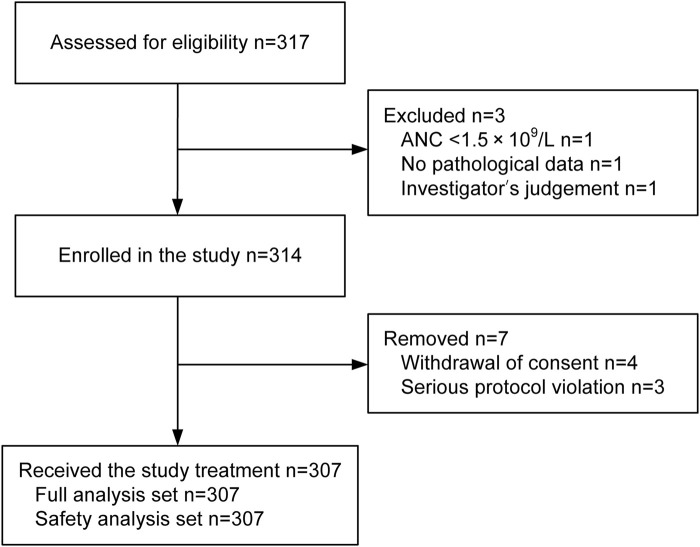 Figure 1
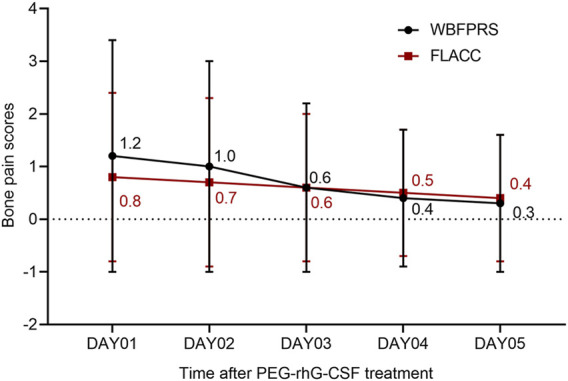 Figure 2
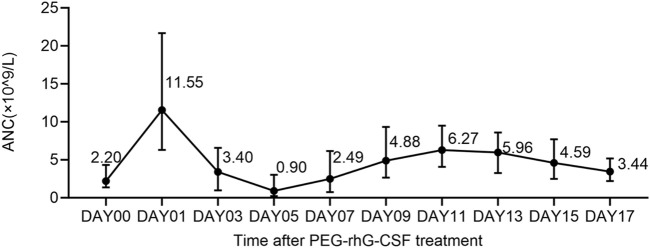 Figure 3
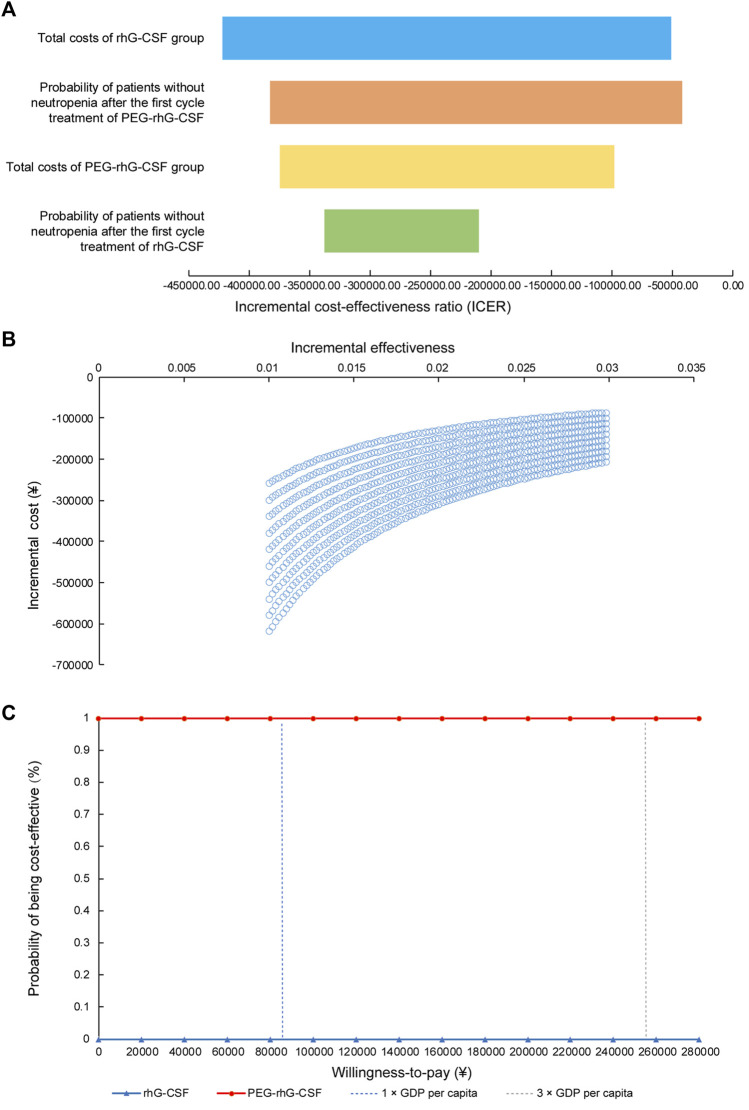 Figure 4
Peer Reviews
No public reviews on file for this paper yet. If you reviewed it on a platform where reviews are public (OpenReview, ICLR, NeurIPS, ICML), you can paste yours below so the community can read it here.
Videos
No videos yet. Explain this paper in a talk, walkthrough, or lecture? Add one.
Taxonomy
TopicsNeutropenia and Cancer Infections · Neuroblastoma Research and Treatments · Pleural and Pulmonary Diseases