Integrating Pt nanoparticles with 3D Cu2- x Se/GO nanostructure to achieve nir-enhanced peroxidizing Nano-enzymes for dynamic monitoring the level of H2O2 during the inflammation
Man Shen, Xianling Dai, Dongni Ning, Hanqing Xu, Yang Zhou, Gangan Chen, Zhangyin Ren, Ming Chen, Mingxuan Gao, Jing Bao

TL;DR
This paper introduces a new sensor that uses nanostructures to detect hydrogen peroxide in wounds, improving treatment of inflammation.
Contribution
A novel 3D Cu2- x Se/GO nanostructure decorated with Pt nanoparticles enables NIR-enhanced detection of H2O2 with high sensitivity.
Findings
The Cu2- x Se/GO@Pt/SPCE sensor reduces H2O2 detection limit from 1.45 μM to 0.53 μM under NIR light.
The sensor allows in-situ real-time monitoring of H2O2 released by cells.
The nanostructure enhances catalytic efficiency through localized surface plasma effects.
Abstract
The treatment of wound inflammation is intricately linked to the concentration of reactive oxygen species (ROS) in the wound microenvironment. Among these ROS, H2O2 serves as a critical signaling molecule and second messenger, necessitating the urgent need for its rapid real-time quantitative detection, as well as effective clearance, in the pursuit of effective wound inflammation treatment. Here, we exploited a sophisticated 3D Cu2- x Se/GO nanostructure-based nanonzymatic H2O2 electrochemical sensor, which is further decorated with evenly distributed Pt nanoparticles (Pt NPs) through electrodeposition. The obtained Cu2- x Se/GO@Pt/SPCE sensing electrode possesses a remarkable increase in specific surface derived from the three-dimensional surface constructed by GO nanosheets. Moreover, the localized surface plasma effect of the Cu2- x Se nanospheres enhances the separation of…
Genes, proteins, chemicals, diseases, species, mutations and cell lines named across the full text — each resolved to its canonical identifier and authoritative record.
Click any figure to enlarge with its caption.
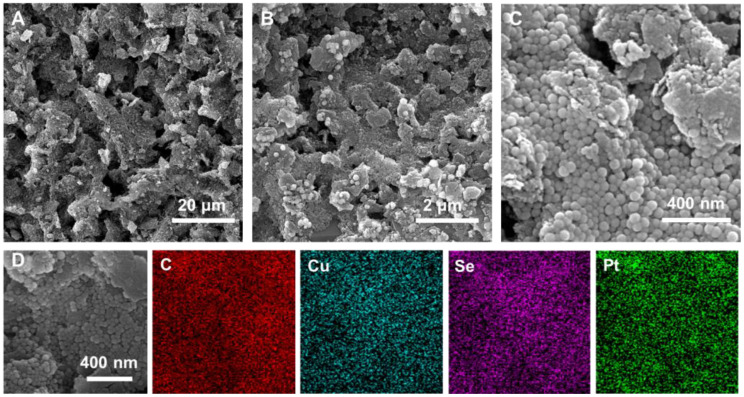 Figure 1
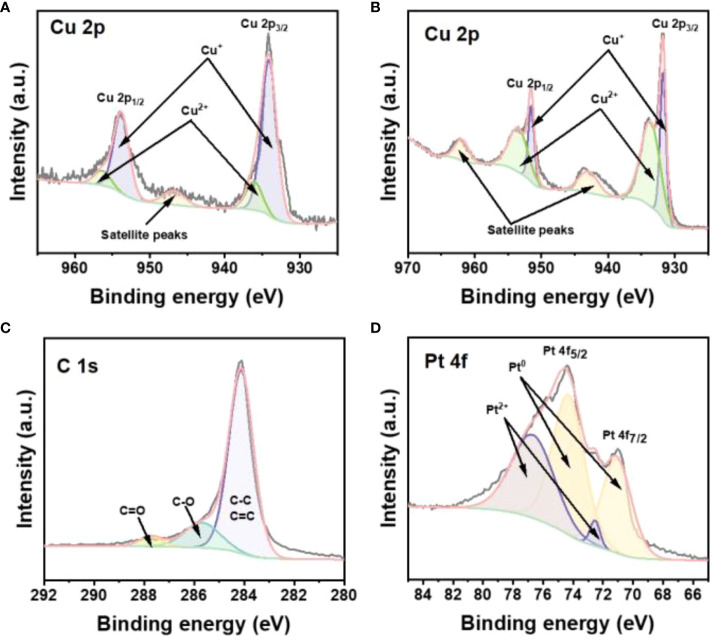 Figure 2
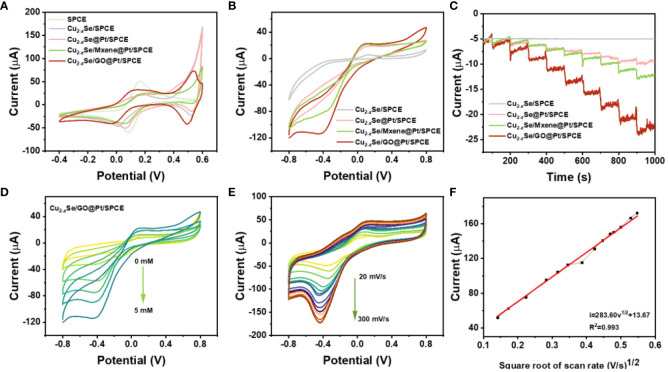 Figure 3
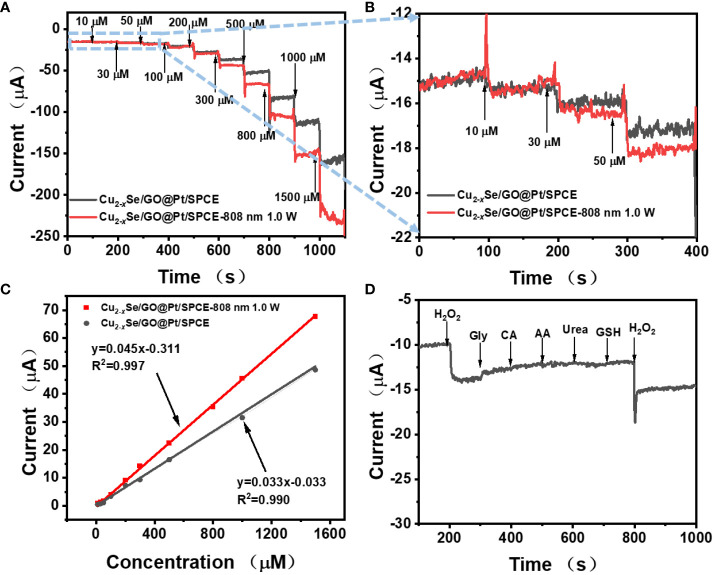 Figure 4
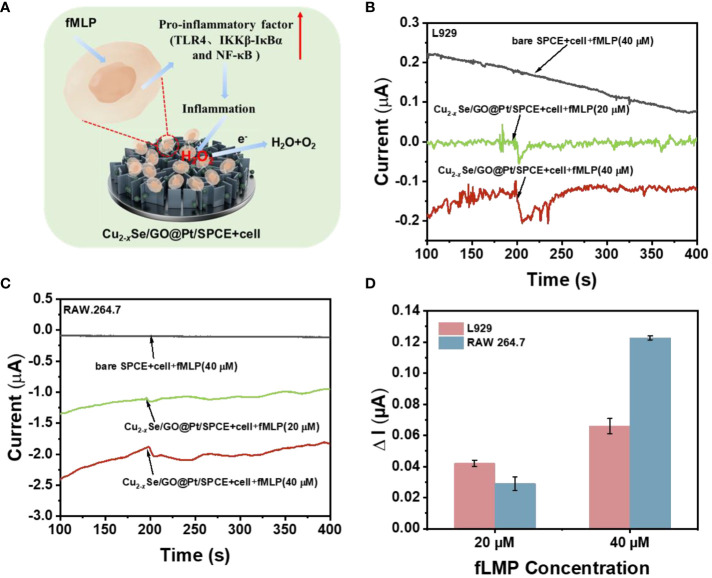 Figure 5
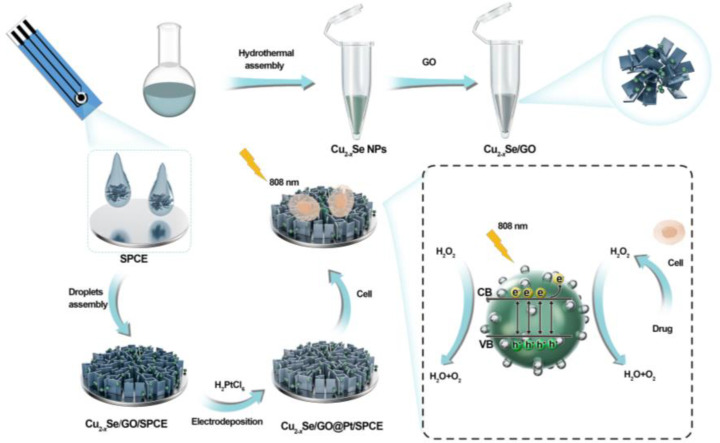 Figure 6
Peer Reviews
No public reviews on file for this paper yet. If you reviewed it on a platform where reviews are public (OpenReview, ICLR, NeurIPS, ICML), you can paste yours below so the community can read it here.
Videos
No videos yet. Explain this paper in a talk, walkthrough, or lecture? Add one.
Taxonomy
TopicsAdvanced Nanomaterials in Catalysis · Electrochemical sensors and biosensors · Gas Sensing Nanomaterials and Sensors