Global exact optimisations for chloroplast structural haplotype scaffolding
Victor Epain, Rumen Andonov

TL;DR
This paper introduces a new method for assembling chloroplast genomes by using mathematical optimization to scaffold genomic regions, particularly focusing on repeats and multiple genome forms.
Contribution
A novel discrete optimization formulation for chloroplast scaffolding is introduced, proven NP-Complete, and implemented in a Python package.
Findings
A new formulation of the scaffolding problem for chloroplast genomes was developed and proven NP-Complete.
The approach successfully models genomic regions and repeats to scaffold multiple genome forms within a single chloroplast cell.
The method was implemented in a Python package and tested on synthetic data to evaluate performance and robustness.
Abstract
Scaffolding is an intermediate stage of fragment assembly. It consists in orienting and ordering the contigs obtained by the assembly of the sequencing reads. In the general case, the problem has been largely studied with the use of distances data between the contigs. Here we focus on a dedicated scaffolding for the chloroplast genomes. As these genomes are small, circular and with few specific repeats, numerous approaches have been proposed to assemble them. However, their specificities have not been sufficiently exploited. We give a new formulation for the scaffolding in the case of chloroplast genomes as a discrete optimisation problem, that we prove the decision version to be \documentclass[12pt]{minimal} \usepackage{amsmath} \usepackage{wasysym} \usepackage{amsfonts} \usepackage{amssymb} \usepackage{amsbsy} \usepackage{mathrsfs} \usepackage{upgreek}…
Genes, proteins, chemicals, diseases, species, mutations and cell lines named across the full text — each resolved to its canonical identifier and authoritative record.
Click any figure to enlarge with its caption.
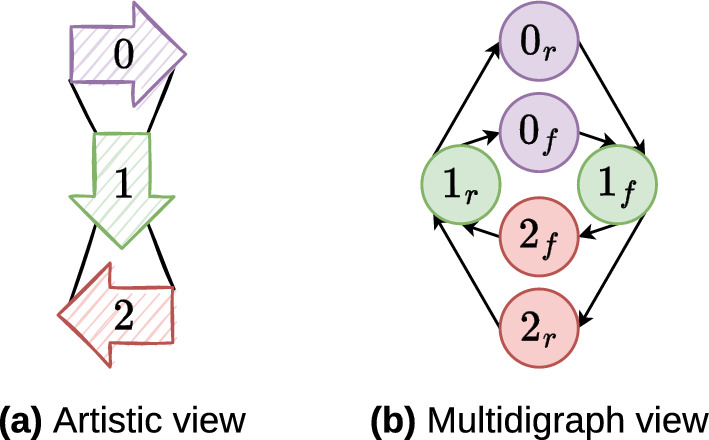 Figure 10
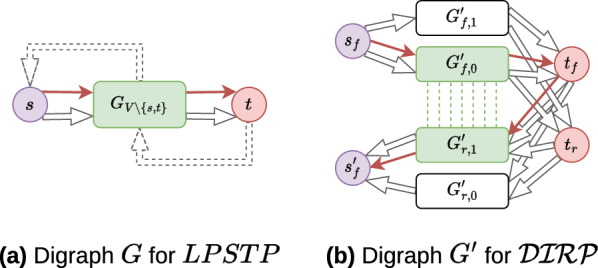 Figure 11
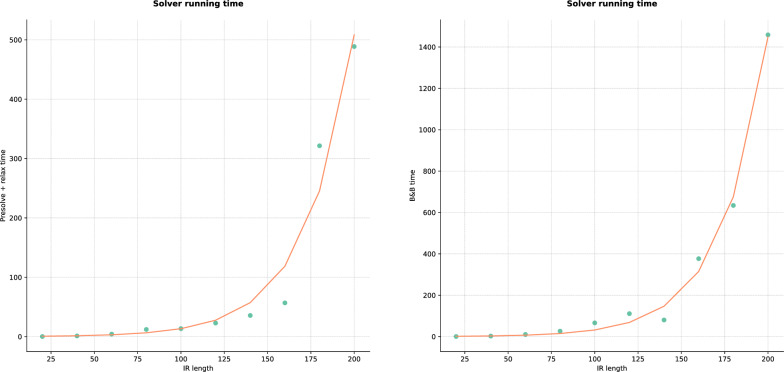 Figure 12
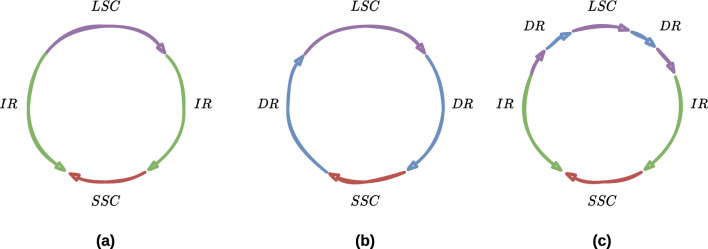 Figure 1
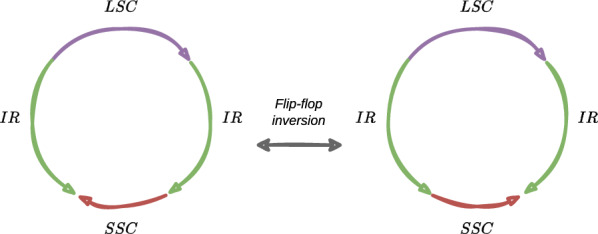 Figure 2
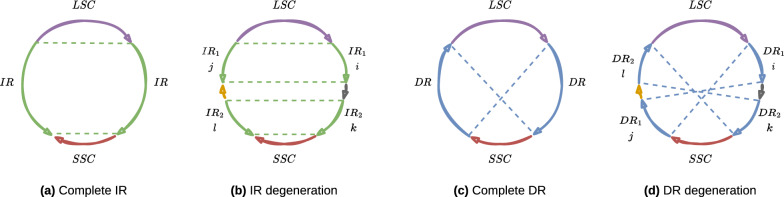 Figure 3
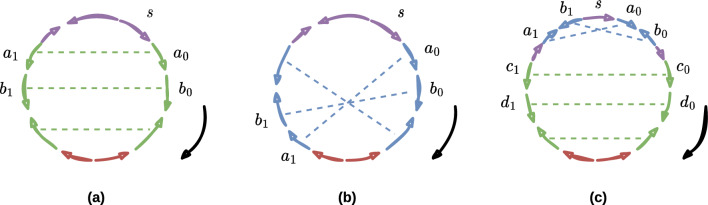 Figure 4
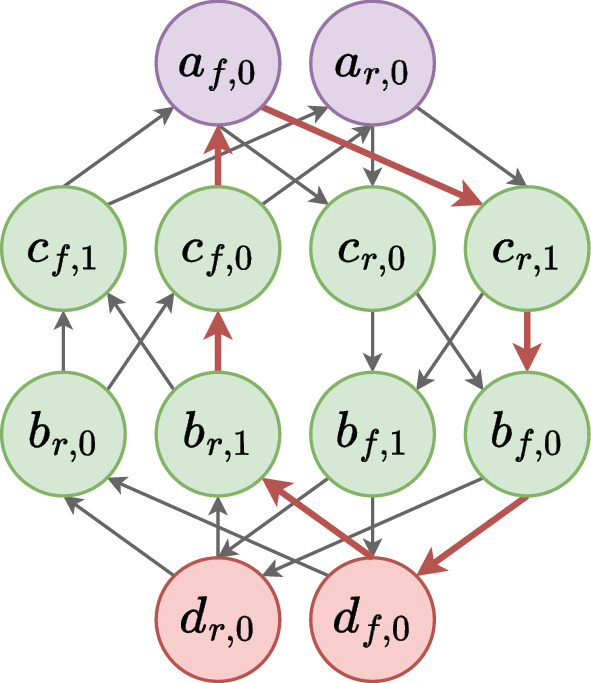 Figure 5
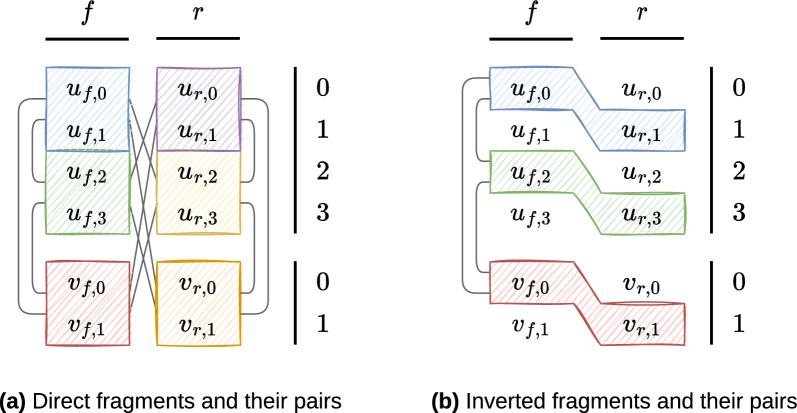 Figure 6
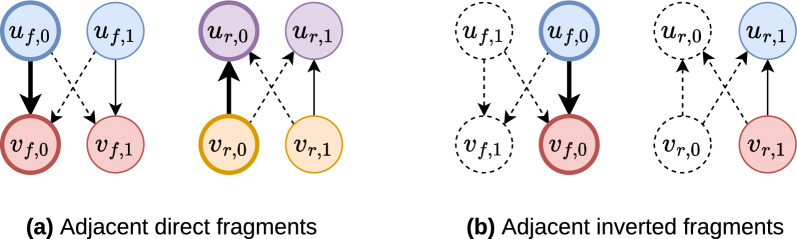 Figure 7
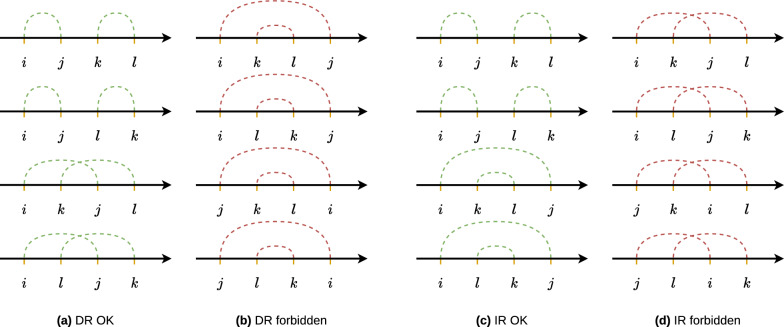 Figure 8
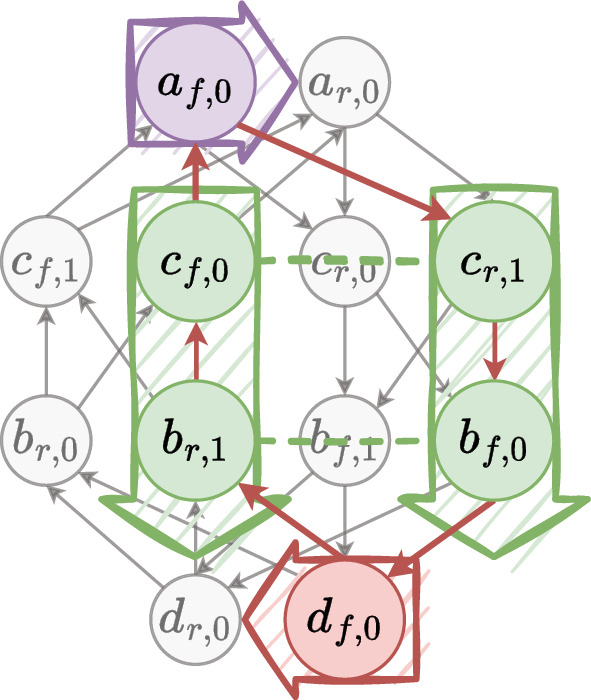 Figure 9
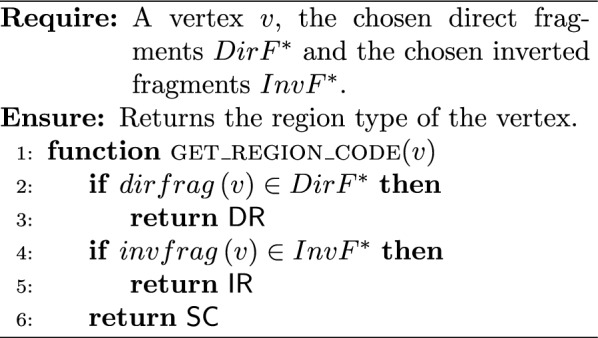 Figure 13
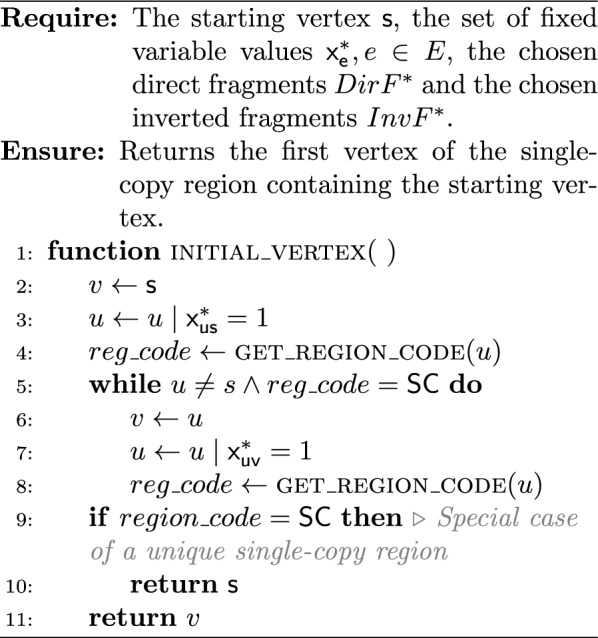 Figure 14
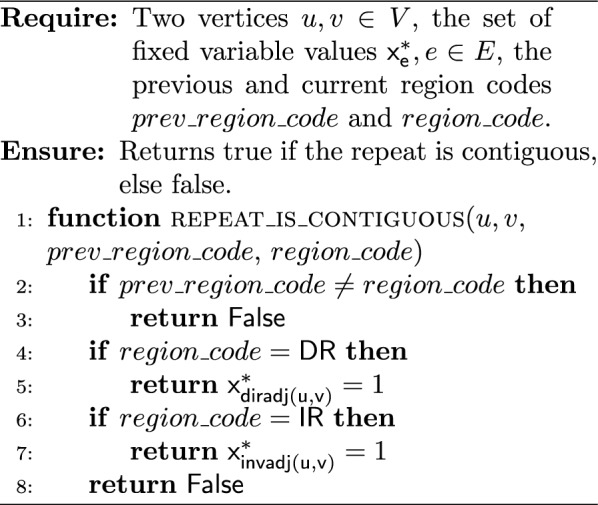 Figure 15
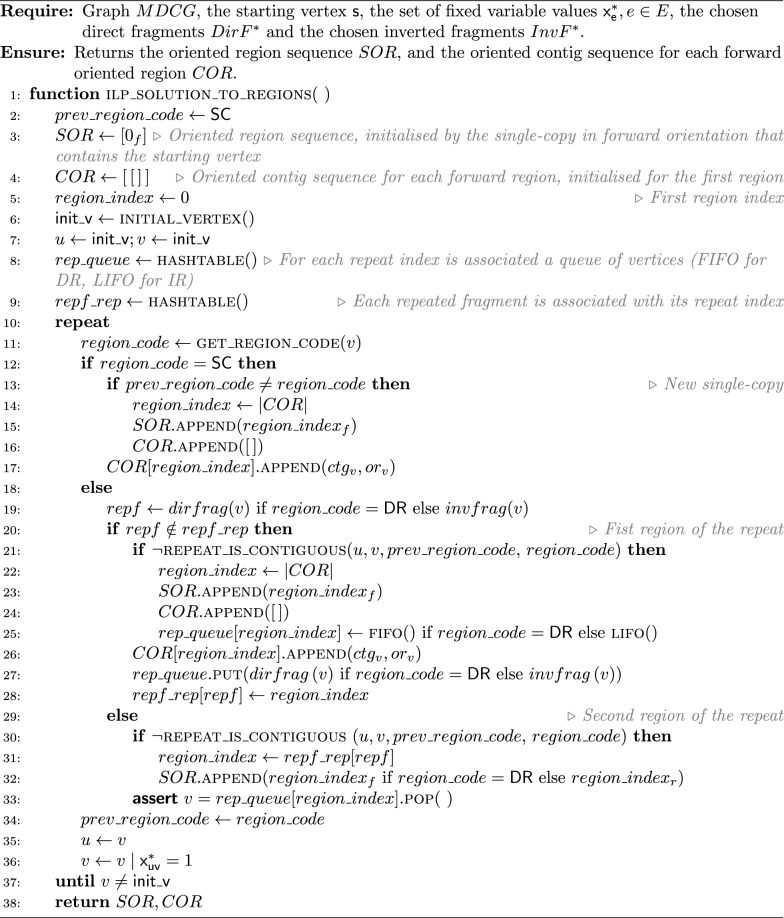 Figure 16
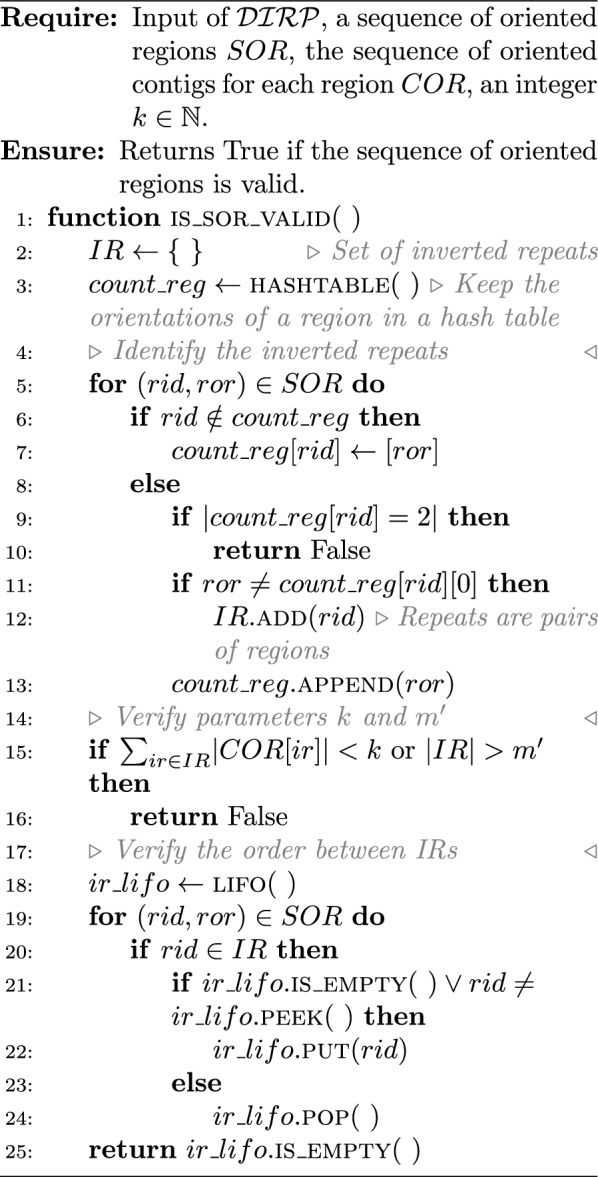 Figure 17
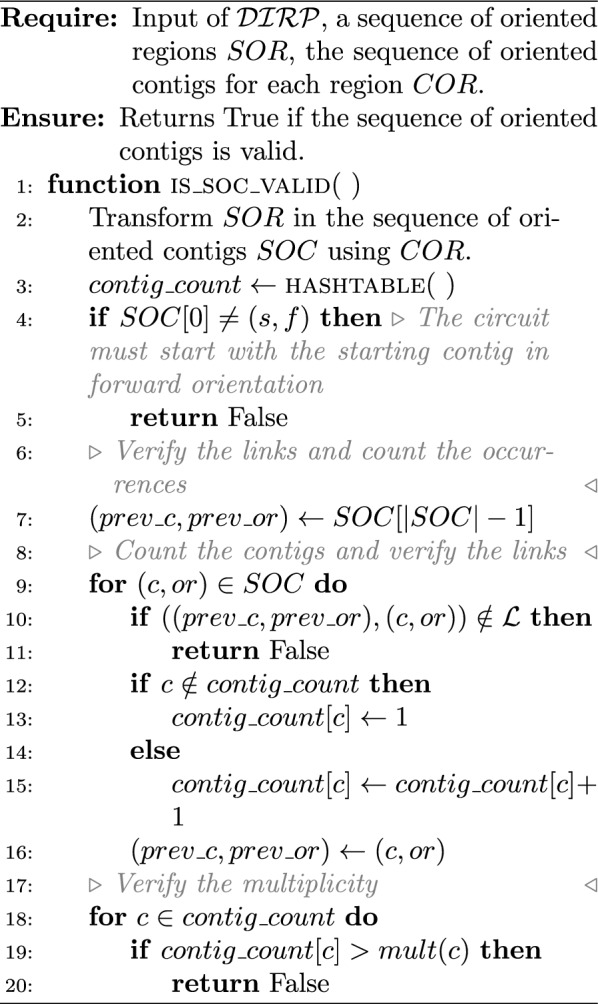 Figure 18
Peer Reviews
No public reviews on file for this paper yet. If you reviewed it on a platform where reviews are public (OpenReview, ICLR, NeurIPS, ICML), you can paste yours below so the community can read it here.
Videos
No videos yet. Explain this paper in a talk, walkthrough, or lecture? Add one.
Taxonomy
TopicsGenomics and Phylogenetic Studies · Genetic diversity and population structure · Photosynthetic Processes and Mechanisms