Gene-specific transcriptional activation by the Aspergillus fumigatus AtrR factor requires a conserved C-terminal domain
Shivani Ror, Mark A. Stamnes, W. Scott Moye-Rowley

TL;DR
A conserved part of the AtrR protein in Aspergillus fumigatus is crucial for activating certain genes, which affects resistance to antifungal drugs.
Contribution
The study identifies a conserved C-terminal domain in AtrR that is essential for gene-specific activation of transporter genes in Aspergillus fumigatus.
Findings
A conserved C-terminal domain in AtrR is required for the expression of abcG1 but not cyp51A.
This domain is conserved in AtrR homologs from other fungal pathogens.
Reduced ABC transporter expression affects azole drug susceptibility.
Abstract
Treatment of fungal infections associated with the filamentous fungus Aspergillus fumigatus is becoming more problematic as this organism is developing resistance to the main chemotherapeutic drug at an increasing rate. Azole drugs represent the current standard-of-care in the treatment of aspergillosis with this drug class acting by inhibiting a key step in the biosynthesis of the fungal sterol ergosterol. Azole compounds block the activity of the lanosterol α-14 demethylase, encoded by the cyp51A gene. A common route of azole resistance involves an increase in transcription of cyp51A. This transcriptional increase requires the function of a Zn2Cys6 DNA-binding domain-containing transcription activator protein called AtrR. AtrR was identified through its action as a positive regulator of expression of an ATP-binding cassette transporter (abcC/cdr1B here called abcG1). Using both…
Genes, proteins, chemicals, diseases, species, mutations and cell lines named across the full text — each resolved to its canonical identifier and authoritative record.
Click any figure to enlarge with its caption.
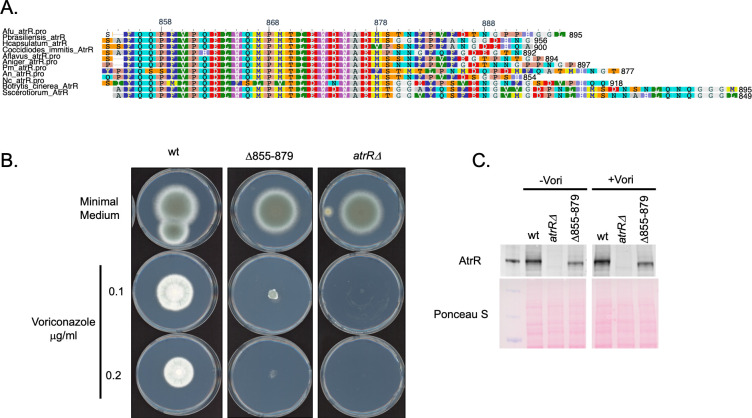 Figure 1
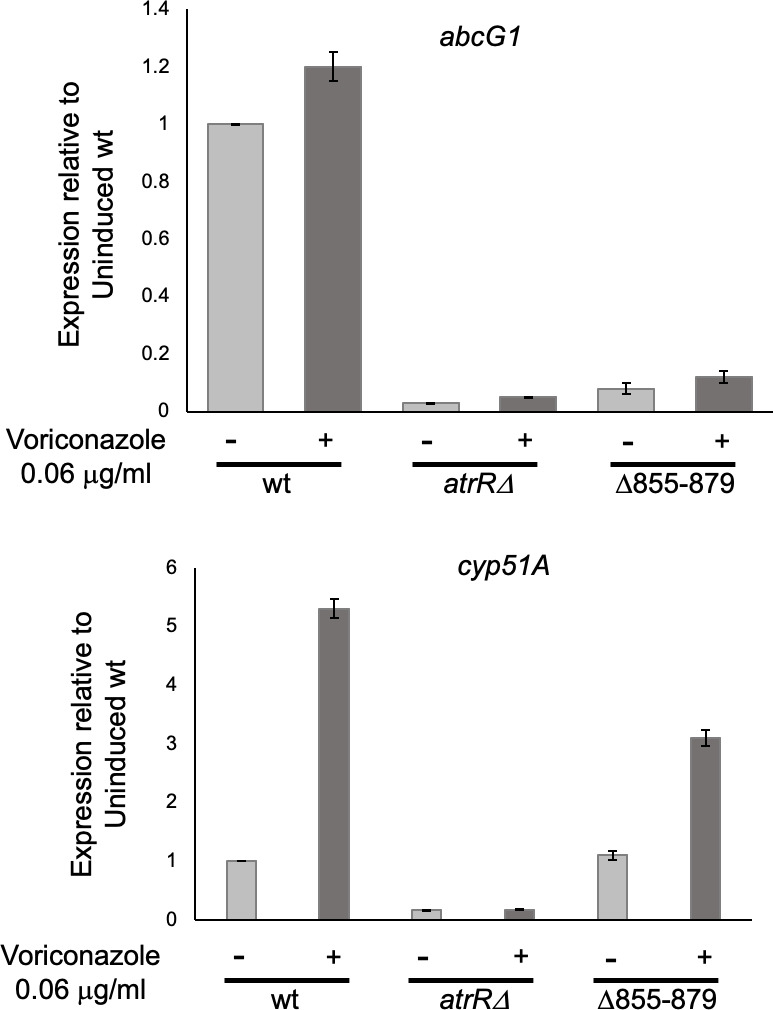 Figure 2
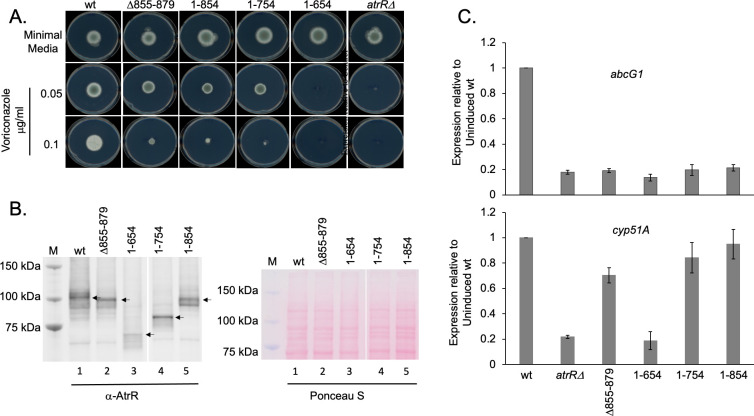 Figure 3
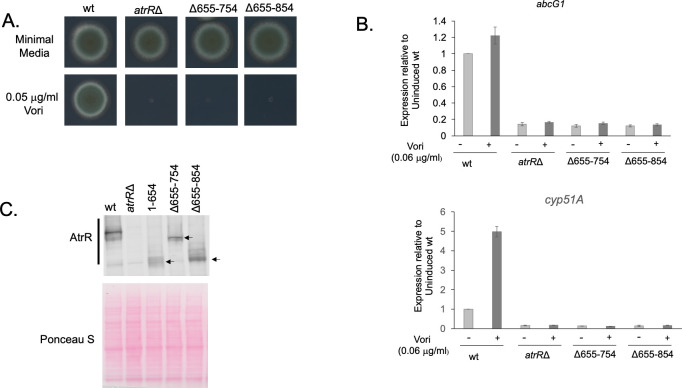 Figure 4
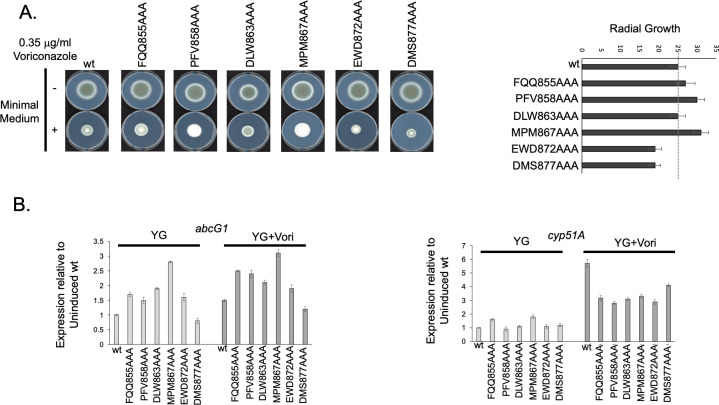 Figure 5
 Figure 6
 Figure 7
Peer Reviews
No public reviews on file for this paper yet. If you reviewed it on a platform where reviews are public (OpenReview, ICLR, NeurIPS, ICML), you can paste yours below so the community can read it here.
Videos
No videos yet. Explain this paper in a talk, walkthrough, or lecture? Add one.
Taxonomy
TopicsAntifungal resistance and susceptibility · Fungal Biology and Applications · Fungal and yeast genetics research