Direct electrohydraulic lithotripsy with a novel peroral cholangioscope through the overtube for surgically-altered anatomy
Kosuke Hiroe, Shuhei Shintani, Takuya Okamoto, Hidenori Kimura, Takaaki Eguchi, Yoshihisa Tsuji, Osamu Inatomi

Abstract
Genes, proteins, chemicals, diseases, species, mutations and cell lines named across the full text — each resolved to its canonical identifier and authoritative record.
Click any figure to enlarge with its caption.
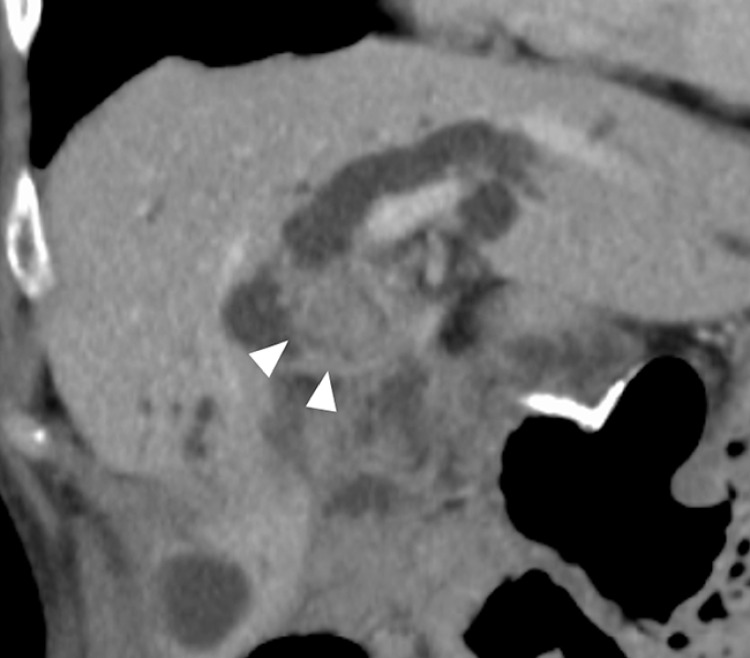 Fig. 1
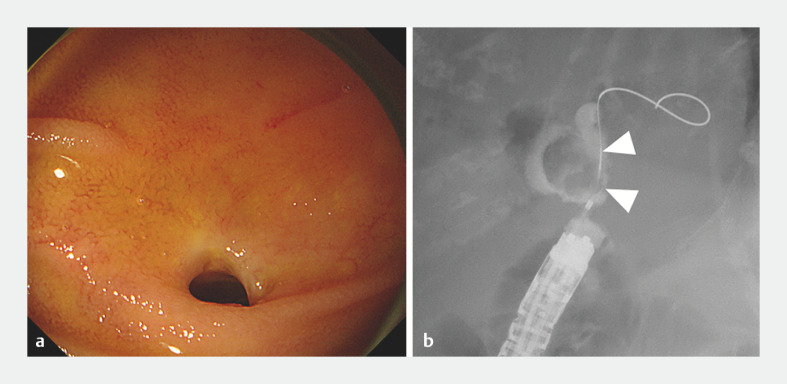 Fig. 2
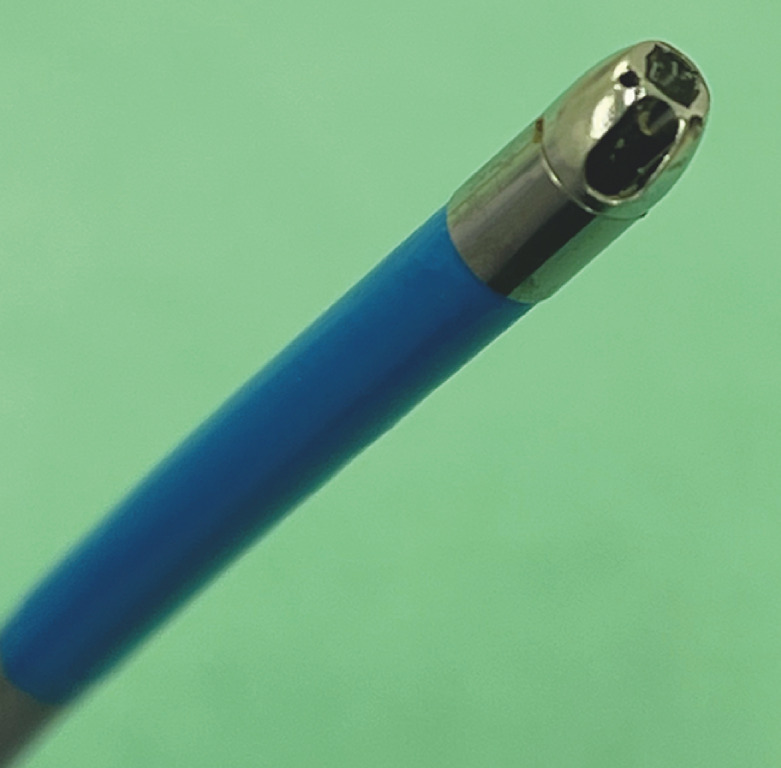 Fig. 3
Peer Reviews
No public reviews on file for this paper yet. If you reviewed it on a platform where reviews are public (OpenReview, ICLR, NeurIPS, ICML), you can paste yours below so the community can read it here.
Videos
No videos yet. Explain this paper in a talk, walkthrough, or lecture? Add one.
Taxonomy
TopicsGallbladder and Bile Duct Disorders · Esophageal and GI Pathology · Pediatric Hepatobiliary Diseases and Treatments
Endoscopic management of choledocholithiasis in patients with surgically altered anatomy is challenging and likely to be difficult 1 2 . Although the mother–baby type of peroral cholangioscopy is a useful modality, there are some limitations when using the mother scope, related to the working channel diameter and extended scope length 3 4 . In this video, we present a direct electrohydraulic lithotripsy (EHL) using a novel type of cholangioscope without a mother scope in a patient with Roux-en-Y reconstruction.
The patient was a 73-year-old woman with a history of subtotal stomach-preserving pancreaticoduodenal resection for pancreatic cancer 5 years previously. The patient had a history of endoscopic treatment of a large common bile duct stone, but complete stone extraction was difficult even after several endoscopic procedures. The stone was accompanied by recurrent liver dysfunction and obstructive jaundice. Computed tomography showed a stone with high attenuation in the hilar bile duct ( Fig. 1 ). Stenosis of the choledochojejunal anastomosis was confirmed by balloon-assisted enteroscopy, and cholangiography showed a defect of almost 20 mm in size ( Fig. 2 ). The enteroscope was removed leaving the overtube (ST-SB1S, outer diameter 13.2 mm, length 960 mm; Olympus, Tokyo, Japan) and stiff guidewire in place, and a novel cholangioscope (EyeMax, 11 Fr; Micro-Tech, Nanjing, China) ( Fig. 3 ) was directly inserted into the overtube ( Video 1 ). The novel cholangioscope combined good pushability and flexibility, which enabled easy passage through the overtube bends. EHL (Autolith Touch; Boston Scientific, Marlborough, USA) without a mother scope was initiated. The large-diameter channel (1.8 mm) simplified suction and water delivery during the procedure, with an excellent endoscopic view. It was possible to crush all the stones in one session, and we used a basket and balloon catheter to finally succeed in performing a normal complete stone extraction.
Computed tomography in a 73-year-old patient with Roux-en-Y anatomy showed a 20-mm choledocholithiasis in the hilar bile duct (white arrowheads).
a Single-balloon enteroscopy-assisted endoscopic retrograde cholangiopancreatography enabled deep insertion and confirmation of a slight stricture of a choledochojejunostomy anastomosis. b Cholangiography showed a 20-mm defect (white arrowheads).
The novel direct cholangioscope has a diameter of 11 Fr and a 1.8-mm working channel (EyeMax; Micro-Tech, Nanjing, China).
Direct electrohydraulic lithotripsy (EHL) using a novel type of direct cholangioscope, without a mother scope, in a patient with surgically altered gastrointestinal anatomy.Video 1
Direct EHL with the new peroral cholangioscope proved beneficial for the management of challenging bile duct stone in a patient with altered gastrointestinal anatomy.
Endoscopy_UCTN_Code_TTT_1AR_2AH
The reference list from the paper itself. Each links out to its DOI / PubMed record.
- 1Shimatani M Hatanaka H Kogure H Diagnostic and therapeutic endoscopic retrograde cholangiography using a short-type double-balloon endoscope in patients with altered gastrointestinal anatomy: a multicenter prospective study in Japan Am J Gastroenterol 20161111750175827670601 10.1038/ajg.2016.420 · doi ↗ · pubmed ↗
- 2Tanisaka Y Mizuide M Fujita A Competence development of trainees performing short-type single-balloon enteroscopy-assisted endoscopic retrograde cholangiopancreatography in patients with surgically altered anatomy J Hepatobiliary Pancreat Sci 2022291316132635594030 10.1002/jhbp.1187 · doi ↗ · pubmed ↗
- 3Tonozuka R Itoi T Sofuni A Novel peroral direct digital cholangioscopy-assisted lithotripsy using a monorail technique through the overtube in patients with surgically altered anatomy (with video)Dig Endosc 20193120320830506597 10.1111/den.13310 · doi ↗ · pubmed ↗
- 4Tanisaka Y Ryozawa S Mizuide M Analysis of the factors involved in procedural failure: Endoscopic retrograde cholangiopancreatography using a short-type single-balloon enteroscope for patients with surgically altered gastrointestinal anatomy Dig Endosc 20193168268930942924 10.1111/den.13414 · doi ↗ · pubmed ↗