Endoscopic resection with an over-the-scope clip for recurrence of gastric cancer on the esophagus adjacent to the anastomosis after total gastrectomy
Taro Iwatsubo, Yuichiro Hatano, Kentaro Matsuo, Ryo Tanaka, Kazuhiro Ota, Sang-Woong Lee, Hiroki Nishikawa

Abstract
Genes, proteins, chemicals, diseases, species, mutations and cell lines named across the full text — each resolved to its canonical identifier and authoritative record.
Click any figure to enlarge with its caption.
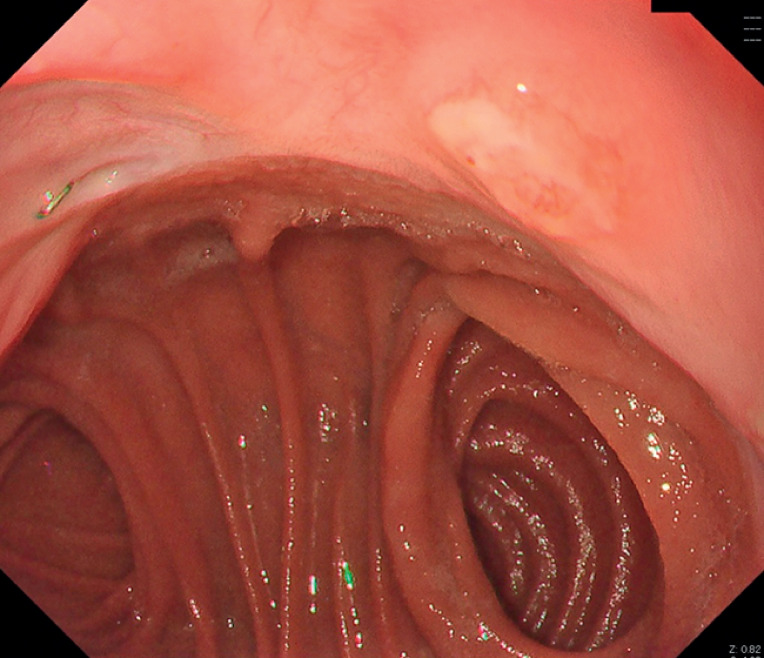 Fig. 1
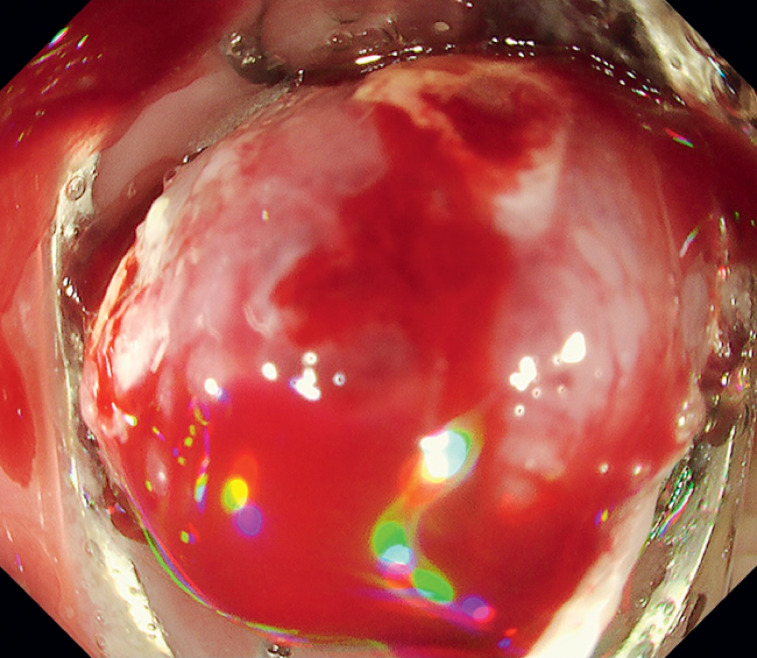 Fig. 2
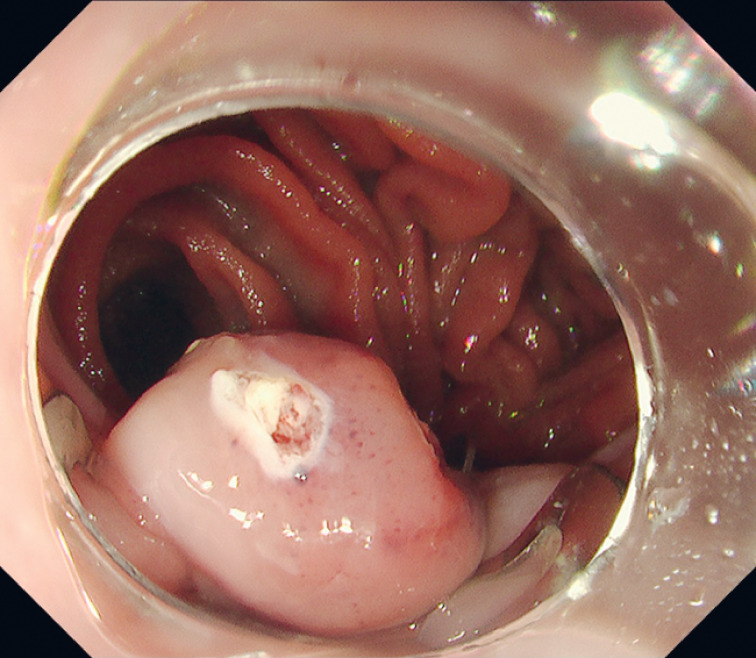 Fig. 3
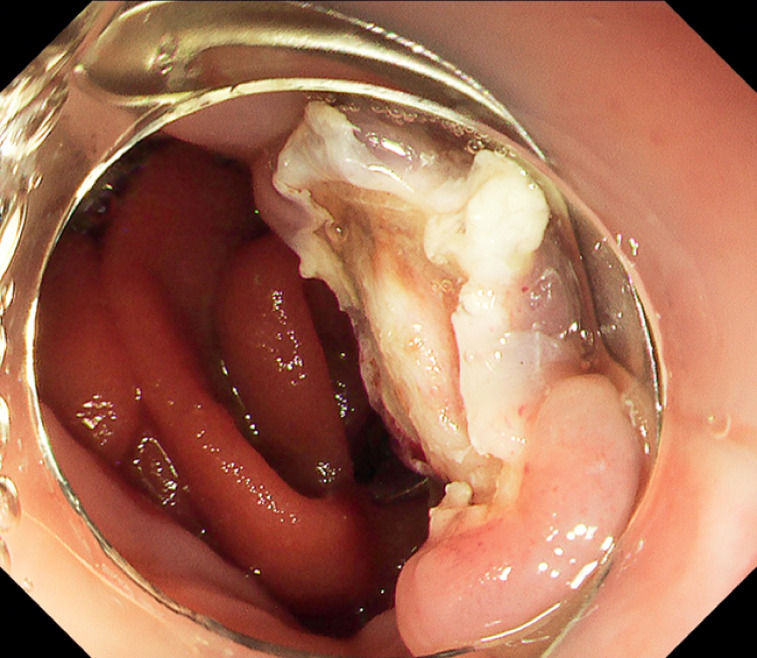 Fig. 4
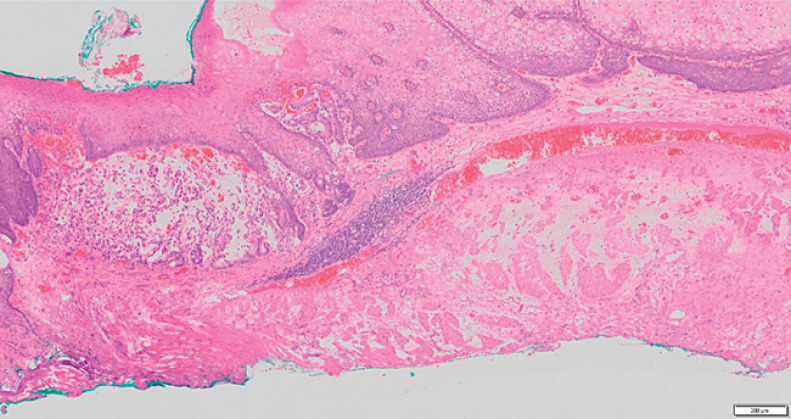 Fig. 5
Peer Reviews
No public reviews on file for this paper yet. If you reviewed it on a platform where reviews are public (OpenReview, ICLR, NeurIPS, ICML), you can paste yours below so the community can read it here.
Videos
No videos yet. Explain this paper in a talk, walkthrough, or lecture? Add one.
Taxonomy
TopicsGastric Cancer Management and Outcomes · Gastrointestinal Tumor Research and Treatment · Neuroendocrine Tumor Research Advances
The endoscopic resection of recurrent lesions on the postoperative anastomosis is challenging. Endoscopic resection with an over-the-scope (OTS) clip has been reported to be useful for subepithelial and fibrotic lesions 1 2 . Herein, we report a case of endoscopic resection for the recurrence of gastric cancer adjacent to the anastomosis after total gastrectomy using an OTS clip.
A man in his sixties underwent total gastrectomy after neoadjuvant chemotherapy for advanced gastric cancer 3 years prior, and the pathological result was a mixture of mucinous, poorly differentiated, and signet-ring cell adenocarcinoma (ypT3, ypN2, and ycM0). Surveillance endoscopy revealed a flat, elevated lesion with erosions, 8 mm in size, adjacent to the anastomosis of the esophagus and small intestine. The lesion resembled a subepithelial tumor covered with normal epithelium ( Fig. 1 ). The biopsied specimen from this lesion pathologically revealed poorly differentiated and signet-ring cell adenocarcinoma, which was suspected to be a residue or implantation of gastric cancer after gastrectomy. Therefore, a deep-layer resection was required to achieve complete resection. However, conventional endoscopic mucosal resection or submucosal dissection was thought to be significantly difficult because of severe fibrosis of the anastomosis and subepithelial lesions.
A subepithelial tumor covered with normal epithelium is located on the esophagus on the oral side of the anastomosis.
We performed endoscopic resection using an OTS clip system (Ovesco Endoscopy GmbH, Tübingen, Germany) to easily and safely resect the recurrent lesion at the deeper layer ( Video 1 ). Markings were placed outside the lesion at the snare tip. The 11-mm version of the OTS clip system was subsequently deployed at the base of the lesion, and the lesion was resected above the OTS clip using a 10-mm snare (Captivator II; Boston Scientific, Marlborough, Massachusetts, USA) ( Fig. 2 , Fig. 3 , Fig. 4 ). The procedure took 15 min. The lesion was successfully resected without complications ( Fig. 5 ). This method was effective for such a small recurrent lesion adjacent to the anastomosis.
Endoscopic resection with an over-the-scope clip for recurrent gastric cancer on the esophagus adjacent to the anastomosis after total gastrectomy.Video 1
The lesion is aspirated to make sure that the markings around the lesion are within the attachment, and the over-the-scope clip is fired.
A pseudo-protruding polyp is formed above the over-the-scope clip.
A pseudo-protruding polyp is formed above the over-the-scope clip.
The tumor is located predominantly in the lamina propria mucosae and successfully completely resected with a negative margin.
Endoscopy_UCTN_Code_TTT_1AO_2AG_3AF
The reference list from the paper itself. Each links out to its DOI / PubMed record.
- 1Tashima T Nonaka K Ryozawa SEMR with an over-the-scope clip for superficial nonampullary duodenal epithelial tumor with fibrosis Video GIE 20183838429916477 10.1016/j.vgie.2017.11.010PMC 6004020 · doi ↗ · pubmed ↗
- 2Tashima T Ryozawa S Tanisaka Y Endoscopic resection using an over-the-scope clip for duodenal neuroendocrine tumors Endosc Int Open 20219 E 659E 66610.1055/a-1374-614133937505 PMC 8062228 · doi ↗ · pubmed ↗