One-step technique for endoscopic ultrasound-guided hepaticogastrostomy using a partially covered metal stent for superficial bile duct access
Takeshi Ogura, Yuki Uba, Nobuhiro Hattori, Kimi Bessho, Hiroki Nishikawa

Abstract
Genes, proteins, chemicals, diseases, species, mutations and cell lines named across the full text — each resolved to its canonical identifier and authoritative record.
Click any figure to enlarge with its caption.
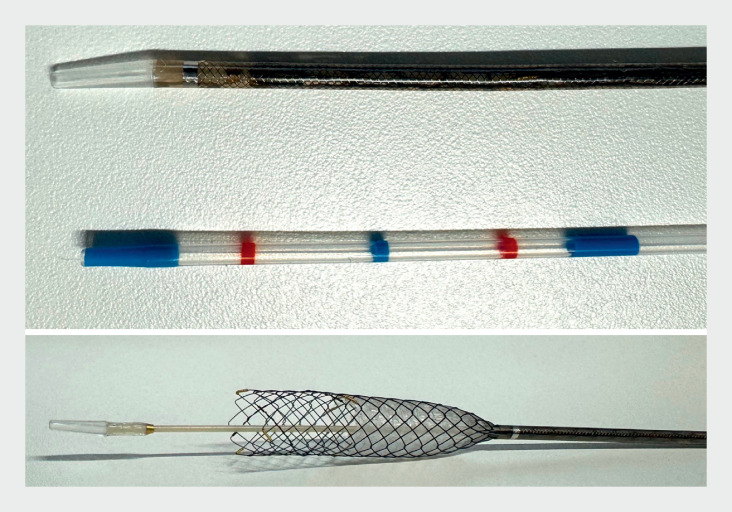 Fig. 1
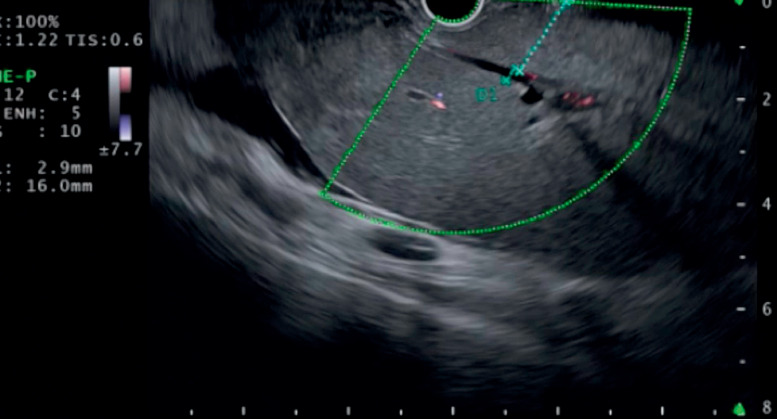 Fig. 2
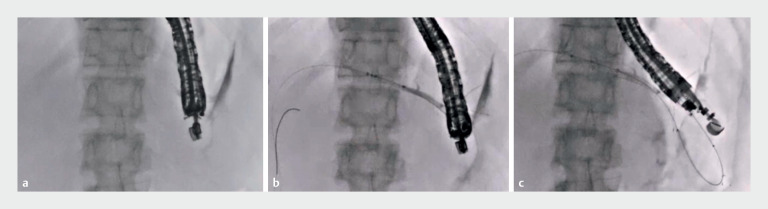 Fig. 3
Peer Reviews
No public reviews on file for this paper yet. If you reviewed it on a platform where reviews are public (OpenReview, ICLR, NeurIPS, ICML), you can paste yours below so the community can read it here.
Videos
No videos yet. Explain this paper in a talk, walkthrough, or lecture? Add one.
Taxonomy
TopicsGallbladder and Bile Duct Disorders · Pediatric Hepatobiliary Diseases and Treatments · Pancreatic and Hepatic Oncology Research
Endoscopic ultrasound-guided hepaticogastrostomy (EUS-HGS) is clinically useful as an alternative biliary drainage technique for patients with failed endoscopic retrograde cholangiopancreatography (ERCP) 1 ; however, one of the adverse events is biliary peritonitis due to bile leakage during the EUS-HGS procedure. Although biliary peritonitis is usually treated conservatively, it can worsen a patient’s condition by delaying oral intake or causing fever postoperatively 2 .
Biliary peritonitis can occur as a complication of intraoperative bile leakage, which among the steps involved in EUS-HGS, may be caused by tract dilation. To prevent this adverse event and to obtain a tamponade effect, enough hepatic parenchyma, at least 2.5 cm, should be crossed when the bile duct is punctured 3 . Another strategy, stent deployment without tract dilation, which is called the ‘one-step technique,’ is also sometimes considered 4 ; however, owing to the use of a fully covered stent, the one-step technique may cause potential stent dislocation or branch bile duct obstruction. Recently, a novel partially covered self-expandable metal stent (PCSEMS) has become available (HANARO Benefit, M.I Tech., Seoul, South Korea). This stent has a 1-cm uncovered portion and its stent delivery system is only 5.9 Fr ( Fig. 1 ). Therefore, insertion of this stent using the one-step technique may be feasible. Additionally, owing to the presence of the uncovered portion, the risk of stent dislocation or bile duct branch obstruction might be reduced. We herein describe the one-step technique for EUS-HGS using a PCSEMS with a fine gauge stent delivery system in a case requiring superficial bile duct access.
Photograph of the novel partially covered self-expandable metal stent, which has a 1-cm uncovered portion and a stent delivery system of only 5.9 Fr.
A 79-year-old man was admitted to our hospital with obstructive jaundice. He had undergone right hepatectomy because of a metastatic tumor caused by colon cancer. Owing to the surgically altered anatomy, EUS-HGS was attempted. As multiple liver metastases were observed, the only available puncture site was the superficial bile duct, access to which involved traversing a 16.0-mm length of the hepatic parenchyma ( Fig. 2 ). After a successful puncture had been performed, contrast medium was injected, with bile leakage observed ( Fig. 3 a ). Because additional tract dilation increases bile leakage, we decided to perform the one-step technique. The novel stent was successfully inserted into the biliary tract ( Fig. 3 b ) and successfully deployed using the intrascope channel release technique ( Fig. 3 c ; Video 1 ). Although the patient experienced mild abdominal pain postoperatively, no severe adverse events were observed.
Endoscopic ultrasound image showing that the length of the hepatic parenchyma traversed to reach the puncture site was 16 mm.
Fluoroscopic images showing: a leakage of bile observed after contrast medium injection; b the stent delivery system of the partially covered self-expandable metal stent after its successful insertion into the biliary tract; c deployment of the metal stent.
A novel partially covered self-expandable metal stent is deployed into a superficial bile duct without tract dilation for biliary obstruction.Video 1
In conclusion, the one-step technique using the novel PCSEMS might be useful in cases requiring superficial bile duct access.
Endoscopy_UCTN_Code_TTT_1AS_2AH
The reference list from the paper itself. Each links out to its DOI / PubMed record.
- 1Ogura T Higuchi K Technical review of developments in endoscopic ultrasound-guided hepaticogastrostomy Clin Endosc 20215465165910.5946/ce.2021.020-KDDW 33896154 PMC 8505184 · doi ↗ · pubmed ↗
- 2Ogura T Higuchi K Endoscopic Ultrasound-guided hepaticogastrostomy: technical review and tips to prevent adverse events Gut Liver 20211519620510.5009/gnl 2009632694240 PMC 7960972 · doi ↗ · pubmed ↗
- 3Yamamoto Y Ogura T Nishioka N Risk factors for adverse events associated with bile leak during EUS-guided hepaticogastrostomy Endosc Ultrasound 2020911011532295968 10.4103/eus.eus_68_19PMC 7279085 · doi ↗ · pubmed ↗
- 4Ogura T Ueno S Okuda A Technical feasibility and safety of one-step deployment of EUS-guided hepaticogastrostomy using an 8-mm diameter metal stent with a fine-gauge stent delivery system (with video)Endosc Ultrasound 20211035536034427190 10.4103/EUS-D-20-00206 PMC 8544008 · doi ↗ · pubmed ↗