Enhancing visibility and hemostasis during necrosectomy for walled-off necrosis: the “dual-gel method”
Kazuki Hama, Haruka Toyonaga, Tatsuya Ishii, Masayo Motoya, Toshifumi Kin, Tsuyoshi Hayashi, Akio Katanuma

Abstract
Genes, proteins, chemicals, diseases, species, mutations and cell lines named across the full text — each resolved to its canonical identifier and authoritative record.
Click any figure to enlarge with its caption.
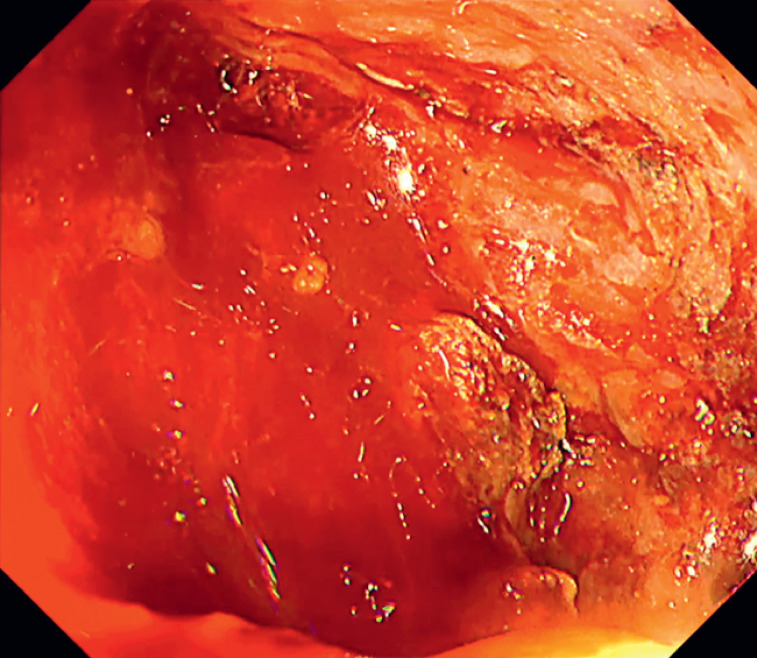 Fig. 1
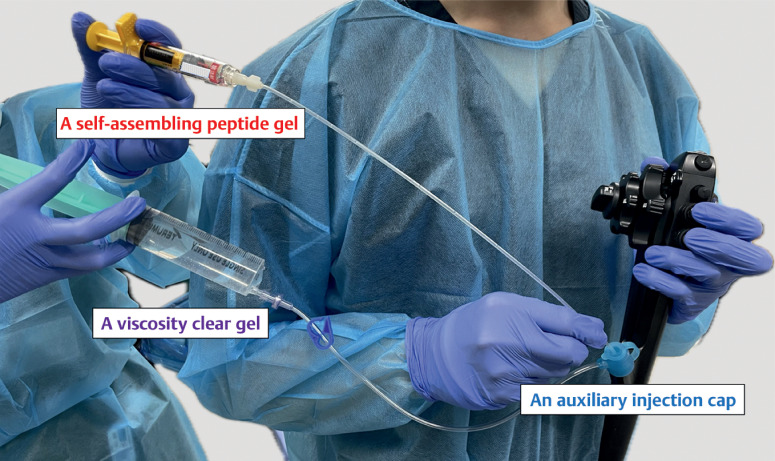 Fig. 2
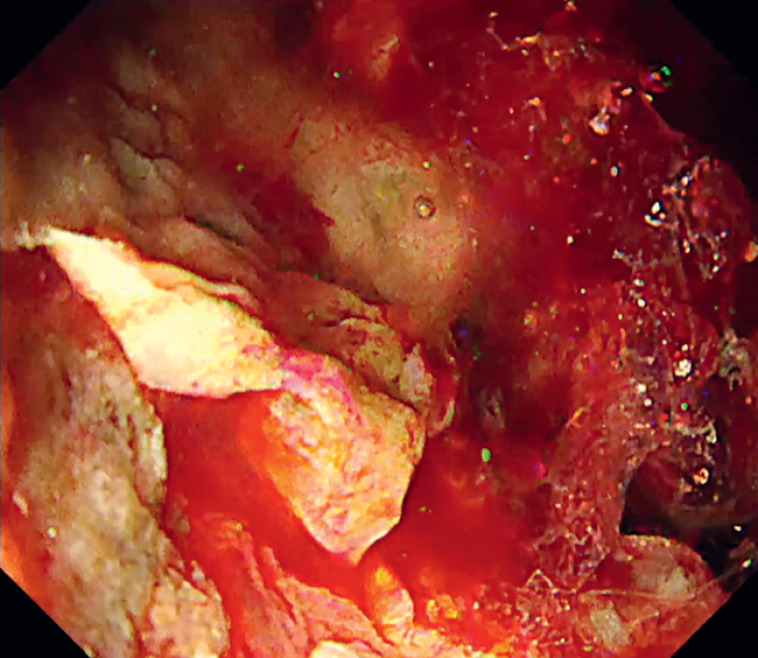 Fig. 3
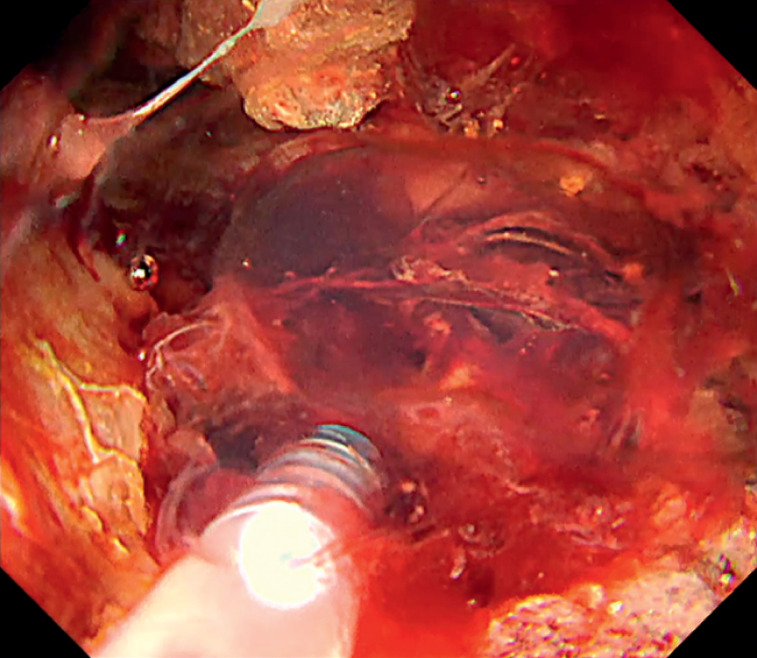 Fig. 4
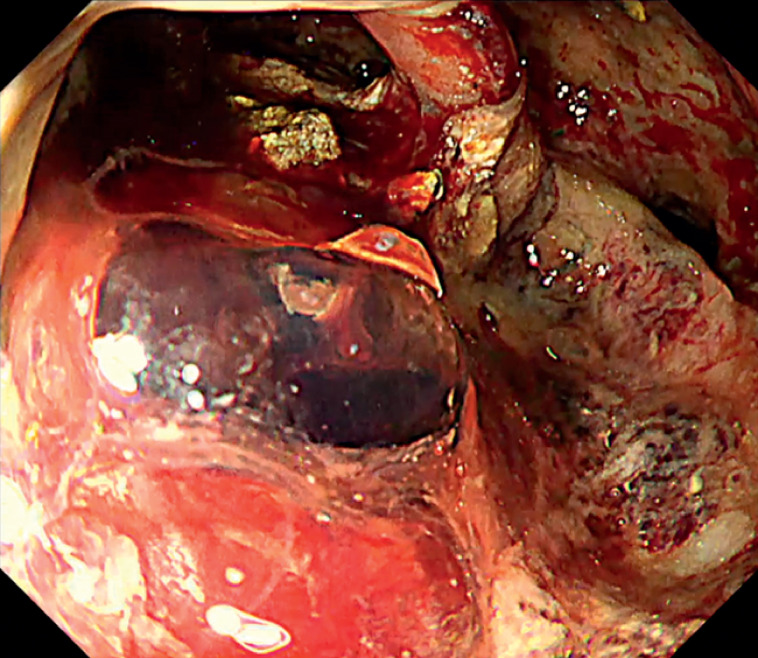 Fig. 5
Peer Reviews
No public reviews on file for this paper yet. If you reviewed it on a platform where reviews are public (OpenReview, ICLR, NeurIPS, ICML), you can paste yours below so the community can read it here.
Videos
No videos yet. Explain this paper in a talk, walkthrough, or lecture? Add one.
Taxonomy
TopicsPancreatitis Pathology and Treatment · Pancreatic and Hepatic Oncology Research · Neuroendocrine Tumor Research Advances
Endoscopic necrosectomy is an effective treatment for walled-off necrosis (WON); however, bleeding complications can be life threatening and require an immediate response 1 . Blood accumulation within the WON compartment makes identifying bleeding blood vessels difficult. Furthermore, the use of clips for hemostasis increases the risk of leaving long-term remains within the WON. Recently, a method for maintaining visibility during gastrointestinal bleeding involving the injection of a gel with an appropriate viscosity (Viscoclear; Otsuka Pharmaceutical Factory, Inc., Tokushima, Japan) was reported 2 3 . Additionally, the hemostatic effect of a self-assembling peptide gel (PuraStat; 3-D Matrix Europe SAS, Lyon, France) used during gastrointestinal endoscopic procedures has been reported 4 5 . Purastat is an aqueous peptide solution that becomes neutral upon contact with blood and body fluids, and its peptide molecules form fibers in solution to form a peptide hydrogel. This hydrogel quickly coats the bleeding point and stops the bleeding. In this case, we successfully employed a novel “dual-gel method” that uses Viscoclear and PuraStat to achieve hemostasis during endoscopic necrosectomy.
A 58-year-old man presented with significant exudative bleeding during endoscopic necrosectomy. The bleeding continued unabated, and the exact location of the bleeding point was unclear because blood had pooled within the WON ( Fig. 1 ). An auxiliary injection cap (BioShield irrigator; US Endoscopy, Mentor, Ohio, USA) was used to free the channel, and Viscoclear was injected via an injection cap ( Fig. 2 ). The injection of Viscoclear facilitated the separation of blood and gel, thereby enabling identification of the bleeding point ( Fig. 3 ). Subsequently, PuraStat injections resulted in effective hemostasis ( Fig. 4 ). The gel-forming properties of PuraStat repaired the injured vessel wall, ensured stability, and sustained its hemostatic effect ( Fig. 5 ).
The bleeding persisted, and the source of the bleeding remained uncertain due to the accumulation of blood in the walled-off necrosis.
An auxiliary injection cap (BioShield irrigator; US Endoscopy, Mentor, Ohio, USA) was used to free the channel, and a viscous clear gel (Viscoclear; Otsuka Pharmaceutical Factory, Inc., Tokushima, Japan) was injected via the irrigation line. Subsequently, a self-assembling peptide gel (PuraStat; 3-D Matrix Europe SAS, Lyon, France) was injected through the forceps channel.
The injection of Viscoclear (Otsuka Pharmaceutical Factory, Inc., Tokushima, Japan) facilitated the separation of blood and gel, thereby enabling identification of the bleeding point.
Effective hemostasis was achieved following injection of PuraStat (3-D Matrix Europe SAS, Lyon, France).
The gel-forming property of PuraStat (3-D Matrix Europe SAS, Lyon, France) ensured its stability in the walled-off necrosis, sustaining its hemostatic efficacy.
The “dual-gel method” is a useful hemostatic technique for managing exudative bleeding within confined spaces of WON ( Video 1 ).
Endoscopic hemostasis using the “dual-gel method” for bleeding during endoscopic necrosectomy.Video 1
Endoscopy_UCTN_Code_TTT_1AS_2AJ
The reference list from the paper itself. Each links out to its DOI / PubMed record.
- 1van Brunschot S Fockens P Bakker OJ Endoscopic transluminal necrosectomy in necrotising pancreatitis: a systematic review Surg Endosc 2014281425143810.1007/s 00464-013-3382-924399524 · doi ↗ · pubmed ↗
- 2Yano T Nemoto D Ono K Gel immersion endoscopy: a novel method to secure the visual field during endoscopy in bleeding patients (with videos)Gastrointest Endosc 20168380981126463338 10.1016/j.gie.2015.09.048 · doi ↗ · pubmed ↗
- 3Hama K Toyonaga H Iwano K Gel immersion cannulation during hemostasis of post-endoscopic sphincterotomy bleeding Endoscopy 202355 E 486E 48736858350 10.1055/a-2025-0172 PMC 9977570 · doi ↗ · pubmed ↗
- 4Toyonaga H Hayashi T Hama K Rapid hemostasis using a self-assembling peptide matrix for midprocedural bleeding in endoscopic sphincterotomy Endoscopy 202355 E 218E 21910.1055/a-1960-319836400053 PMC 9829968 · doi ↗ · pubmed ↗
- 5Koga T Ishida Y Tsuchiya N Novel hemostatic option using self-assembling peptide gel for endoscopic necrosectomy-related bleeding Endoscopy 202355 E 598E 59910.1055/a-2051-809936996885 PMC 10063351 · doi ↗ · pubmed ↗