New drug-delivery balloon catheter for easy and fast injection of triamcinolone after esophageal endoscopic submucosal dissection
Takashi Hirose, Hiroyuki Shibata, Kazuhiro Furukawa, Takeshi Yamamura, Takuya Ishikawa, Masanao Nakamura, Hiroki Kawashima

Abstract
Genes, proteins, chemicals, diseases, species, mutations and cell lines named across the full text — each resolved to its canonical identifier and authoritative record.
Click any figure to enlarge with its caption.
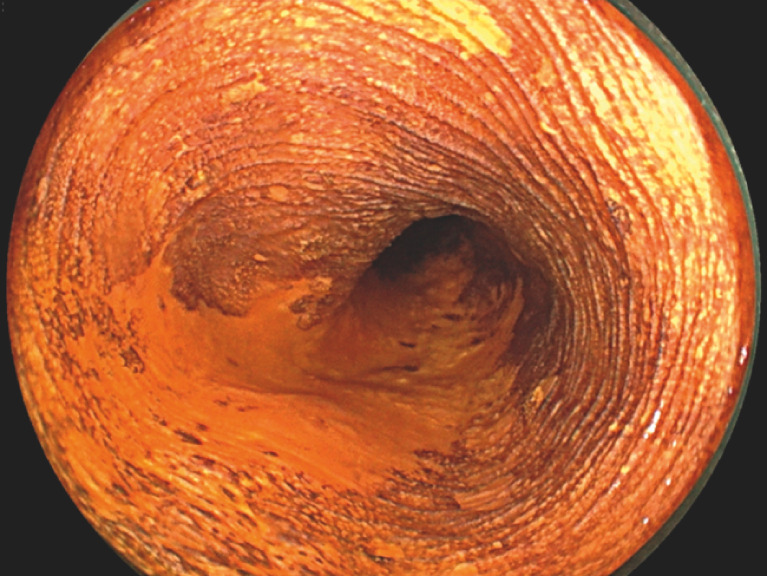 Fig. 1
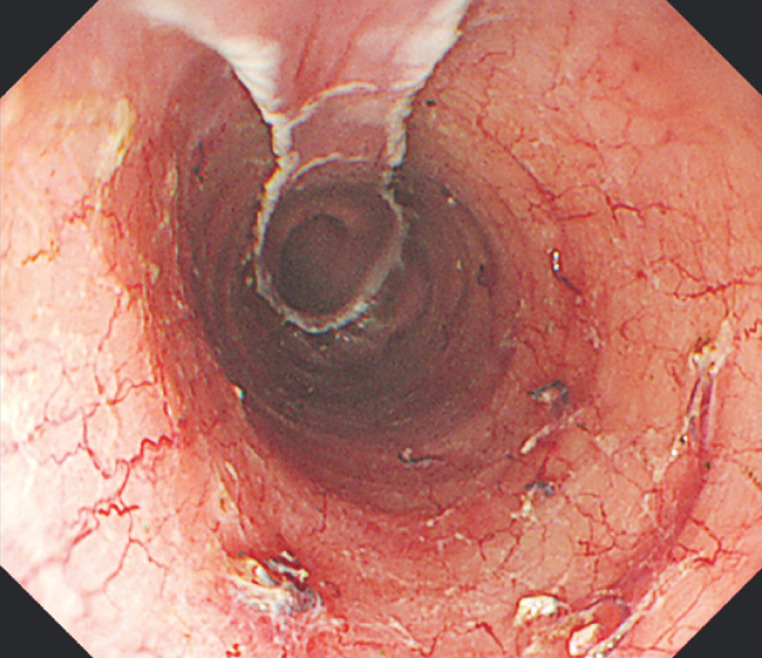 Fig. 2
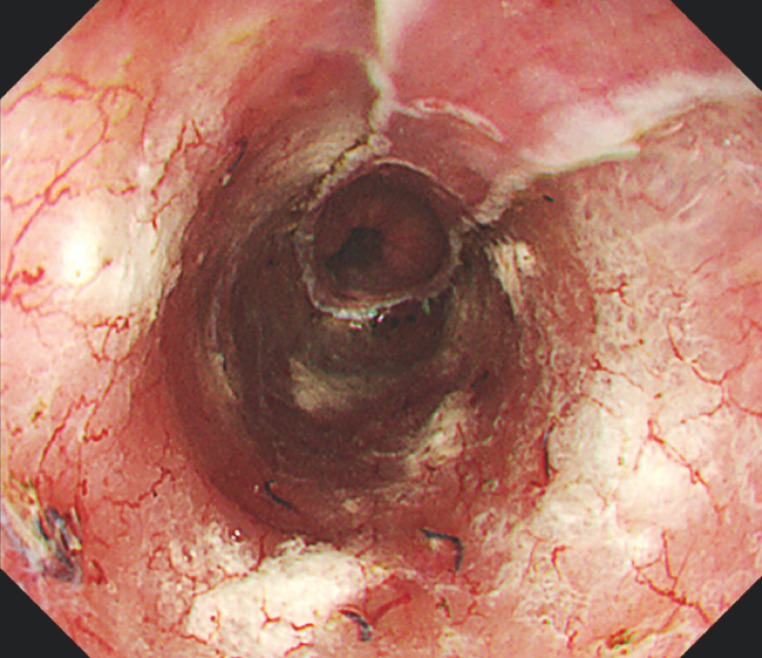 Fig. 3
Peer Reviews
No public reviews on file for this paper yet. If you reviewed it on a platform where reviews are public (OpenReview, ICLR, NeurIPS, ICML), you can paste yours below so the community can read it here.
Videos
No videos yet. Explain this paper in a talk, walkthrough, or lecture? Add one.
Taxonomy
TopicsEsophageal Cancer Research and Treatment · Gastric Cancer Management and Outcomes · Esophageal and GI Pathology
Esophageal endoscopic submucosal dissection (ESD) is a very common and useful endoscopic treatment for superficial esophageal cancer 1 . The most common delayed adverse event of esophageal ESD for extensive lesions is stenosis 2 . Local injection of triamcinolone is the most common form of stenosis prevention 3 , and the method using a needle is a rather complicated and time-consuming procedure. A new drug-delivery balloon catheter is a device with multiple micro holes on its surface that eject fluid from the balloon when the balloon pressure rises.
A man in his 60s underwent ESD for semiperipheral superficial esophageal cancer in the upper thoracic esophagus ( Fig. 1 ). The resected pathology was squamous cell carcinoma, and curative resection was obtained. After resection, the mucosal defect extended to 7/8 of the circumference ( Fig. 2 ), and triamcinolone 40 mg was injected into the post-treatment ulcer using the new drug-delivery balloon catheter ( Video 1 ).
Semiperipheral superficial esophageal cancer in the upper thoracic esophagus.
After endoscopic resection, the mucosal defect extended to 7/8 of the circumference.
After resection, the mucosal defect extended to 7/8 of the circumference, and triamcinolone 40 mg was injected into the post-treatment ulcer using the new drug-delivery balloon catheter.Video 1
The procedure was completed in only a few minutes, and was very safe and simple. Post-procedure observation showed that triamcinolone was injected evenly and firmly into the ulcer ( Fig. 3 ).
Post-procedure observation showed that triamcinolone was injected evenly and firmly into the ulcer.
A new drug-delivery balloon catheter allows for safe, simple, and quick triamcinolone injection after esophageal ESD.
Endoscopy_UCTN_Code_TTT_1AO_2AG_3AD
The reference list from the paper itself. Each links out to its DOI / PubMed record.
- 1Inoue H Minami H Kaga M Endoscopic mucosal resection and endoscopic submucosal dissection for esophageal dysplasia and carcinoma Gastrointest Endosc Clin N Am 2010202534, v-vi 10.1016/j.giec.2009.08.00519951792 · doi ↗ · pubmed ↗
- 2Ishihara R Prevention of esophageal stricture after endoscopic resection Dig Endosc 20193113414510.1111/den.1329630427076 · doi ↗ · pubmed ↗
- 3Miyake M Ishihara R Matsuura N Predictors of stricture after non-circumferential endoscopic submucosal dissection of the esophagus and single-dose triamcinolone injection immediately after the procedure Gastrointest Endosc 20239817017710.1016/j.gie.2023.03.01736990127 · doi ↗ · pubmed ↗