System Design for Sensing in Manufacturing to Apply AI through Hierarchical Abstraction Levels
Georgios Sopidis, Michael Haslgrübler, Behrooz Azadi, Ouijdane Guiza, Martin Schobesberger, Bernhard Anzengruber-Tanase, Alois Ferscha

TL;DR
This paper introduces a hierarchical taxonomy for human activity recognition in industrial settings to improve AI applications in manufacturing.
Contribution
A novel five-level hierarchical taxonomy for human activity abstraction is proposed to better capture contextual complexities in industrial environments.
Findings
The proposed taxonomy includes atomic, micro, meso, macro, and mega levels of activity abstraction.
Real-world examples demonstrate the taxonomy's effectiveness in industrial assembly procedures.
The approach enables structured data analysis and highlights correlations across abstraction levels.
Abstract
Activity recognition combined with artificial intelligence is a vital area of research, ranging across diverse domains, from sports and healthcare to smart homes. In the industrial domain, and the manual assembly lines, the emphasis shifts to human–machine interaction and thus to human activity recognition (HAR) within complex operational environments. Developing models and methods that can reliably and efficiently identify human activities, traditionally just categorized as either simple or complex activities, remains a key challenge in the field. Limitations of the existing methods and approaches include their inability to consider the contextual complexities associated with the performed activities. Our approach to address this challenge is to create different levels of activity abstractions, which allow for a more nuanced comprehension of activities and define their underlying…
Genes, proteins, chemicals, diseases, species, mutations and cell lines named across the full text — each resolved to its canonical identifier and authoritative record.
Click any figure to enlarge with its caption.
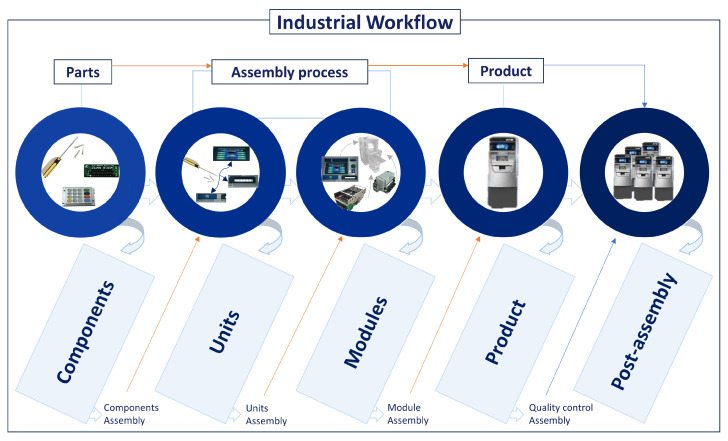 Figure 1
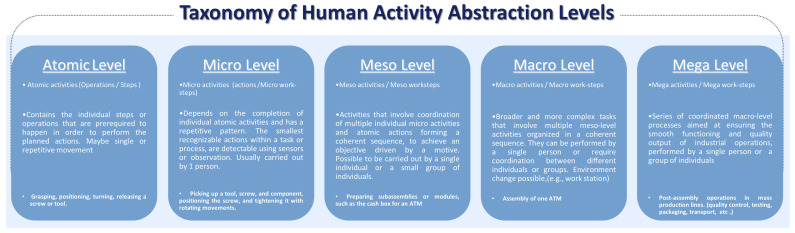 Figure 2
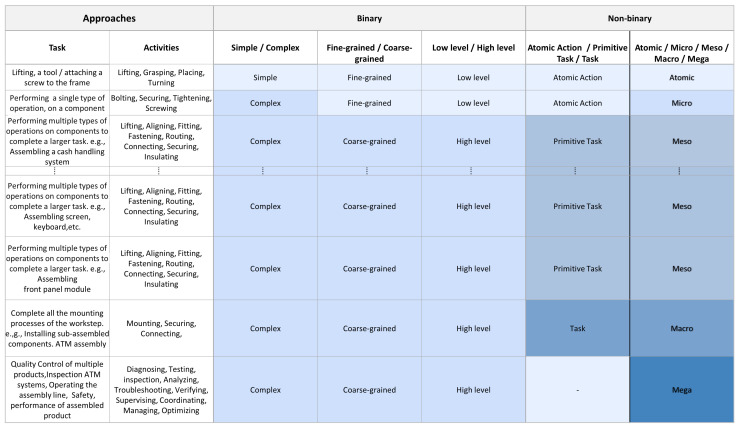 Figure 3
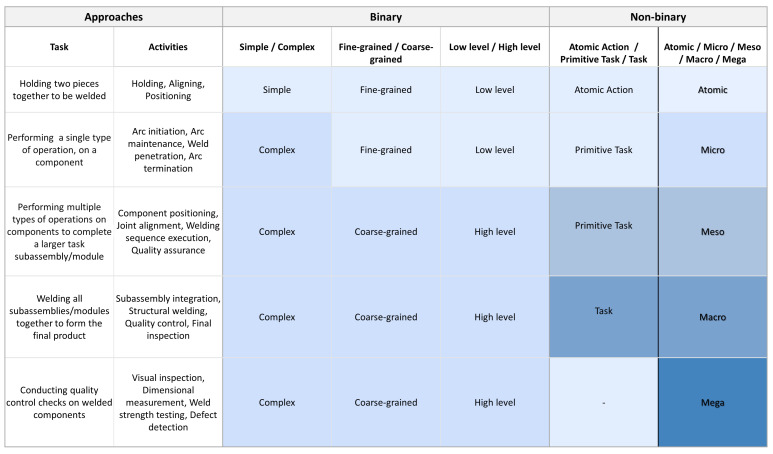 Figure 4
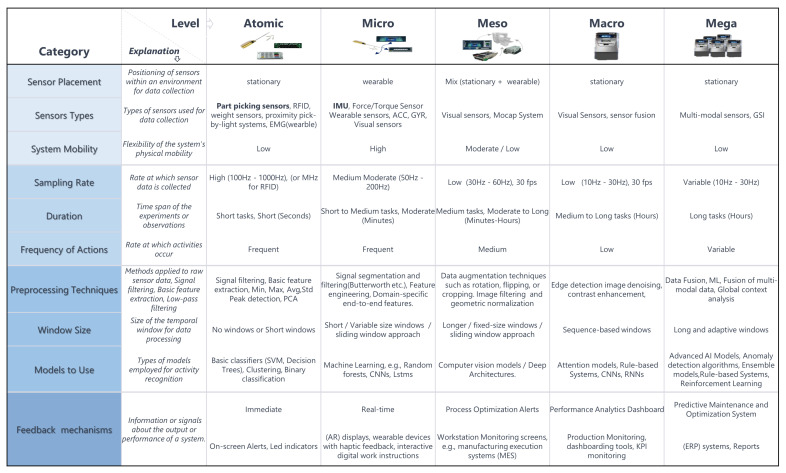 Figure 5
Peer Reviews
No public reviews on file for this paper yet. If you reviewed it on a platform where reviews are public (OpenReview, ICLR, NeurIPS, ICML), you can paste yours below so the community can read it here.
Videos
No videos yet. Explain this paper in a talk, walkthrough, or lecture? Add one.
Taxonomy
TopicsPhilosophy, Science, and History · Classical Philosophy and Thought