Bilayer Intelligent Omni-Surface-Assisted Full-Duplex Systems: Simultaneous Self-Interference Cancellation and Sum Rate Maximization
Yunxia Zhou, Qiucen Wu, Yu Zhu

TL;DR
This paper introduces a new bilayer intelligent omni-surface to improve full-duplex systems by better canceling interference and maximizing data rates.
Contribution
The novel bilayer intelligent omni-surface (BIOS) structure enables decoupled beamforming for self-interference cancellation and sum rate maximization.
Findings
BIOS provides independent beams for more flexible self-interference cancellation and sum rate maximization.
A weighted MSE minimization with SIC algorithm is proposed to optimize BIOS-assisted FD systems.
Simulation results show BIOS outperforms conventional RIS designs and validate the derived lower bound for BIOS size.
Abstract
Recently, reconfigurable intelligent surfaces (RISs) have attracted increasing attentions in the design of full-duplex (FD) systems due to their novel capability of propagation environment reconfiguration. However, in conventional RIS-assisted FD systems, the beamforming for self-interference cancellation (SIC) and sum rate maximization (SRM) are highly coupled during RIS optimization, which significantly degrades the system performance. To tackle this issue, we exploit a novel bilayer intelligent omni-surface (BIOS) structure in FD systems. Compared with the conventional RIS designs, the BIOS provides independent beams on both sides, thus enabling more flexible achievement of SRM and SIC. For the BIOS-assisted FD system, we first formulate an optimization problem to achieve SRM and efficient SIC simultaneously. Then, we exploit the relationship between the SRM and mean square error…
Genes, proteins, chemicals, diseases, species, mutations and cell lines named across the full text — each resolved to its canonical identifier and authoritative record.
Click any figure to enlarge with its caption.
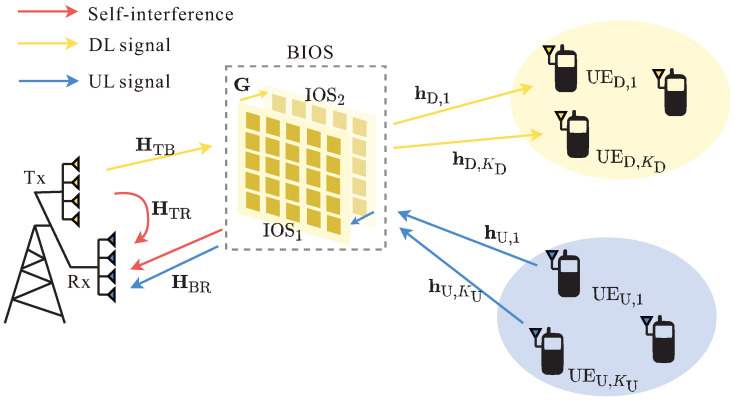 Figure 1
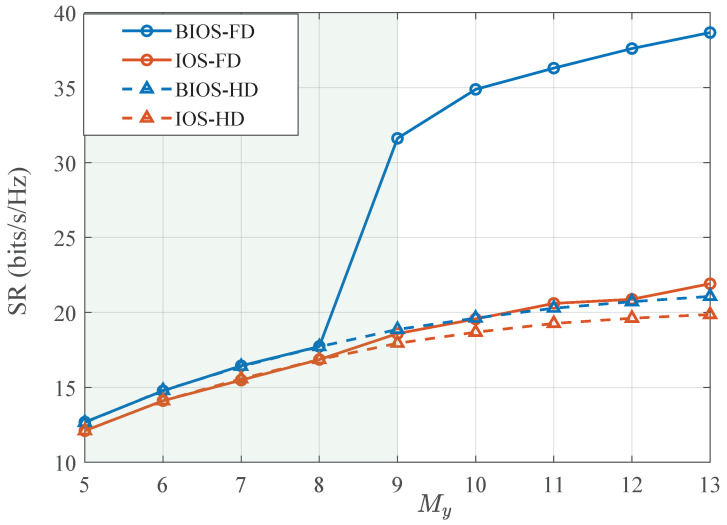 Figure 2
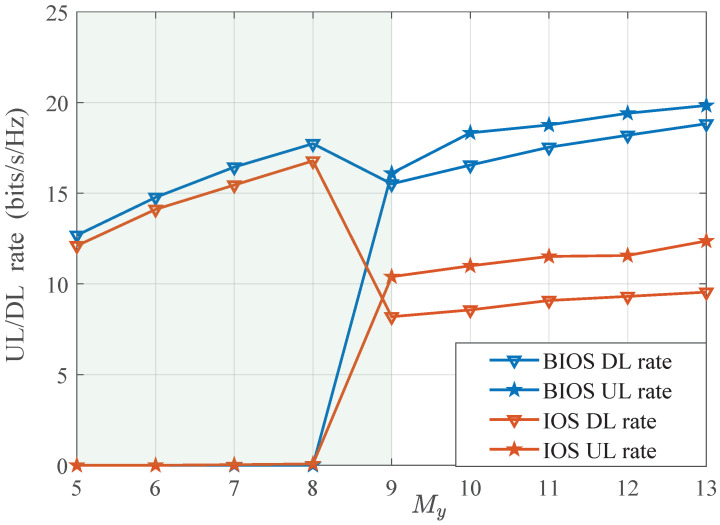 Figure 3
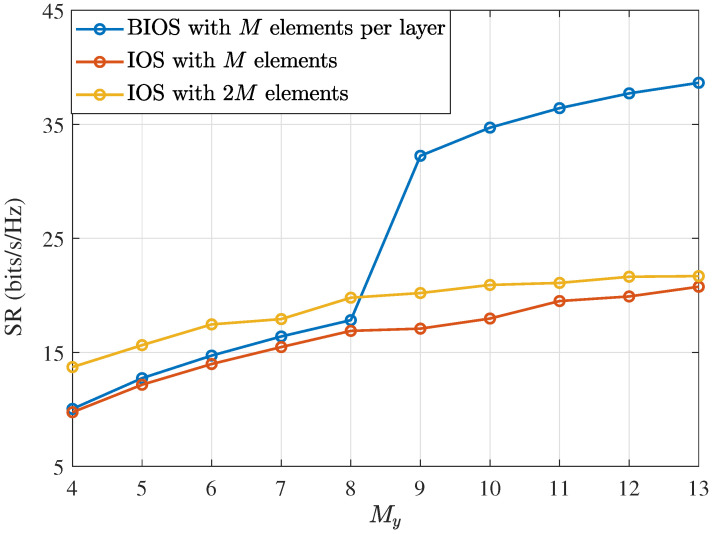 Figure 4
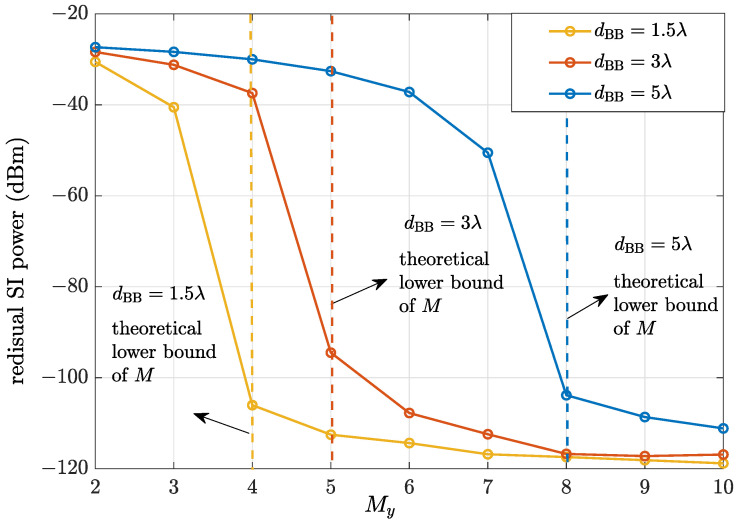 Figure 5
Peer Reviews
No public reviews on file for this paper yet. If you reviewed it on a platform where reviews are public (OpenReview, ICLR, NeurIPS, ICML), you can paste yours below so the community can read it here.
Videos
No videos yet. Explain this paper in a talk, walkthrough, or lecture? Add one.
Taxonomy
TopicsFull-Duplex Wireless Communications · Advanced Wireless Communication Technologies · Antenna Design and Analysis