Flexibility in conceptual combinations: A neural network model of gradable adjective modification
Georgia-Ann Carter, Frank Keller, Paul Hoffman

TL;DR
This paper explores how neural networks model the flexible meanings of gradable adjectives when combined with nouns, using brightness as a test case.
Contribution
The study demonstrates that neural networks can learn and generalize non-additive feature modulation in adjective–noun combinations.
Findings
Neural networks learned to predict brightness ratings for adjective–noun pairs by first using the adjective and later incorporating the noun.
Model outputs showed non-additive feature modulation similar to human data.
The model generalized to untrained combinations, suggesting flexible learning of gradable adjectives.
Abstract
Our ability to combine simple constituents into more complex conceptual combinations is a fundamental aspect of cognition. Gradable adjectives (e.g., ‘tall’ and ‘light’) are a critical example of this process, as their meanings vary depending on the noun with which they are combined. For example, a dark diamond is less dark than dark charcoal. Here, we investigate how a neural network encodes the flexible nature of gradable adjectives in adjective–noun pairs, using the perceptual feature of brightness as a test case. We trained a neural network to predict human brightness ratings for unmodified nouns and adjective–noun pairs and assessed its ability to generalize to untrained combinations (e.g., ‘light paint’ vs. ‘dark paint’). We also explored how this information is encoded. We found that flexible learning of gradable adjectives was possible, with neural networks first making…
Genes, proteins, chemicals, diseases, species, mutations and cell lines named across the full text — each resolved to its canonical identifier and authoritative record.
Click any figure to enlarge with its caption.
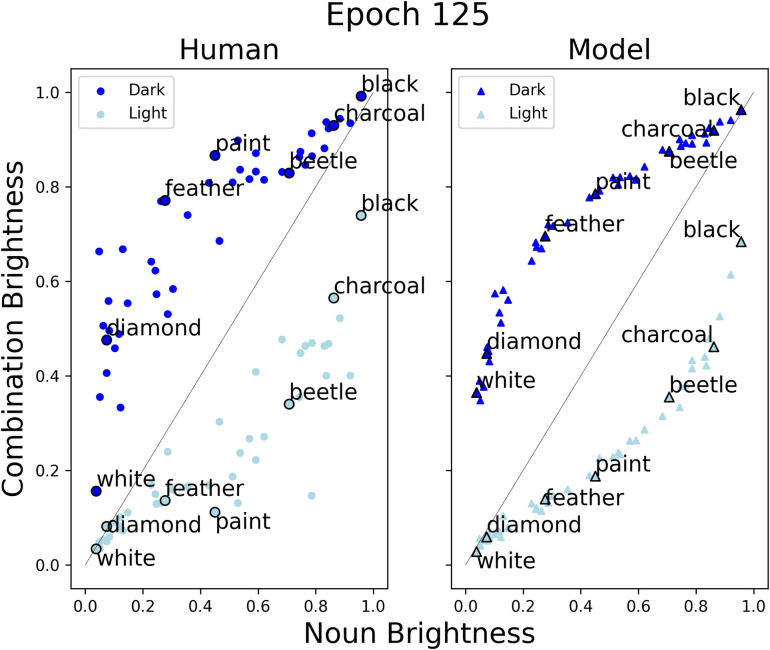 Figure 1
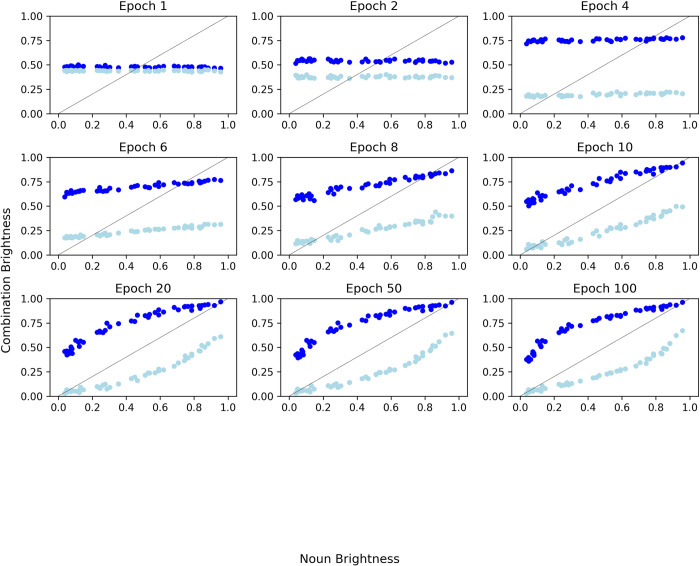 Figure 2
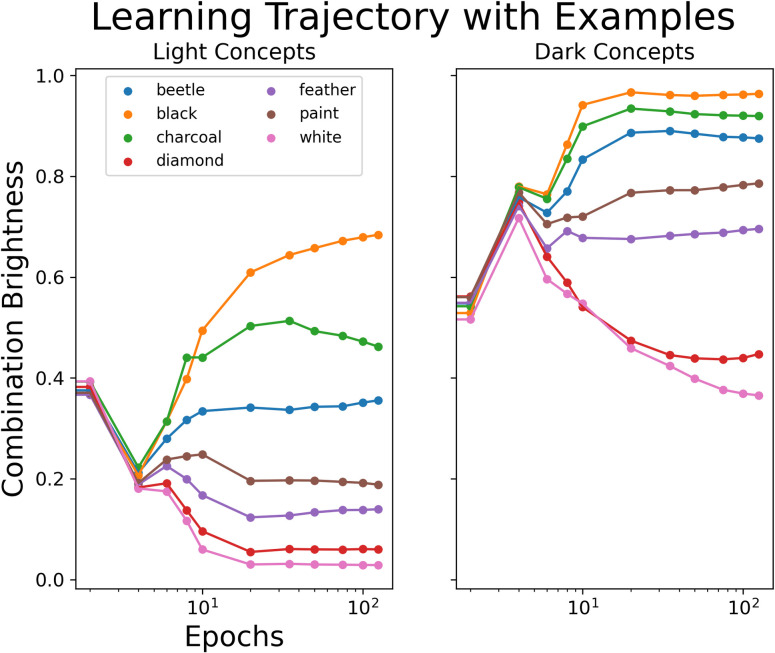 Figure 3
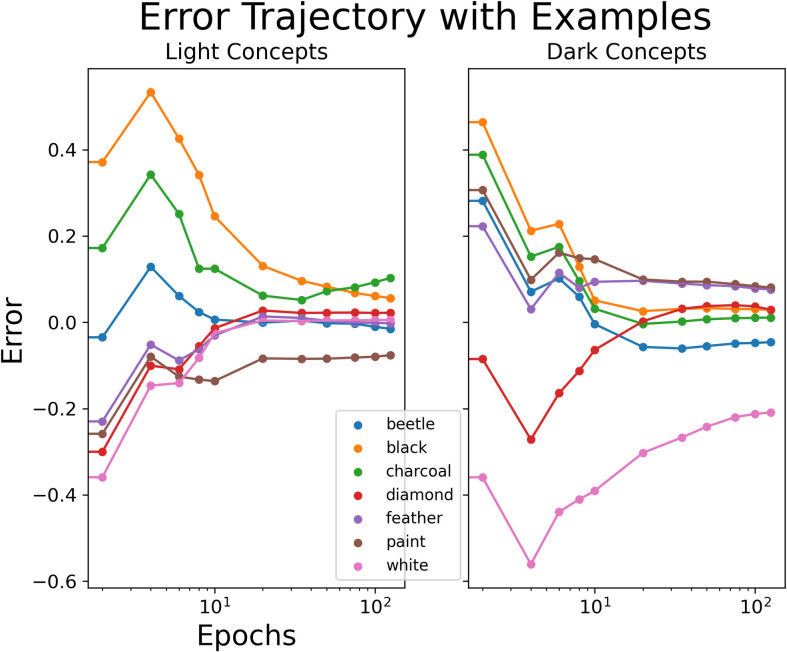 Figure 4
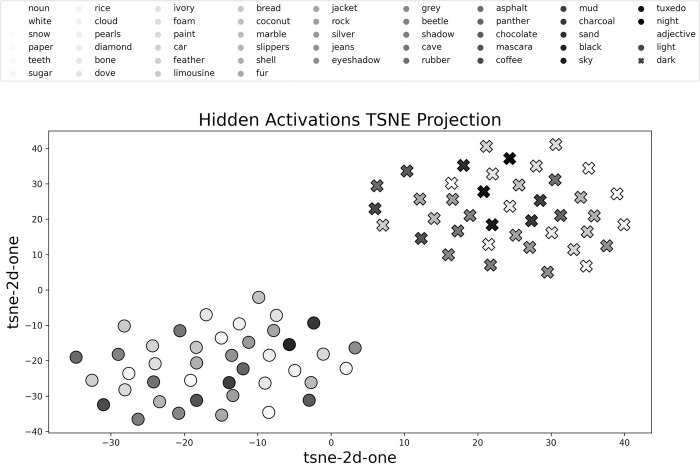 Figure 5
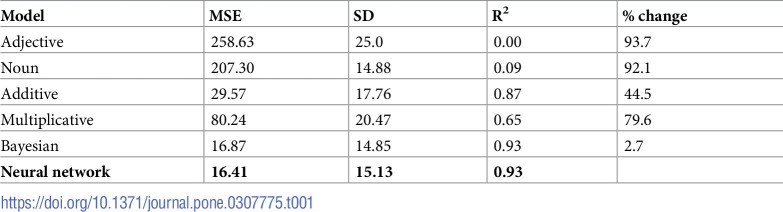 Figure 6
Peer Reviews
No public reviews on file for this paper yet. If you reviewed it on a platform where reviews are public (OpenReview, ICLR, NeurIPS, ICML), you can paste yours below so the community can read it here.
Videos
No videos yet. Explain this paper in a talk, walkthrough, or lecture? Add one.
Taxonomy
TopicsNatural Language Processing Techniques · Language, Metaphor, and Cognition · Speech and dialogue systems