Efficacy and safety of upadacitinib in the treatment of moderate-to-severe atopic dermatitis: A systematic review
Dan-Jie Zhao, Xia Li, Hai-Xia Lin, Hong Zheng, Di Zhou, Peng Tang, Feroze Kaliyadan, Feroze Kaliyadan, Feroze Kaliyadan

TL;DR
This study reviews the effectiveness and safety of upadacitinib for treating moderate-to-severe atopic dermatitis, finding it to be both effective and safe.
Contribution
A systematic review and meta-analysis of upadacitinib's efficacy and safety in treating moderate-to-severe atopic dermatitis.
Findings
Upadacitinib significantly improved EASI 75%, NRS ≥ 4, and IGA 0/1 scores compared to placebo.
The 30 mg dose of upadacitinib was more effective than the 15 mg dose.
Upadacitinib increased overall adverse events but did not significantly increase serious adverse events or withdrawal rates.
Abstract
To evaluate the efficacy and safety of upadacitinib in the treatment of moderate-to-severe atopic dermatitis (AD), and provide reference for rational clinical medication. PubMed, Medline, Embase, Web of Science, Clinical Trials Website, and Cochrane Library databases were searched from the time of establishment until January 6, 2024, to compile a list of all randomized controlled trials (RCTs) including upadacitinib in the treatment of moderate-to-severe AD. The quality of the included studies was evaluated using the Cochrane Systematic Review. Review Manager 5.3 software was utilized for statistical analysis of outcome measures. A total of five studies were included in the meta-analysis. The results revealed that the 15 mg and 30 mg upadacitinib significantly improved Eczema Area and Severity Index (EASI) 75% {[Odds Ratio (OR) = 8.58, 95% confidence interval (CI) (5.84–12.60), P <…
Genes, proteins, chemicals, diseases, species, mutations and cell lines named across the full text — each resolved to its canonical identifier and authoritative record.
Click any figure to enlarge with its caption.
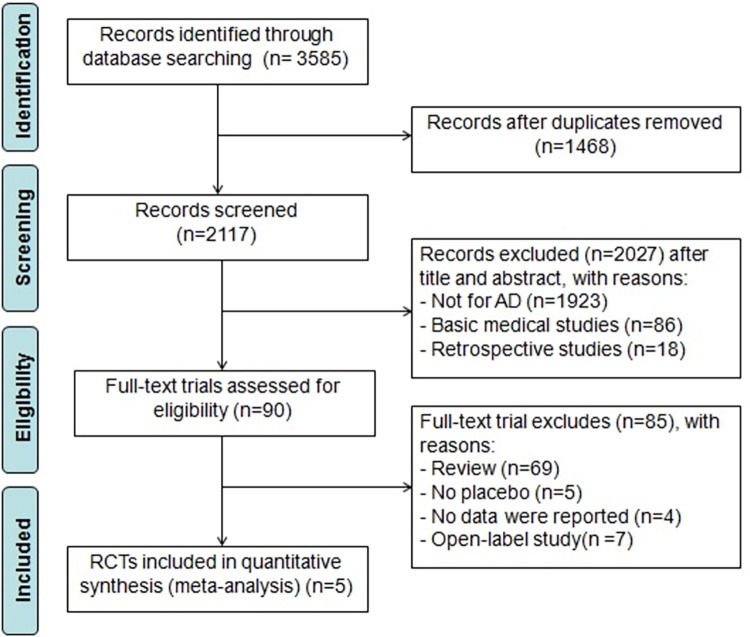 Figure 1
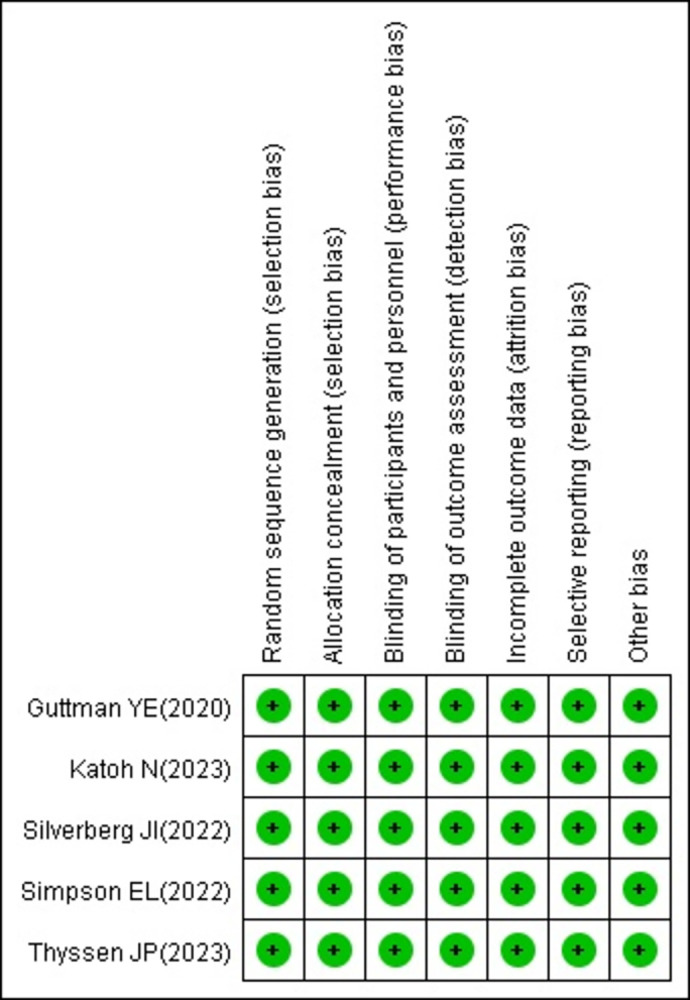 Figure 2
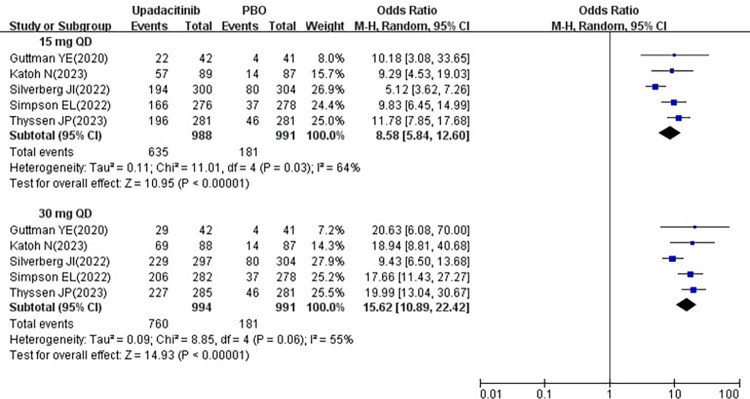 Figure 3
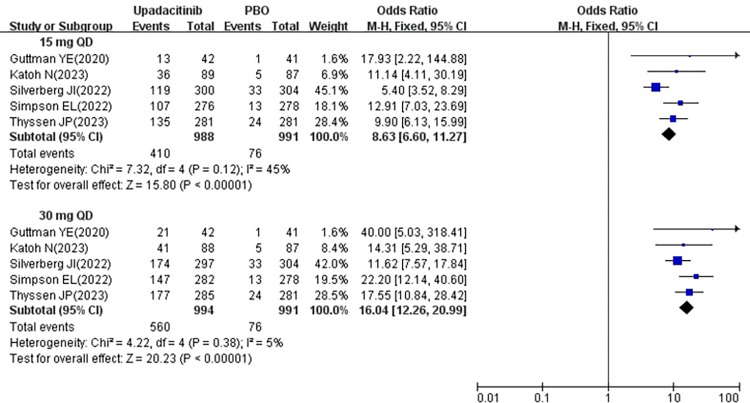 Figure 4
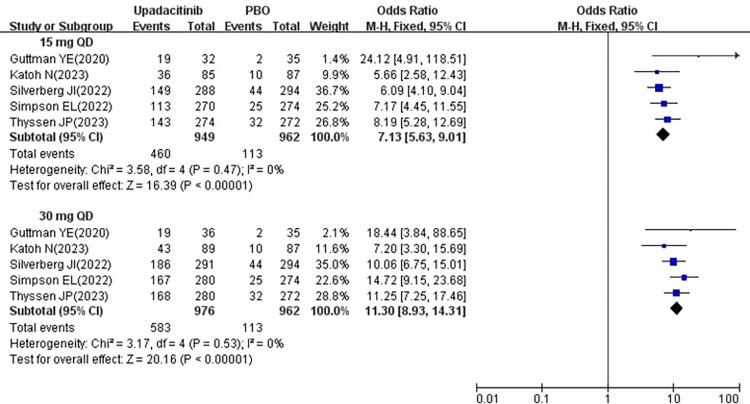 Figure 5
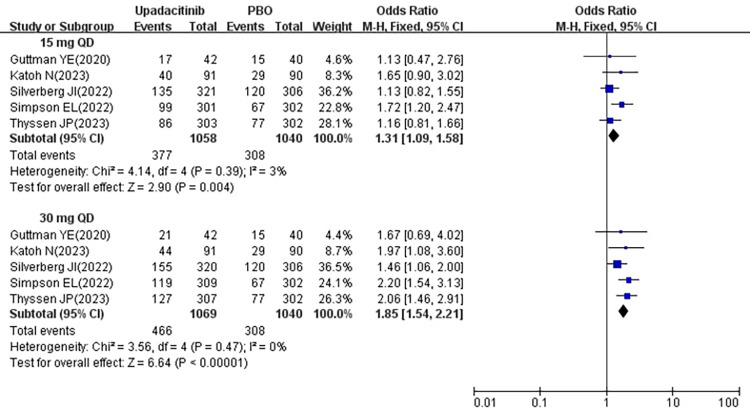 Figure 6
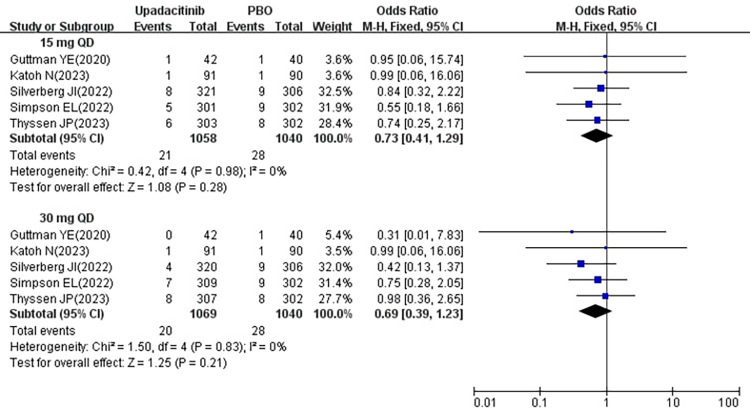 Figure 7
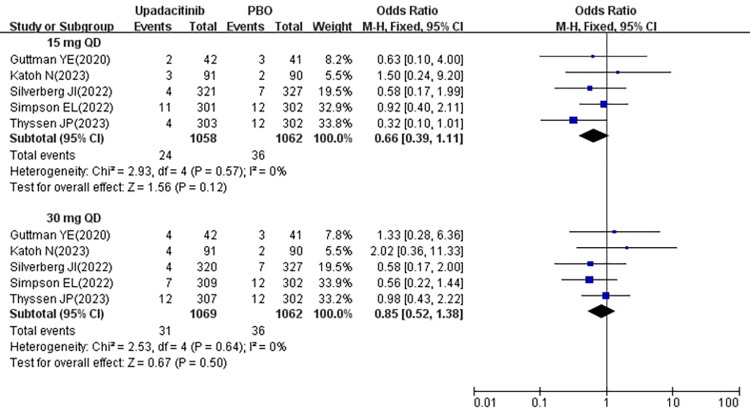 Figure 8
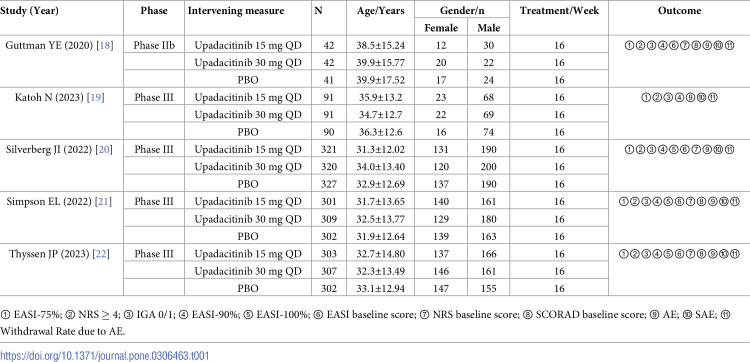 Figure 9
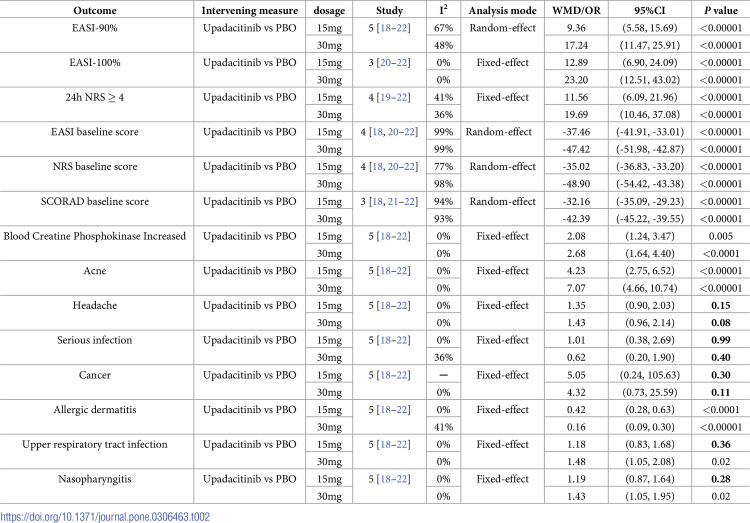 Figure 10
Peer Reviews
No public reviews on file for this paper yet. If you reviewed it on a platform where reviews are public (OpenReview, ICLR, NeurIPS, ICML), you can paste yours below so the community can read it here.
Videos
No videos yet. Explain this paper in a talk, walkthrough, or lecture? Add one.
Taxonomy
TopicsDermatology and Skin Diseases · Allergic Rhinitis and Sensitization · Asthma and respiratory diseases