Novel Genetic Variants Explaining Severe Adverse Drug Events after Clinical Implementation of DPYD Genotype-Guided Therapy with Fluoropyrimidines: An Observational Study
Xando Díaz-Villamarín, María Martínez-Pérez, María Teresa Nieto-Sánchez, Gabriela Ruiz-Tueros, Emilio Fernández-Varón, Alicia Torres-García, Beatriz González Astorga, Isabel Blancas, Antonio J. Iáñez, José Cabeza-Barrera, Rocío Morón

TL;DR
This study identifies a new genetic variant linked to severe side effects from a common cancer drug, even after implementing existing genetic testing guidelines.
Contribution
The study discovers a novel DPYD variant (rs1801158) associated with severe adverse drug events in fluoropyrimidine-treated patients.
Findings
The DPYD*4 allele (rs1801158) is strongly associated with severe ADEs in FP-treated patients.
Physicians fully accepted DPYD genotype-guided dosing recommendations without affecting treatment efficacy.
The DPYD*4 allele shows significant odds ratios in both univariate and multivariate analyses.
Abstract
Fluoropyrimidines (FPs) are commonly prescribed in many cancer streams. The EMA and FDA-approved drug labels for FPs recommend genotyping the DPYD*2A (rs3918290), *13 (rs55886062), *HapB3 (rs56038477), alleles, and DPYD rs67376798 before treatment starts. We implemented the DPYD genotyping in our daily clinical routine, but we still found patients showing severe adverse drug events (ADEs) to FPs. We studied among these patients the DPYD rs1801265, rs17376848, rs1801159, rs1801160, rs1801158, and rs2297595 as explanatory candidates of the interindividual differences for FP-related toxicities, examining the association with the response to FPs . We also studied the impact of DPYD testing for FP dose tailoring in our clinical practice and characterized the DPYD gene in our population. We found a total acceptance among physicians of therapeutic recommendations translated from the DPYD test,…
Genes, proteins, chemicals, diseases, species, mutations and cell lines named across the full text — each resolved to its canonical identifier and authoritative record.
Click any figure to enlarge with its caption.
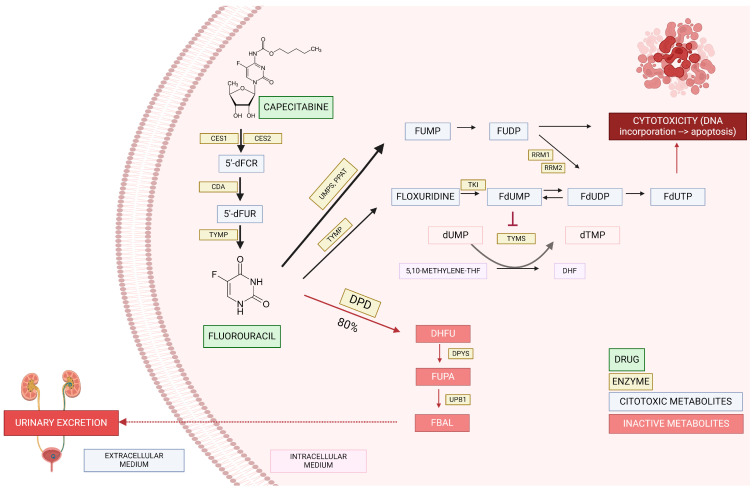 Figure 1
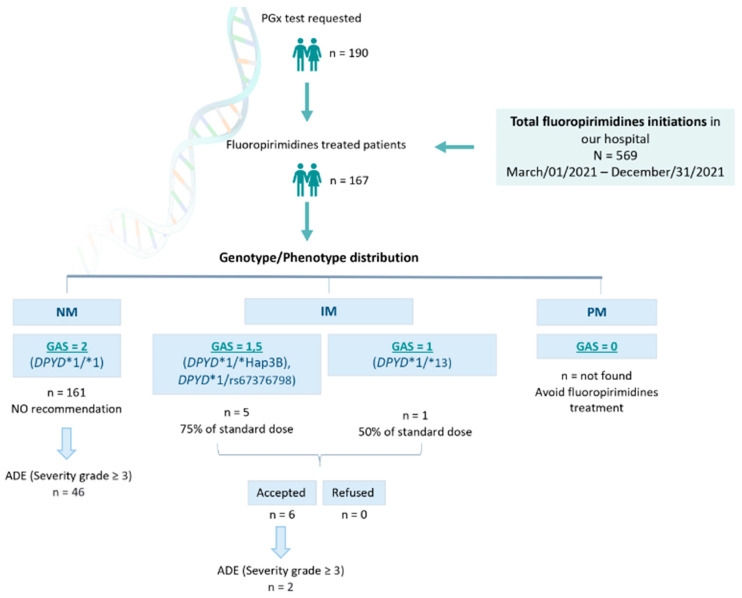 Figure 2
Peer Reviews
No public reviews on file for this paper yet. If you reviewed it on a platform where reviews are public (OpenReview, ICLR, NeurIPS, ICML), you can paste yours below so the community can read it here.
Videos
No videos yet. Explain this paper in a talk, walkthrough, or lecture? Add one.
Taxonomy
TopicsColorectal Cancer Treatments and Studies · Pharmacogenetics and Drug Metabolism · Cancer Treatment and Pharmacology