64Cu2+ Complexes of Tripodal Amine Ligands’ In Vivo Tumor and Liver Uptakes and Intracellular Cu Distribution in the Extrahepatic Bile Duct Carcinoma Cell Line TFK-1: A Basic Comparative Study
Mitsuhiro Shinada, Masashi Takahashi, Chika Igarashi, Hiroki Matsumoto, Fukiko Hihara, Tomoko Tachibana, Masakazu Oikawa, Hisashi Suzuki, Ming-Rong Zhang, Tatsuya Higashi, Hiroaki Kurihara, Yukie Yoshii, Yoshihiro Doi

TL;DR
This study compares how different copper complexes affect tumor and liver uptake in a mouse model of bile duct cancer, aiming to improve cancer treatment.
Contribution
The study introduces a comparative analysis of three tripodal amine ligands for 64Cu2+ complexes to enhance tumor targeting and reduce liver accumulation.
Findings
64Cu2+-Tren and 64Cu2+-Dien showed higher tumor uptake than 64Cu2+-TPMA and free 64Cu2+ ions.
Liver uptake was inversely correlated with tumor uptake among the tested 64Cu2+ complexes.
Micro-PIXE analysis confirmed that 64Cu2+-Tren delivered the highest nuclear uptake in vitro.
Abstract
Copper (Cu) is a critical element for cancer cell proliferation and considerably accumulates in the nucleus. 64Cu2+ is an anticancer radiopharmaceutical that targets the copper requirement of cancer cells. However, intravenously injected 64Cu2+ ions primarily accumulate in the liver. Ligand complexation of 64Cu2+ may be a promising method for increasing tumor delivery by reducing liver uptake. In this study, we used three tripodal amine ligands [tris(2-aminoethyl)amine (Tren), diethylenetriamine (Dien), and tris(2-pyridylmethyl)amine (TPMA)] to enclose 64Cu2+ ions and compared their in vivo tumor and liver uptakes using a tumor-bearing xenograft mouse model of the extrahepatic bile duct carcinoma cell line TFK-1. We examined intracellular Cu distribution using microparticle-induced X-ray emission (micro-PIXE) analysis of these compounds. 64Cu2+-Tren and 64Cu2+-Dien showed higher tumor…
Genes, proteins, chemicals, diseases, species, mutations and cell lines named across the full text — each resolved to its canonical identifier and authoritative record.
Click any figure to enlarge with its caption.
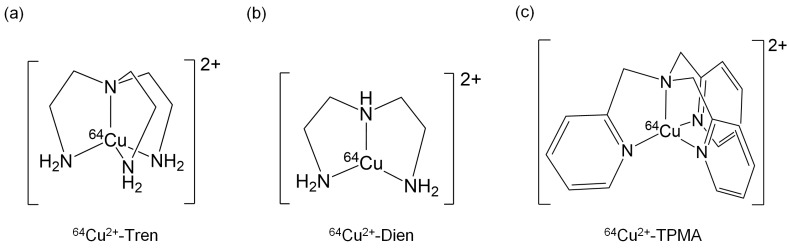 Figure 1
 Figure 2
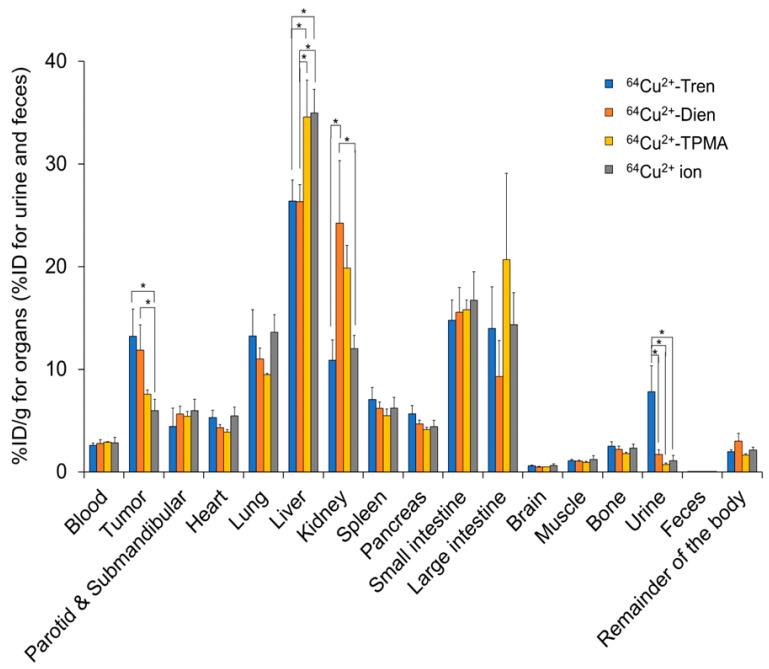 Figure 3
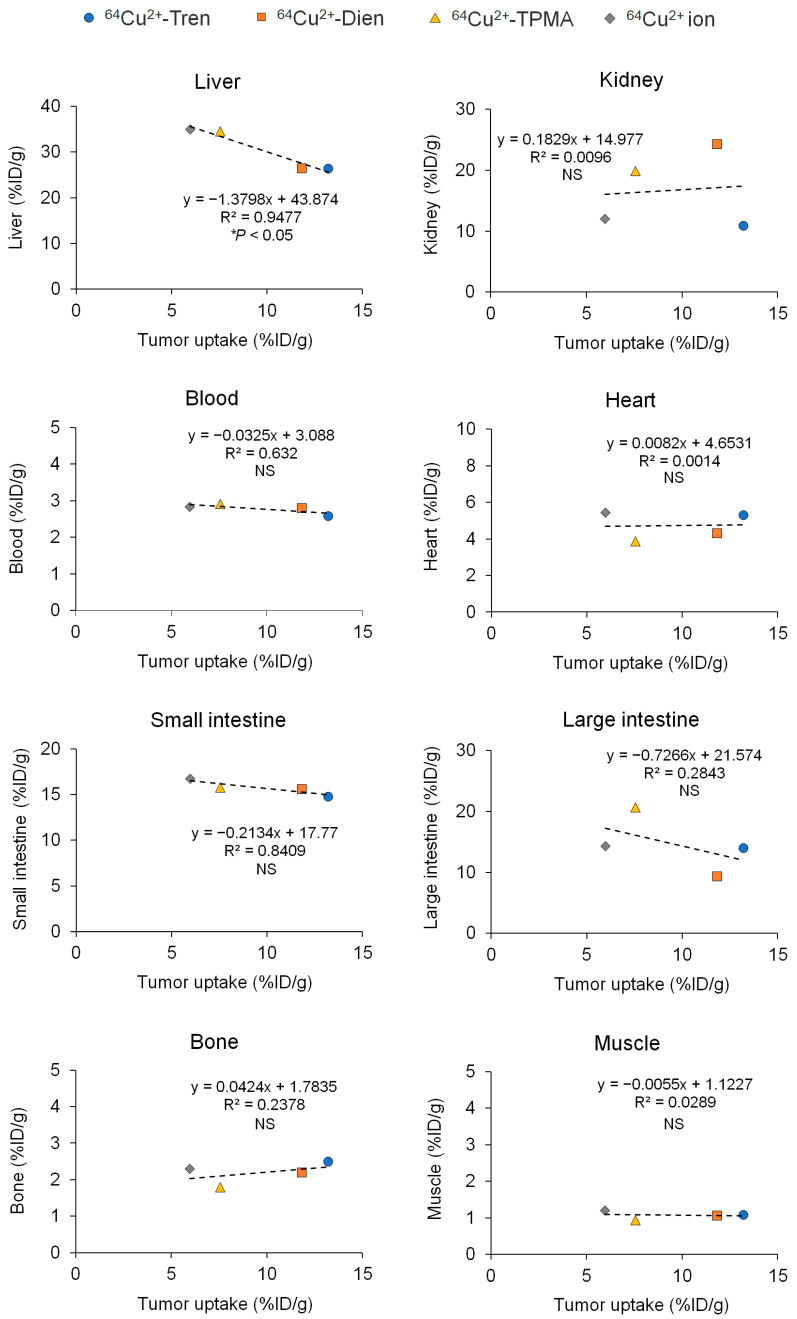 Figure 4
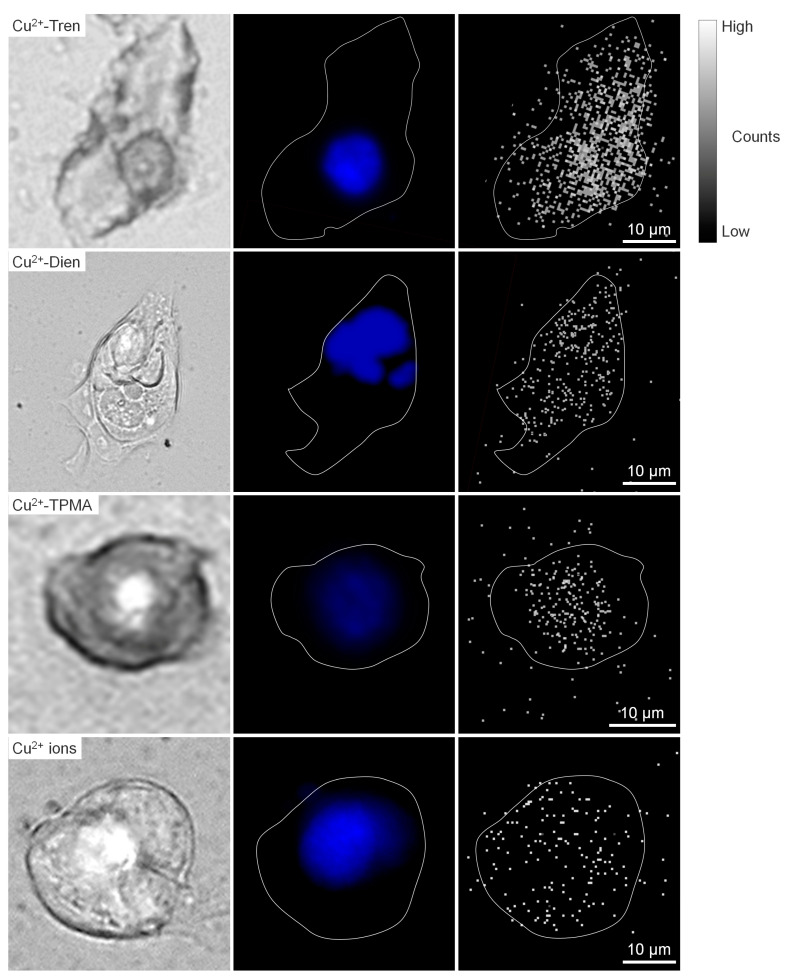 Figure 5
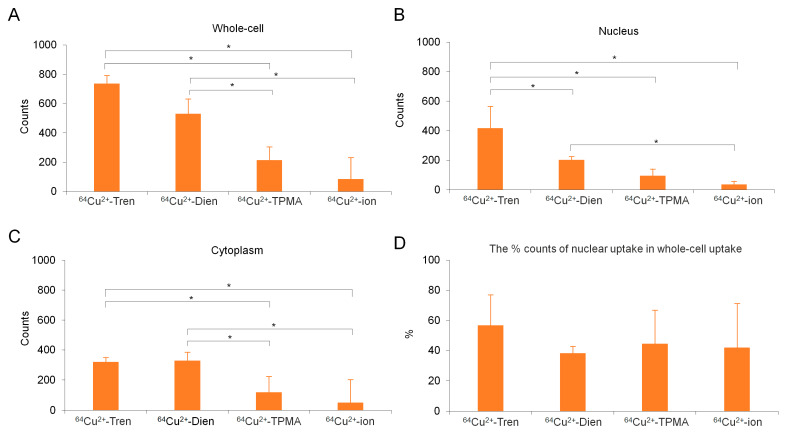 Figure 6
Peer Reviews
No public reviews on file for this paper yet. If you reviewed it on a platform where reviews are public (OpenReview, ICLR, NeurIPS, ICML), you can paste yours below so the community can read it here.
Videos
No videos yet. Explain this paper in a talk, walkthrough, or lecture? Add one.
Taxonomy
TopicsDrug Transport and Resistance Mechanisms · Metal complexes synthesis and properties · Trace Elements in Health