Photocatalytic CO2 Reduction Using Zinc Indium Sulfide Aggregated Nanostructures Fabricated under Four Anionic Conditions
I-Hua Tsai, Eric Wei-Guang Diau

TL;DR
This study explores how different anionic precursors affect the photocatalytic performance of zinc indium sulfide in reducing CO2, finding that one combination significantly boosts CO production.
Contribution
The study introduces a novel method to optimize ZIS photocatalysts by systematically varying anionic precursors to enhance CO2 reduction efficiency.
Findings
ZIS synthesized with Zn(CH3CO2)2/In2(SO4)3 achieved the highest CO production yield of 134 μmol g−1h−1.
More zinc and indium vacancy defects in ZIS-AceSO4 improve photocatalytic performance, confirmed by EDS analysis.
Energy levels of VBM and CBM were determined, offering insights into band alignment for photocatalytic processes.
Abstract
Zinc indihuhium sulfide (ZIS), among various semiconductor materials, shows considerable potential due to its simplicity, low cost, and environmental compatibility. However, the influence of precursor anions on ZIS properties remains unclear. In this study, we synthesized ZIS via a hydrothermal method using four different anionic precursors (ZnCl2/InCl3, Zn(NO3)2/In(NO3)3, Zn(CH3CO2)2/In(CH3CO2)3, and Zn(CH3CO2)2/In2(SO4)3), resulting in distinct morphologies and crystal structures. Our findings reveal that ZIS produced from Zn(CH3CO2)2/In2(SO4)3 (ZIS-AceSO4) exhibited the highest photocatalytic CO2 reduction efficiency, achieving a CO production yield of 134 μmol g−1h−1. This enhanced performance is attributed to the formation of more zinc and indium vacancy defects, as confirmed by EDS analysis. Additionally, we determined the energy levels of the valence band maximum (VBM) and the…
Genes, proteins, chemicals, diseases, species, mutations and cell lines named across the full text — each resolved to its canonical identifier and authoritative record.
Click any figure to enlarge with its caption.
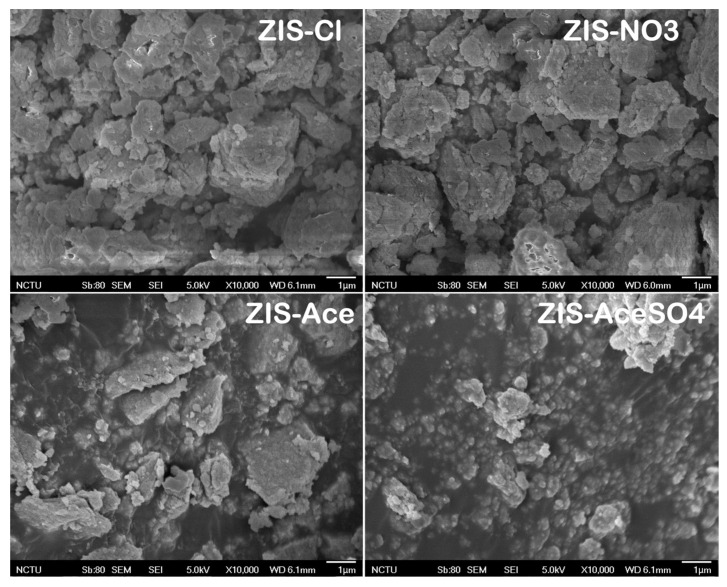 Figure 1
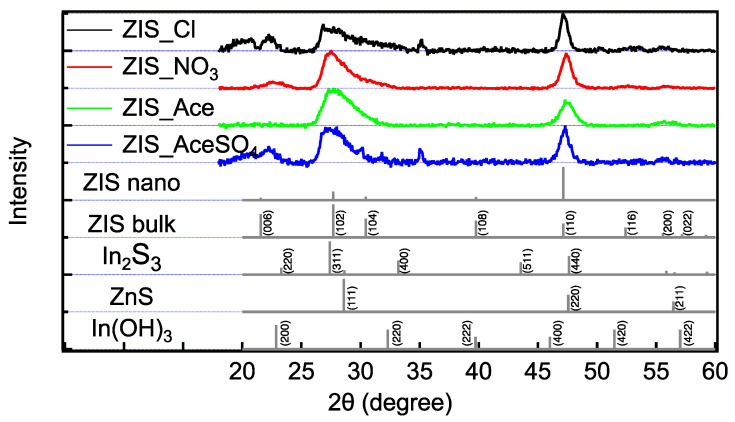 Figure 2
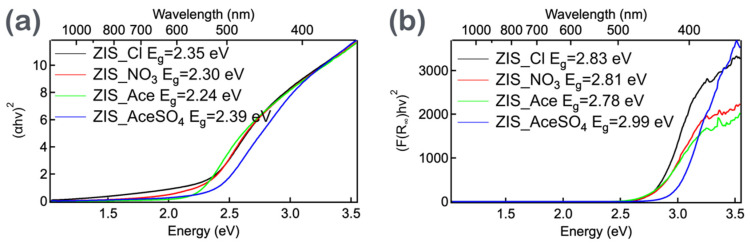 Figure 3
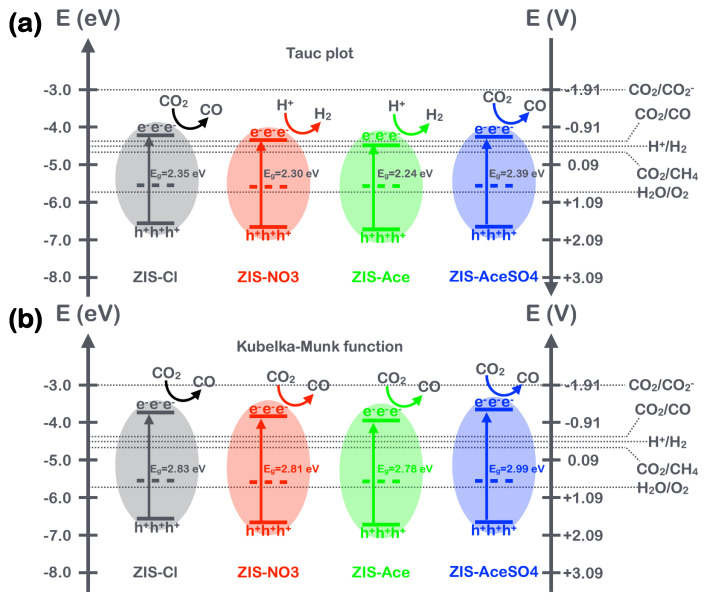 Figure 4
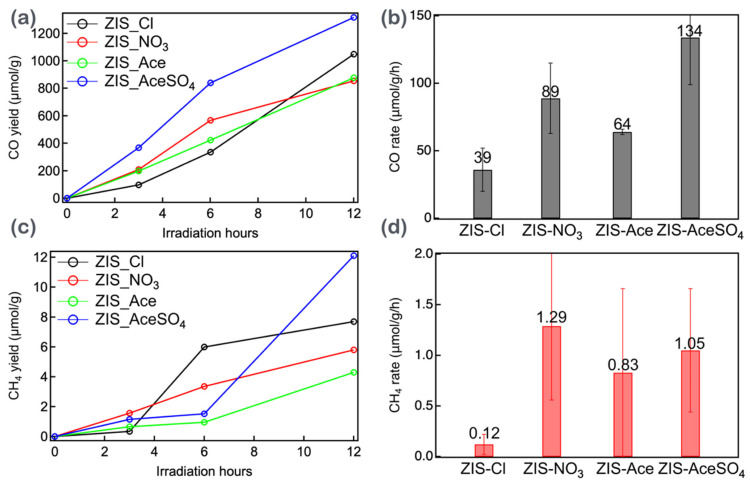 Figure 5
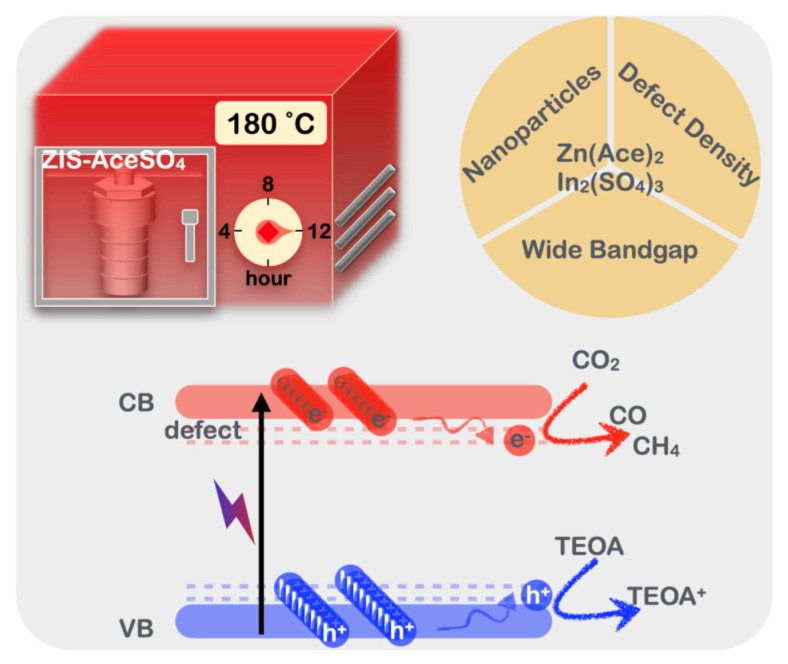 Figure 6
Peer Reviews
No public reviews on file for this paper yet. If you reviewed it on a platform where reviews are public (OpenReview, ICLR, NeurIPS, ICML), you can paste yours below so the community can read it here.
Videos
No videos yet. Explain this paper in a talk, walkthrough, or lecture? Add one.
Taxonomy
TopicsAdvanced Photocatalysis Techniques · Gas Sensing Nanomaterials and Sensors · Covalent Organic Framework Applications