Do Molecules Tunnel through Nanoporous Graphene?
Liudmyla Barabanova, Alper Buldum

TL;DR
This paper explores how hydrogen and water molecules move and tunnel through nanopores in graphene using computational methods.
Contribution
The study demonstrates that molecules can tunnel through nanopores and be trapped near them, offering insights into molecular behavior.
Findings
Molecules with high kinetic energy can tunnel through nanopores in graphene.
Molecules can be trapped either in front of or behind a nanopore.
The findings suggest nanoporous graphene could be useful for gas separation and nanofiltration.
Abstract
The molecular transport and quantum tunneling of H2 and H2O molecules through nanoporous graphene is studied using computational modeling and first-principles density functional theory. It is demonstrated that molecules with sufficiently high kinetic energies can tunnel through nanopores. It is also demonstrated that molecules can be trapped in front of a nanopore or behind it. These investigations help us learn the behavior of molecules in and around the nanopores of graphene. They also help us learn the fundamentals of molecular tunneling. We believe nanoporous graphene can play important roles for gas separation and nanofiltration.
Genes, proteins, chemicals, diseases, species, mutations and cell lines named across the full text — each resolved to its canonical identifier and authoritative record.
Click any figure to enlarge with its caption.
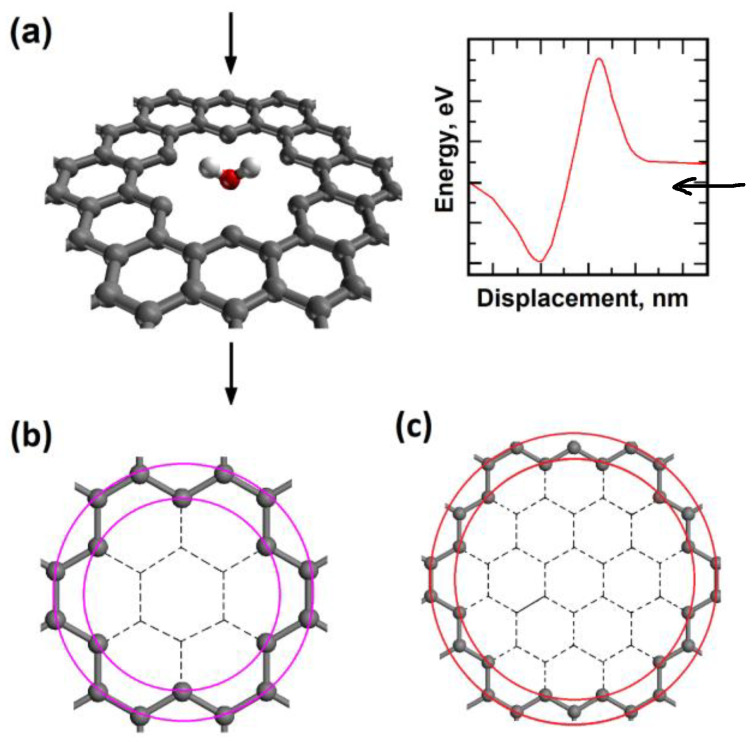 Figure 1
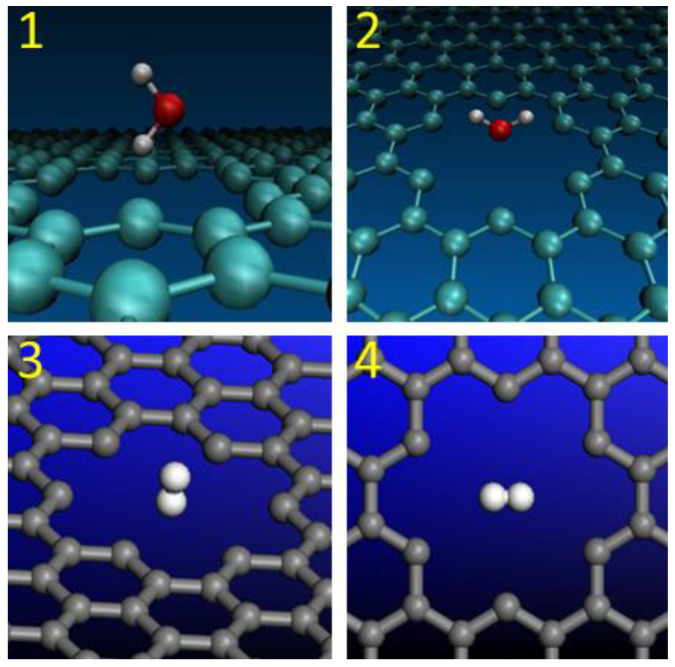 Figure 2
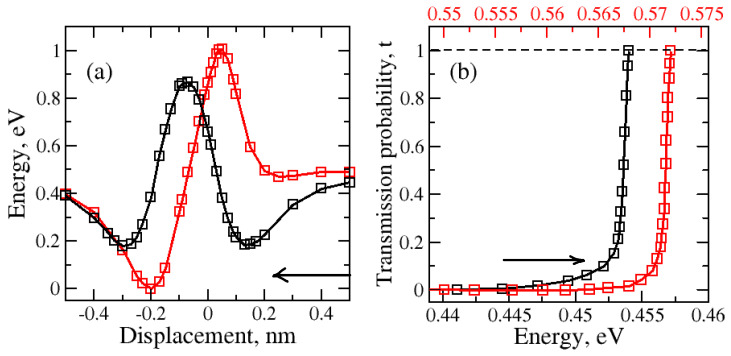 Figure 3
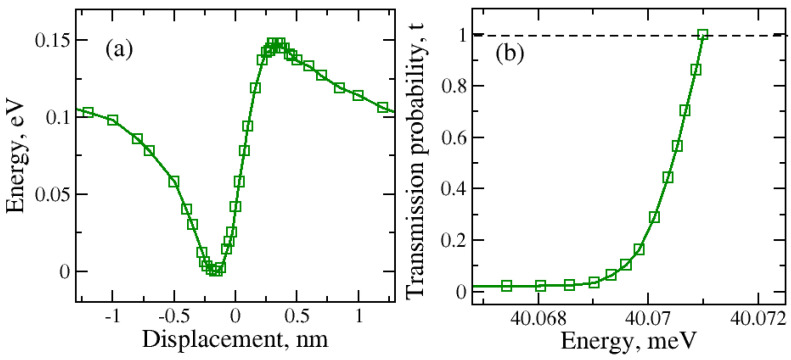 Figure 4
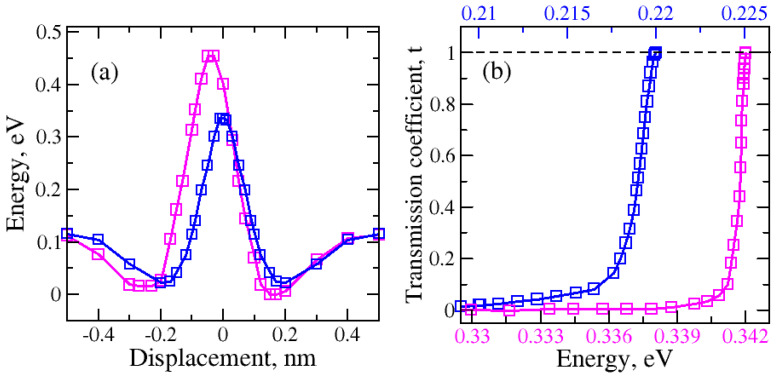 Figure 5
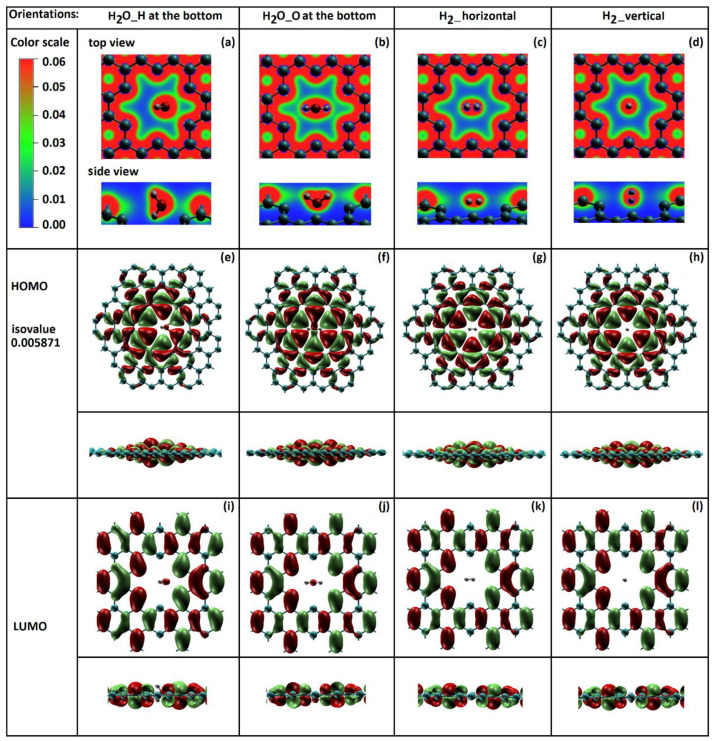 Figure 6
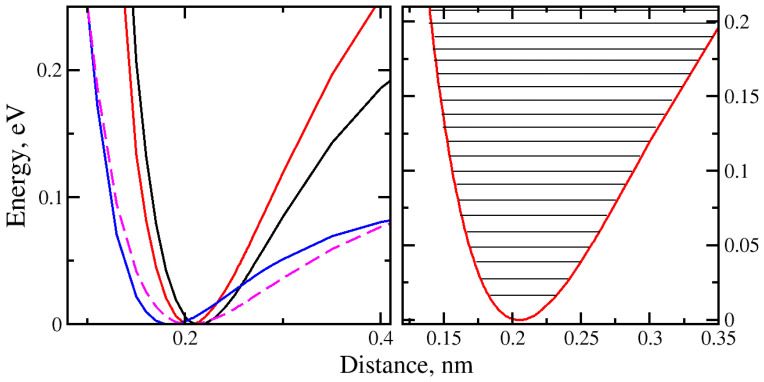 Figure 7
Peer Reviews
No public reviews on file for this paper yet. If you reviewed it on a platform where reviews are public (OpenReview, ICLR, NeurIPS, ICML), you can paste yours below so the community can read it here.
Videos
No videos yet. Explain this paper in a talk, walkthrough, or lecture? Add one.
Taxonomy
TopicsGraphene research and applications · Nanopore and Nanochannel Transport Studies · Advancements in Battery Materials