Exfoliation of Molecular Solids by the Synergy of Ultrasound and Use of Surfactants: A Novel Method Applied to Boric Acid
Sara Calistri, Alberto Ubaldini, Chiara Telloli, Francesco Gennerini, Giuseppe Marghella, Alessandro Gessi, Stefania Bruni, Antonietta Rizzo

TL;DR
A new method using ultrasound and surfactants successfully exfoliates boric acid into thin layers, similar to how graphite is turned into graphene.
Contribution
The synergy of ultrasound and surfactants enables exfoliation of boric acid, a molecular solid with hydrogen-bonded layers.
Findings
Ultrasound provides the energy needed to exfoliate boric acid layers.
Surfactants help stabilize the exfoliated flakes in solution.
Incipient exfoliation was achieved using sodium stearate at 40 °C.
Abstract
Boric acid, H3BO3, is a molecular solid made up of layers held together by weak van der Waals forces. It can be considered a pseudo “2D” material, like graphite, compared to graphene. The key distinction is that within each individual layer, the molecular units are connected not only by strong covalent bonds but also by hydrogen bonds. Therefore, classic liquid exfoliation is not suitable for this material, and a specific method needs to be developed. Preliminary results of exfoliation of boric acid particles by combination of ultrasound and the use of surfactants are presented. Ultrasound provides the system with the energy needed for the process, and the surfactant can act to keep the crystalline flakes apart. A system consisting of a saturated solution and large excess solid residue of boric acid was treated in this way for a few hours at 40 °C in the presence of various sodium…
Genes, proteins, chemicals, diseases, species, mutations and cell lines named across the full text — each resolved to its canonical identifier and authoritative record.
Click any figure to enlarge with its caption.
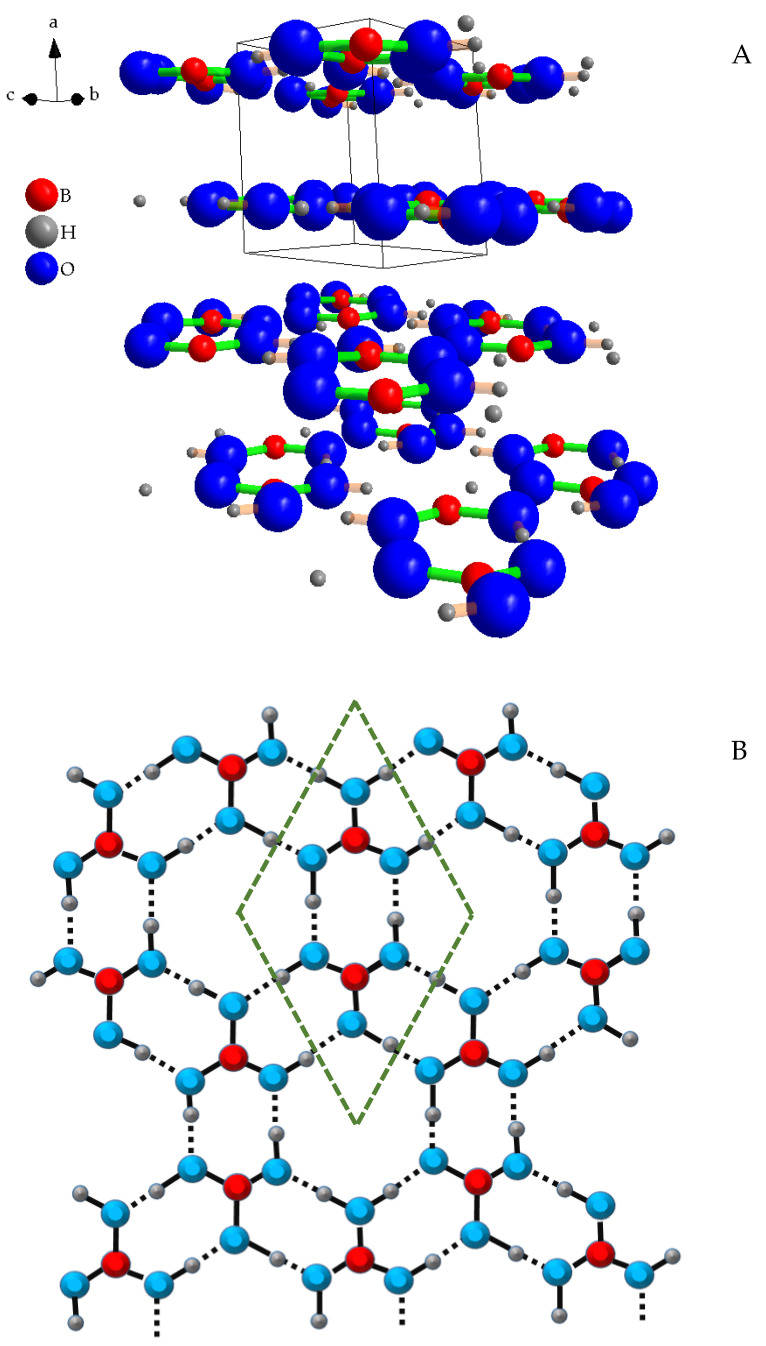 Figure 1
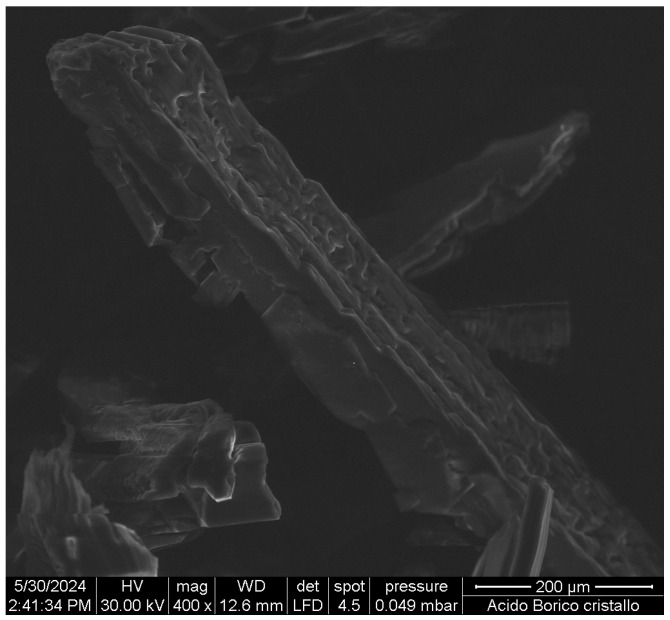 Figure 2
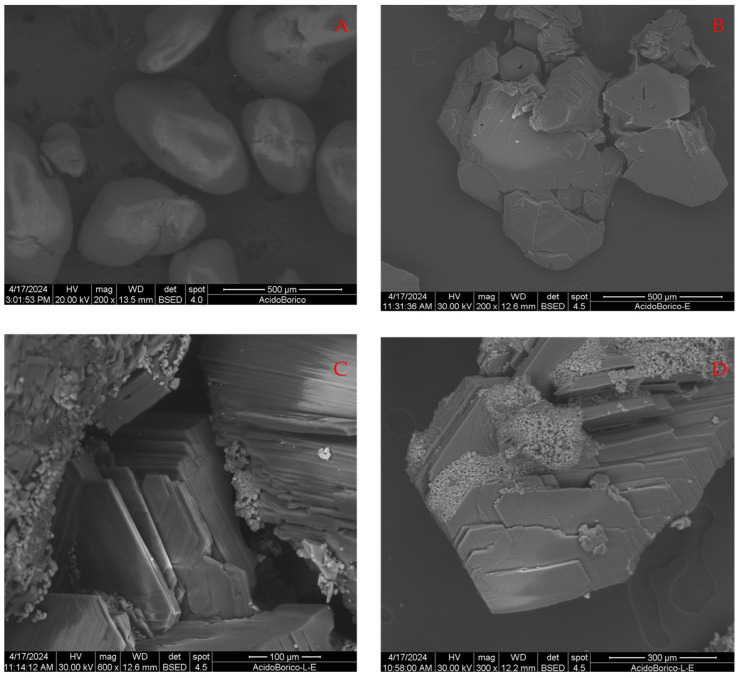 Figure 3
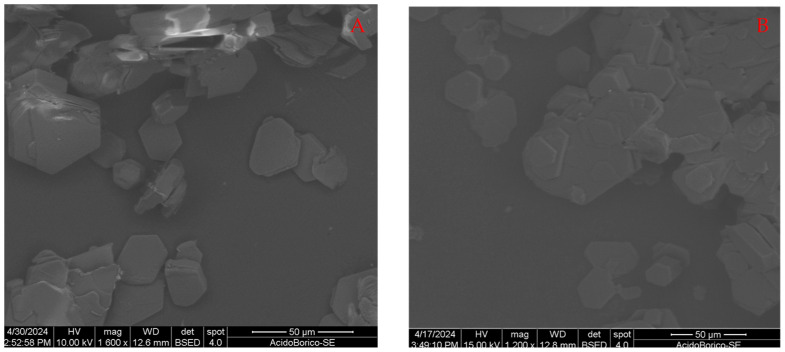 Figure 4
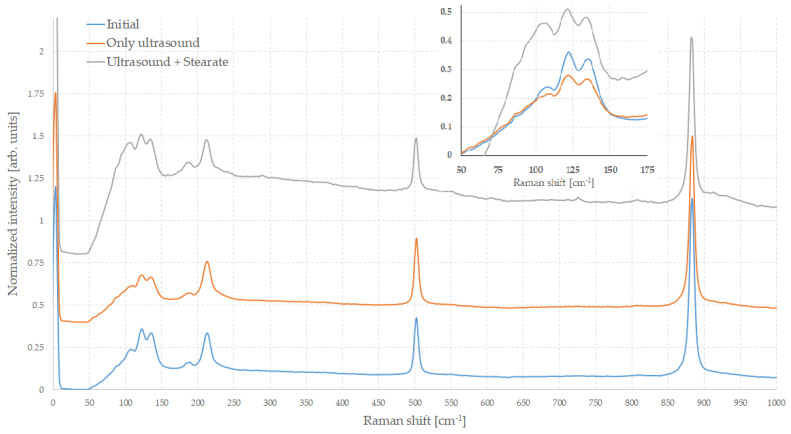 Figure 5
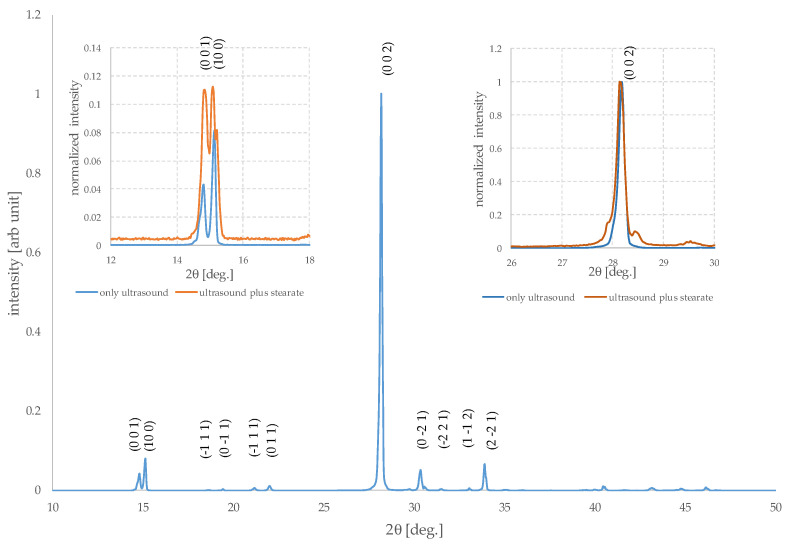 Figure 6
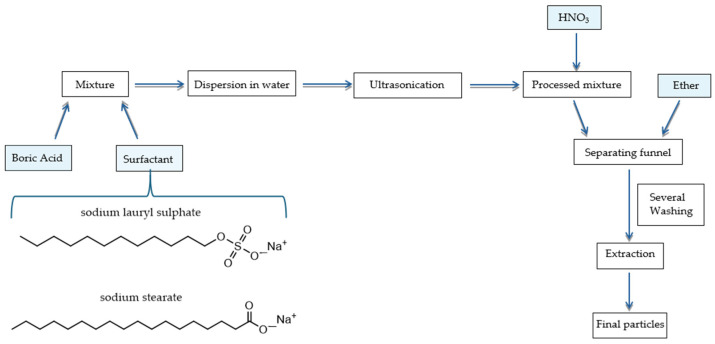 Figure 7
Peer Reviews
No public reviews on file for this paper yet. If you reviewed it on a platform where reviews are public (OpenReview, ICLR, NeurIPS, ICML), you can paste yours below so the community can read it here.
Videos
No videos yet. Explain this paper in a talk, walkthrough, or lecture? Add one.
Taxonomy
TopicsBoron and Carbon Nanomaterials Research · Luminescence and Fluorescent Materials · Boron Compounds in Chemistry