Association of Dietary Selenium Intake with Type 2 Diabetes in Middle-Aged and Older Adults in China
Fangyuan Li, Xi Hong, Huijun Wang, Weiyi Li, Lili Chen, Liusen Wang, Boya Zhao, Shaoshunzi Wang, Hongru Jiang, Zhihong Wang

TL;DR
This study finds that both low and high selenium intake are linked to increased type 2 diabetes risk in older Chinese adults, with the lowest risk at around 45 µg/day.
Contribution
The study reveals a V-shaped relationship between selenium intake and type 2 diabetes risk in middle-aged and older Chinese adults.
Findings
Low selenium intake (<45 µg/day) is associated with increased type 2 diabetes risk.
High selenium intake (45–100 µg/day) is also linked to increased type 2 diabetes risk.
No significant association is found for selenium intake above 100 µg/day.
Abstract
The relationship between distinct dietary selenium intake and type 2 diabetes (T2D) is still a topic of uncertainty. This study examined the relationship between dietary selenium intake and T2D risk among middle-aged and older Chinese adults. Dietary selenium intake was assessed through three 24 h recalls, using data from the China Health and Nutrition Survey. To investigate the relationship and the potential dose–response pattern between selenium intake and the likelihood of developing T2D, we employed both the restricted cubic spline analysis and the Cox proportional hazards model as our analytical tools. A cohort of 5970 participants aged ≥ 50 years was followed for an average of 5.44 years. The results revealed a V-shaped correlation between selenium intake and T2D risk, with the lowest risk observed at approximately 45 µg/day. Below this level, the risk decreased with an increasing…
Genes, proteins, chemicals, diseases, species, mutations and cell lines named across the full text — each resolved to its canonical identifier and authoritative record.
Click any figure to enlarge with its caption.
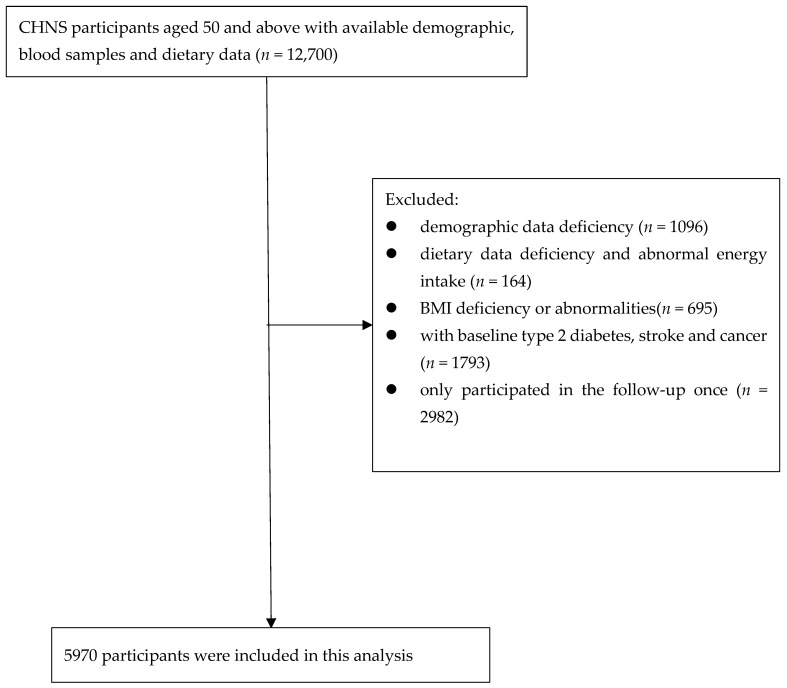 Figure 1
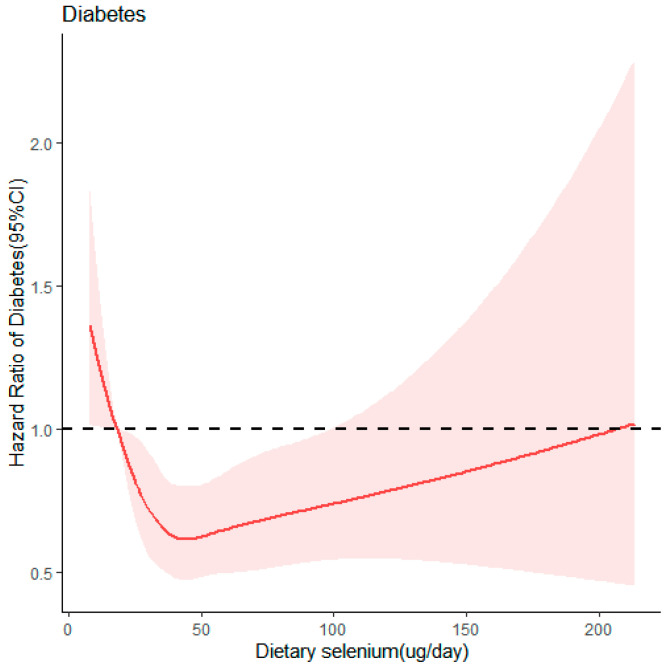 Figure 2
Peer Reviews
No public reviews on file for this paper yet. If you reviewed it on a platform where reviews are public (OpenReview, ICLR, NeurIPS, ICML), you can paste yours below so the community can read it here.
Videos
No videos yet. Explain this paper in a talk, walkthrough, or lecture? Add one.
Taxonomy
TopicsManagement of metastatic bone disease · Frailty in Older Adults · Head and Neck Cancer Studies