Quantized Microcavity Polariton Lasing Based on InGaN Localized Excitons
Huying Zheng, Runchen Wang, Xuebing Gong, Junxing Dong, Lisheng Wang, Jingzhuo Wang, Yifan Zhang, Yan Shen, Huanjun Chen, Baijun Zhang, Hai Zhu

TL;DR
Researchers demonstrated room-temperature polariton lasing in quantized energy states using InGaN quantum wells, enabling control of macroscopic quantum effects.
Contribution
Achieved quantized polariton lasing at room temperature using localized excitons in InGaN/GaN quantum wells with a parabolic potential well.
Findings
Room-temperature polaritons with 61 meV Rabi splitting were obtained using InGaN/GaN quantum wells.
Quantized energy sublevels with a maximum spacing of 11.3 meV were observed in the SHO states.
Coherent polariton lasing was achieved in the ground state with coherence confirmed via interference and g(2)(τ) measurements.
Abstract
Exciton–polaritons, which are bosonic quasiparticles with an extremely low mass, play a key role in understanding macroscopic quantum effects related to Bose–Einstein condensation (BEC) in solid-state systems. The study of trapped polaritons in a potential well provides an ideal platform for manipulating polariton condensates, enabling polariton lasing with specific formation in k-space. Here, we realize quantized microcavity polariton lasing in simple harmonic oscillator (SHO) states based on spatial localized excitons in InGaN/GaN quantum wells (QWs). Benefiting from the high exciton binding energy (90 meV) and large oscillator strength of the localized exciton, room-temperature (RT) polaritons with large Rabi splitting (61 meV) are obtained in a strongly coupled microcavity. The manipulation of polariton condensates is performed through a parabolic potential well created by optical…
Genes, proteins, chemicals, diseases, species, mutations and cell lines named across the full text — each resolved to its canonical identifier and authoritative record.
Click any figure to enlarge with its caption.
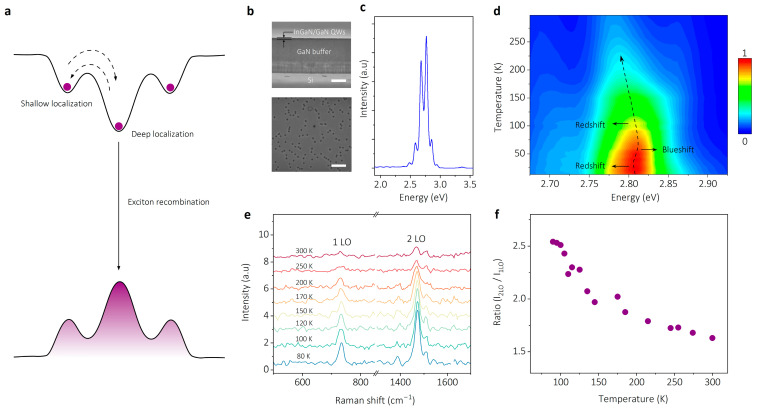 Figure 1
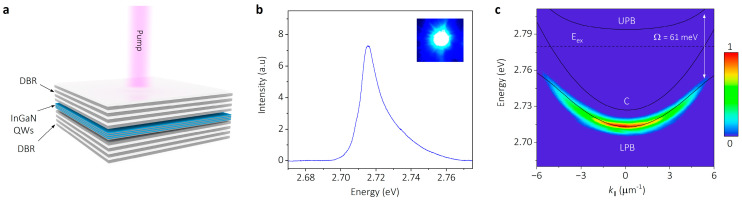 Figure 2
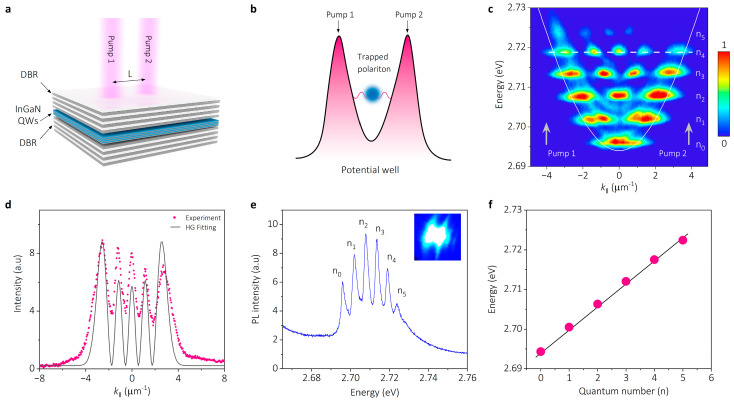 Figure 3
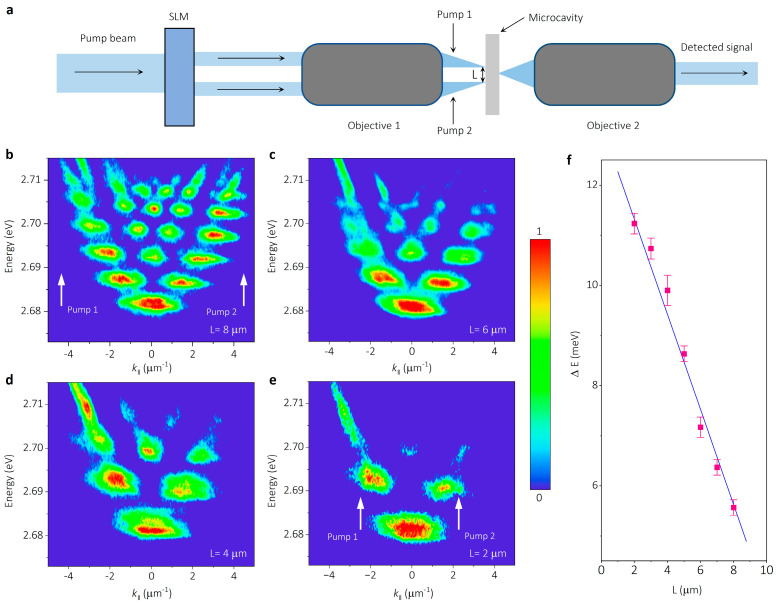 Figure 4
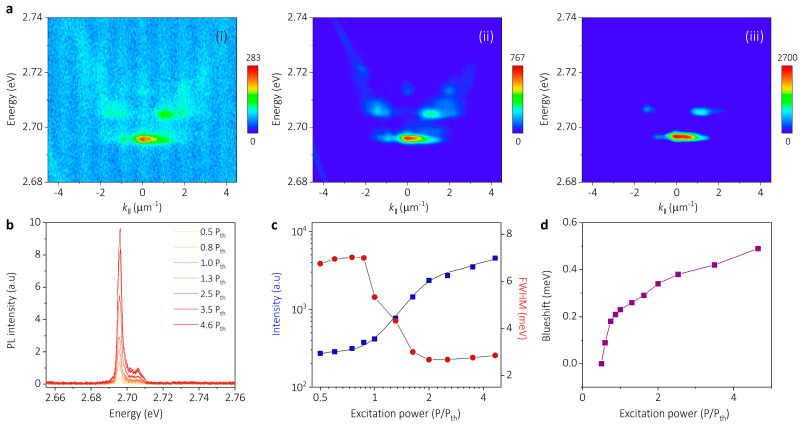 Figure 5
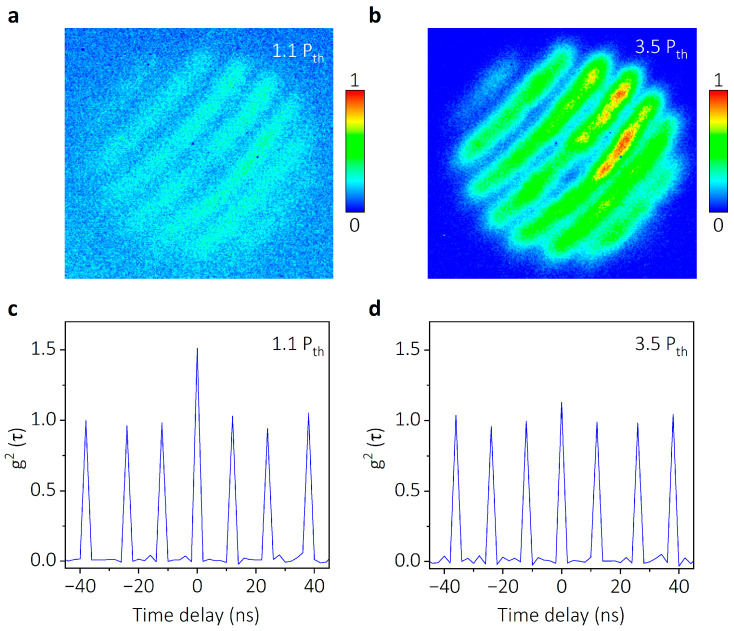 Figure 6
Peer Reviews
No public reviews on file for this paper yet. If you reviewed it on a platform where reviews are public (OpenReview, ICLR, NeurIPS, ICML), you can paste yours below so the community can read it here.
Videos
No videos yet. Explain this paper in a talk, walkthrough, or lecture? Add one.
Taxonomy
TopicsStrong Light-Matter Interactions · Plasmonic and Surface Plasmon Research · Thermal Radiation and Cooling Technologies