Temporary Hydrostatic Splint Therapy and Its Effects on Occlusal Forces
Mante Kireilyte, Povilas Ancevicius, Ausra Baltrusaityte, Vita Maciulskiene, Gediminas Zekonis

TL;DR
This study shows that hydrostatic splint therapy changes how biting forces are distributed in the mouth, especially for people with temporomandibular disorders.
Contribution
The study demonstrates the effectiveness of hydrostatic splints in altering occlusal force distribution in TMD patients.
Findings
Hydrostatic splint therapy significantly changed force distribution in the anterior and posterior right regions for TMD patients.
Occlusal force increased in the front and decreased in the back after splint usage in the TMD group.
Non-TMD subjects showed no significant changes in force distribution after splint therapy.
Abstract
Background and objectives: This study analyzed and compared the distribution patterns of occlusal forces using T-Scan III before and after the hydrostatic temporary oral splint (Aqualizer Ultra) therapy in healthy subjects and subjects with temporomandibular disorders (TMDs). Materials and Methods: Fifty-one subjects were divided into groups based on anamnesis and responses to the Fonseca questionnaire. The first group, non-TMDs group (n = 19), and the second group, TMDs group (n = 32), had mild-to-severe TMDs, as identified by the Fonseca questionnaire. The non-TMDs group had an average age of 25.4 years (SD = 4.8, range 20–38) with 15 females (78.95%) and 4 males (21.05%). The TMDs group had an average age of 27.4 years (SD = 7.0, range 22–53) with 25 females (78.125%) and 7 males (21.875%). T-Scan III device was used for occlusal analysis before and after hydrostatic splint usage.…
Genes, proteins, chemicals, diseases, species, mutations and cell lines named across the full text — each resolved to its canonical identifier and authoritative record.
Click any figure to enlarge with its caption.
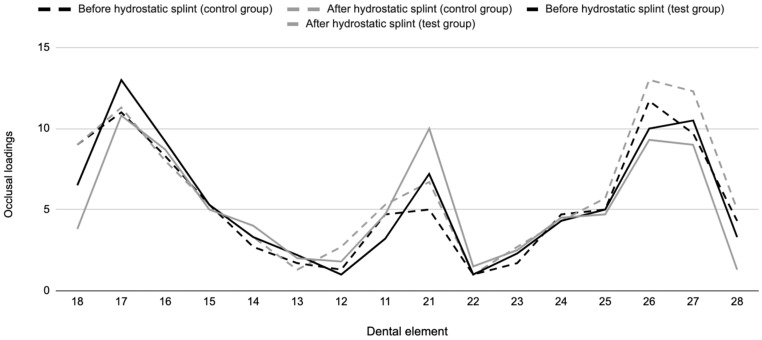 Figure 1
Peer Reviews
No public reviews on file for this paper yet. If you reviewed it on a platform where reviews are public (OpenReview, ICLR, NeurIPS, ICML), you can paste yours below so the community can read it here.
Videos
No videos yet. Explain this paper in a talk, walkthrough, or lecture? Add one.
Taxonomy
TopicsTemporomandibular Joint Disorders · Facial Nerve Paralysis Treatment and Research · Dysphagia Assessment and Management