Serological Screening and Risk Factors Associated with Leishmania infantum Positivity in Newly Diagnosed HIV Patients in Greece
Chrysa Voyiatzaki, Apollon Dareios Zare Chormizi, Maria E. Tsoumani, Antonia Efstathiou, Konstantinos Konstantinidis, Georgios Chrysos, Aikaterini Argyraki, Vasileios Papastamopoulos, Effie G. Papageorgiou, Marika Kotsianopoulou

TL;DR
This study found that 9% of newly diagnosed HIV patients in Greece had antibodies against Leishmania infantum, with drug users at higher risk, suggesting the need for routine screening.
Contribution
The study identifies risk factors and evaluates serological methods for Leishmania infantum in HIV patients in Greece.
Findings
9.0% of 155 HIV patients tested positive for Leishmania infantum IgG antibodies using at least two methods.
Intravenous drug users had a 3.55 times higher risk of Leishmania positivity.
Using two serological methods is recommended to maximize sensitivity.
Abstract
A serological screening was conducted to detect IgG antibodies against Leishmania infantum (L. infantum) in newly diagnosed human immunodeficiency virus (HIV) patients in Greece. The study also examined potential risk factors and the agreement of commercially available serological methods. IgG antibodies against L. infantum were detected using enzyme-linked immunosorbent assay (ELISA), indirect immunofluorescence antibody test (IFAT), and Western blot (WB). Out of 155 samples, 14 (9.0%) tested positive for IgG antibodies against L. infantum using at least two methods. Statistical analysis showed substantial agreement between WB and IFAT methods (Cohen’s kappa = 0.75) but moderate overall agreement among the three methods (Fleiss’ kappa = 0.42). Additionally, HIV+ intravenous drug users faced 3.55 times (p = 0.025) higher risk of testing positive for L. infantum IgG, positing that…
Genes, proteins, chemicals, diseases, species, mutations and cell lines named across the full text — each resolved to its canonical identifier and authoritative record.
Click any figure to enlarge with its caption.
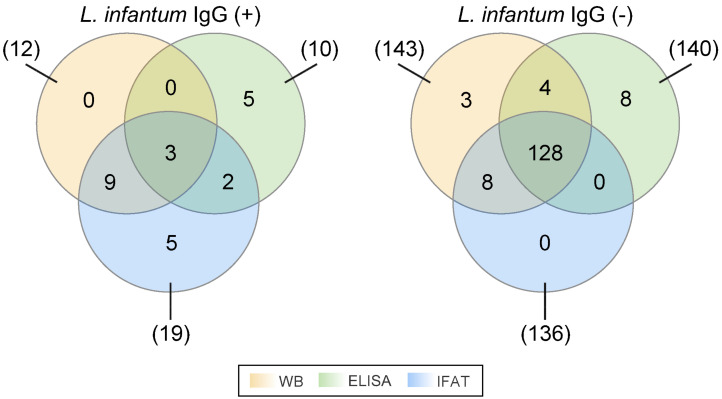 Figure 1
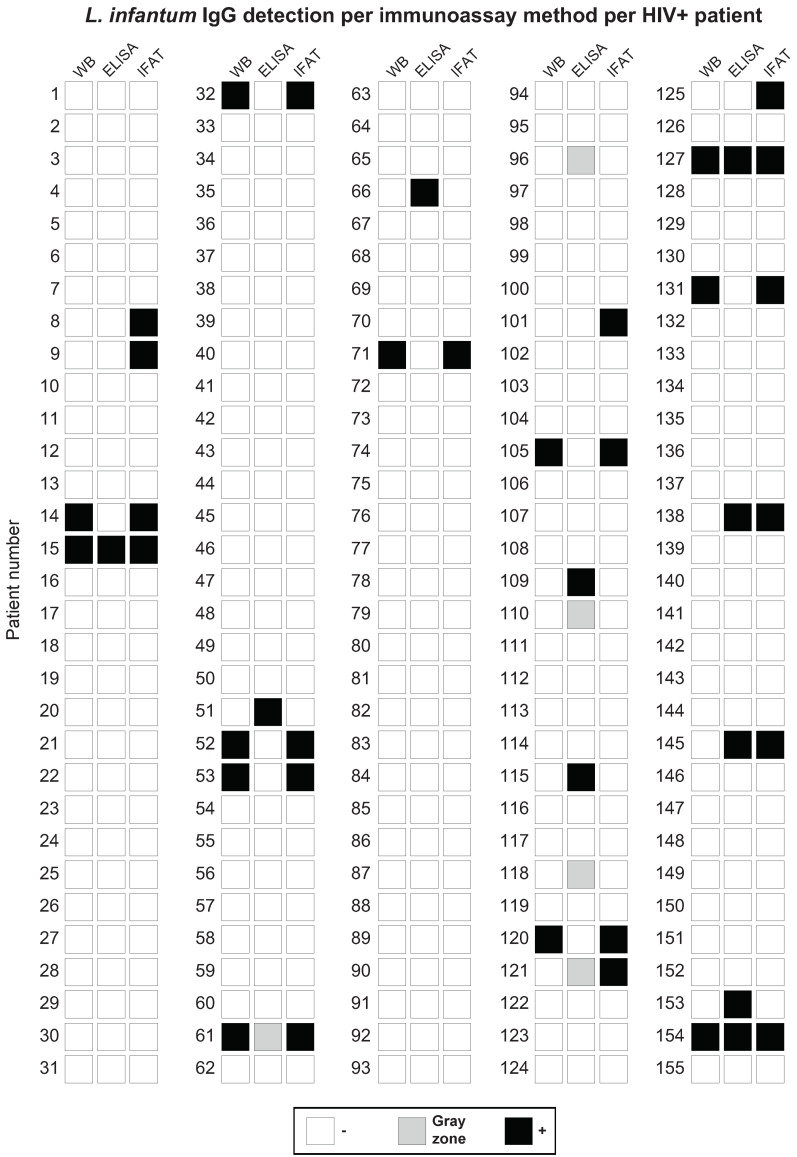 Figure 2
Peer Reviews
No public reviews on file for this paper yet. If you reviewed it on a platform where reviews are public (OpenReview, ICLR, NeurIPS, ICML), you can paste yours below so the community can read it here.
Videos
No videos yet. Explain this paper in a talk, walkthrough, or lecture? Add one.
Taxonomy
TopicsResearch on Leishmaniasis Studies