Inductive Paper-Based Flexible Contact Force Sensor Utilizing Natural Micro-Nanostructures of Paper: Simplicity, Economy, and Eco-Friendliness
Haozhe Zhang, Junwen Zhu, Yujia Yang, Qiang Liu, Wei Xiong, Xing Yang

TL;DR
This paper introduces a simple, low-cost, and eco-friendly flexible contact force sensor made from paper, showing good performance in monitoring human motion and respiration.
Contribution
A novel inductive contact force sensor using paper's natural micro-nanostructures as a sensitive element, offering simplicity and eco-friendliness.
Findings
The paper-based sensor demonstrated good repeatability, hysteresis, sensitivity, and consistency in performance testing.
It showed strong detection performance in experiments for monitoring human motion and respiration.
The sensor is cost-effective, biodegradable, and easy to manufacture.
Abstract
Inductive contact force sensors, known for their high precision and anti-interference capabilities, hold significant potential applications in fields such as wearable and medical monitoring devices. Most of the current research on inductive contact force sensors employed novel nanomaterials as sensitive elements to enhance their sensitivity and other performance characteristics. However, sensors developed through such methods typically involve complex preparation processes, high costs, and difficulty in biodegradation, which limit their further development. This article introduces a new flexible inductive contact force sensor using paper as a sensitive element. Paper inherently possesses micro- and nanostructures on its surface and interior, enabling it to sensitively convert changes in contact force into changes in displacement, making it suitable for use as the sensor’s sensitive…
Genes, proteins, chemicals, diseases, species, mutations and cell lines named across the full text — each resolved to its canonical identifier and authoritative record.
Click any figure to enlarge with its caption.
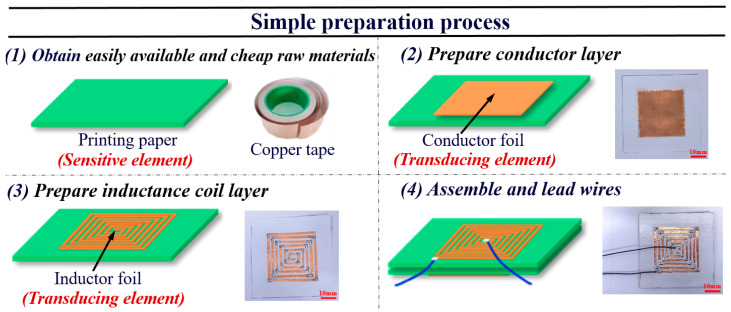 Figure 1
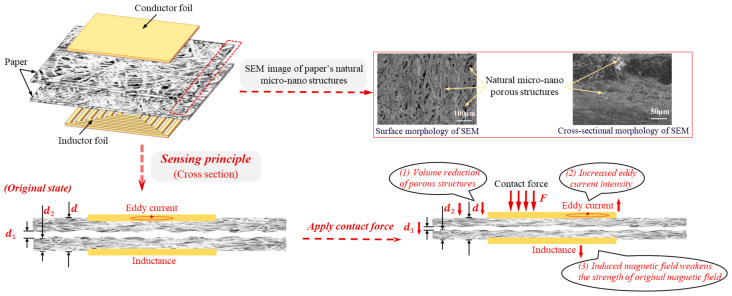 Figure 2
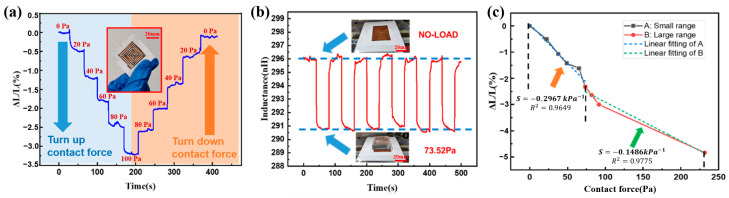 Figure 3
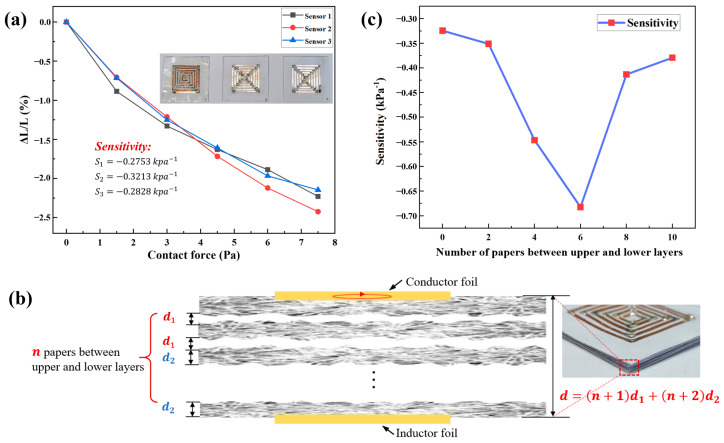 Figure 4
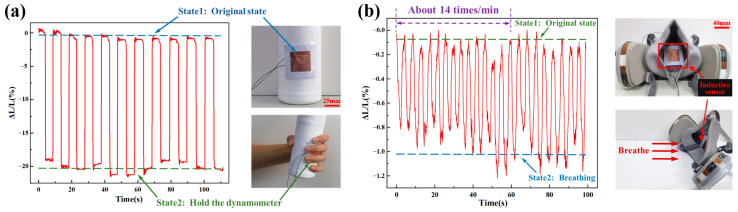 Figure 5
Peer Reviews
No public reviews on file for this paper yet. If you reviewed it on a platform where reviews are public (OpenReview, ICLR, NeurIPS, ICML), you can paste yours below so the community can read it here.
Videos
No videos yet. Explain this paper in a talk, walkthrough, or lecture? Add one.
Taxonomy
TopicsAdvanced Sensor and Energy Harvesting Materials · Tactile and Sensory Interactions · Conducting polymers and applications