A Lego-Like Reconfigurable Microfluidic Stabilizer System with Tunable Fluidic RC Constants and Stabilization Ratios
Wuyang Zhuge, Weihao Li, Kaimin Wang, Zhuodan Chen, Chunhui Wu, Kyle Jiang, Jun Ding, Carl Anthony, Xing Cheng

TL;DR
A modular microfluidic stabilizer system is developed to improve flow stability and adaptability in microfluidic devices.
Contribution
The system introduces a reconfigurable, Lego-like design with tunable stabilization ratios using a simplified three-element circuit model.
Findings
The stabilizer system achieves an optimal stabilization ratio below 1% with an R-square of 0.95.
It significantly reduces flow fluctuations and improves droplet uniformity in microfluidic experiments.
Abstract
In microfluidic systems, it is important to maintain flow stability to execute various functions, such as chemical reactions, cell transportation, and liquid injection. However, traditional flow sources, often bulky and prone to unpredictable fluctuations, limit the portability and broader application of these systems. Existing fluidic stabilizers, typically designed for specific flow sources, lack reconfigurability and adaptability in terms of the stabilization ratios. To address these limitations, a modular and standardized stabilizer system with tunable stabilization ratios is required. In this work, we present a Lego-like modular microfluidic stabilizer system, which is fabricated using 3D printing and offers multi-level stabilization combinations and customizable stabilization ratios through the control of fluidic RC constants, making it adaptable to various microfluidic systems. A…
Genes, proteins, chemicals, diseases, species, mutations and cell lines named across the full text — each resolved to its canonical identifier and authoritative record.
Click any figure to enlarge with its caption.
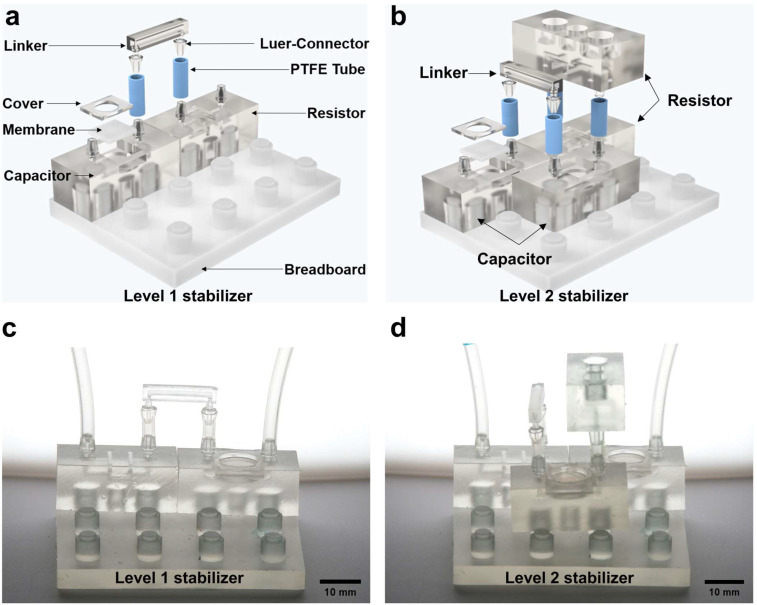 Figure 1
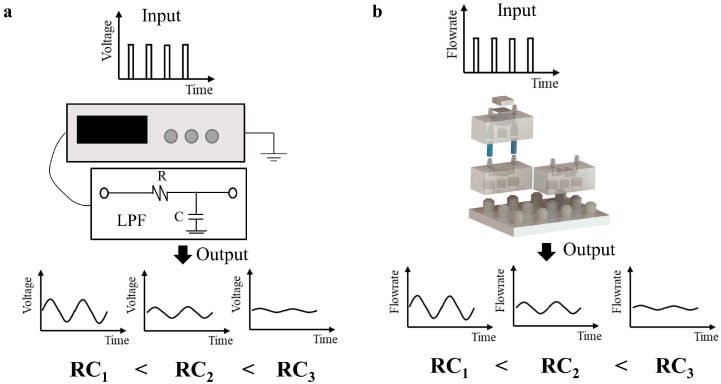 Figure 2
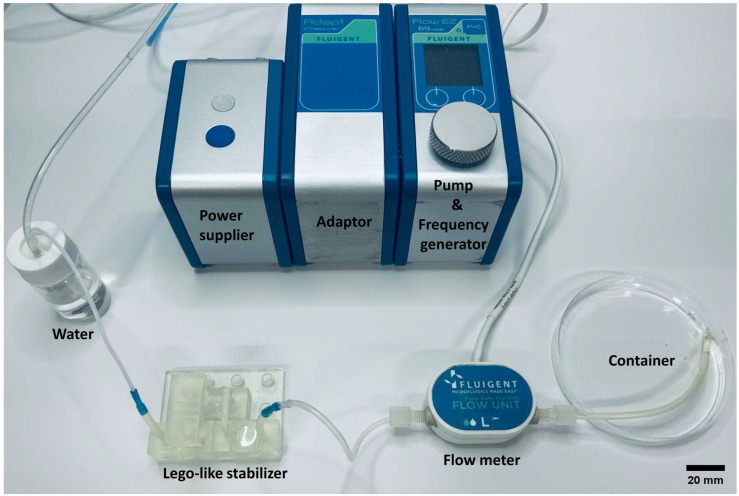 Figure 3
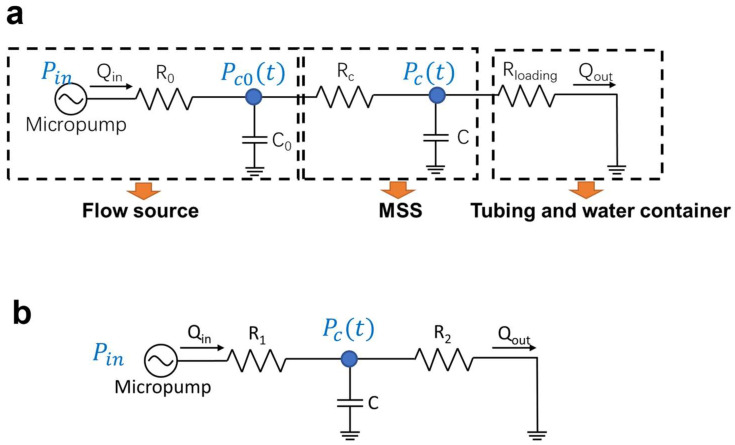 Figure 4
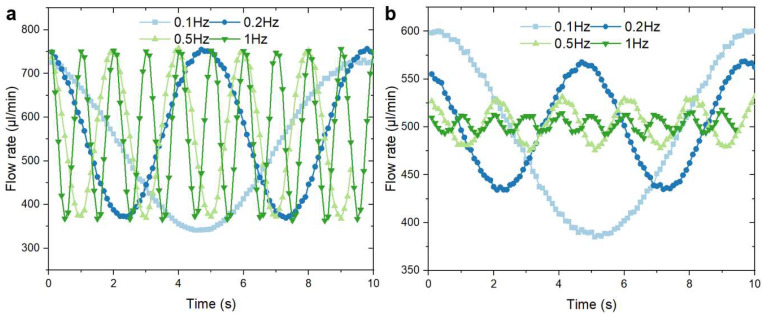 Figure 5
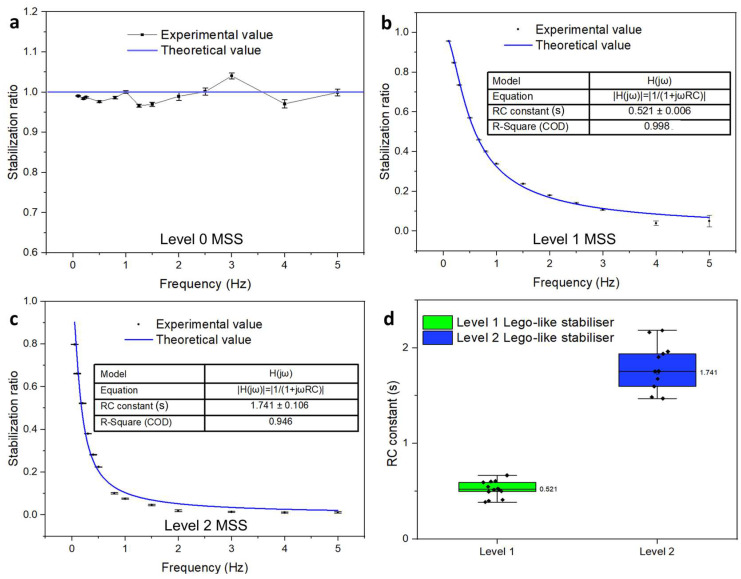 Figure 6
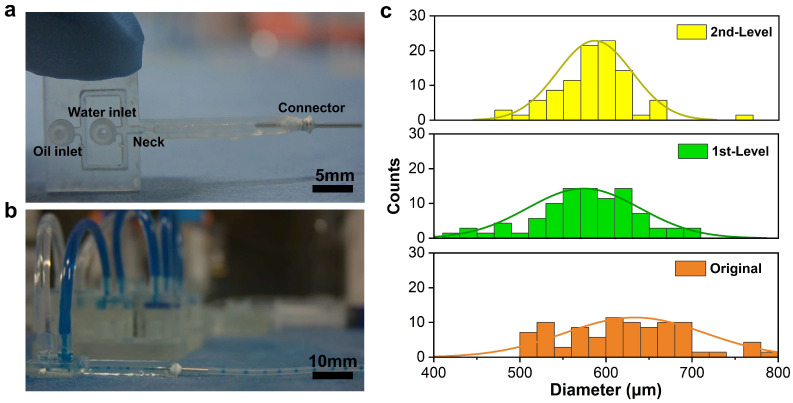 Figure 7
Peer Reviews
No public reviews on file for this paper yet. If you reviewed it on a platform where reviews are public (OpenReview, ICLR, NeurIPS, ICML), you can paste yours below so the community can read it here.
Videos
No videos yet. Explain this paper in a talk, walkthrough, or lecture? Add one.
Taxonomy
TopicsMicrofluidic and Capillary Electrophoresis Applications · Microfluidic and Bio-sensing Technologies · Electrowetting and Microfluidic Technologies