Factors Influencing the Intention of Chinese Adults to Recommend COVID-19 Vaccination for Specific or Non-Specific Groups
Yuxin Pang, Bowen Li, Tongyao Li, Tianan Yang, Jianwei Deng, Wenhao Deng

TL;DR
This study explores what influences Chinese adults to recommend COVID-19 vaccination for specific or general groups, highlighting the role of health information literacy and vaccine hesitancy.
Contribution
The study identifies health information literacy as a key factor influencing vaccination recommendation intentions through mediation by vaccine hesitancy and information perception.
Findings
Health information literacy directly and indirectly affects intentions to recommend vaccination for specific groups.
Vaccine hesitancy and perceived information usefulness mediate the link between health literacy and recommendation intentions.
Special attention is needed to address safety hesitancy in specific groups for effective vaccination promotion.
Abstract
The widespread availability of vaccines has profound implications for sustainable public health. Positive recommendation on vaccination is one of the most effective ways to increase the willingness to vaccinate against COVID-19. This study aims to investigate the factors influencing the intentions to recommend COVID-19 vaccination for specific groups (IRCVSG) and the intentions to recommend COVID-19 vaccination for non-specific groups (IRCVNSG) in China and explore the mediating role of vaccine hesitancy and perception of vaccination information. This study conducted a cross-sectional anonymous online survey of adults (N = 903) in 28 provincial-level administrative regions in China in May 2022. The prevalence of IRCVSG and IRCVNSG was 60.5% and 93.0%, respectively. Health information literacy has a significant direct and indirect impact on IRCVSG through safety hesitancy and the…
Genes, proteins, chemicals, diseases, species, mutations and cell lines named across the full text — each resolved to its canonical identifier and authoritative record.
Click any figure to enlarge with its caption.
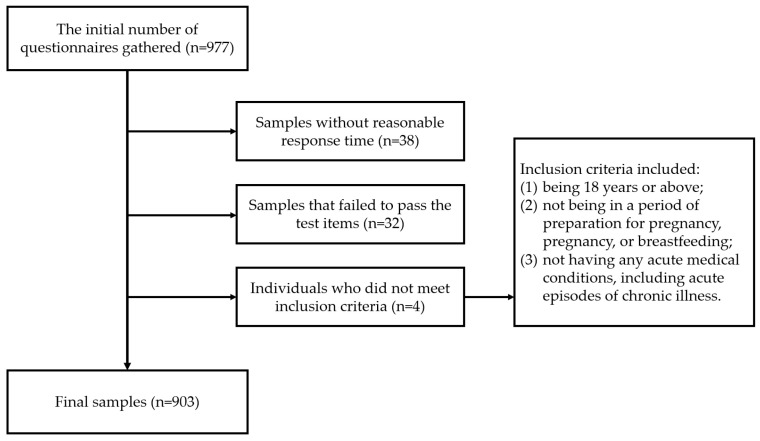 Figure 1
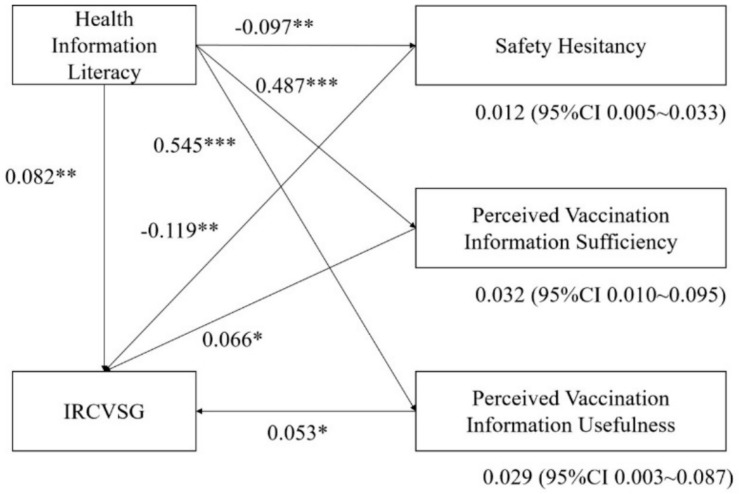 Figure 2
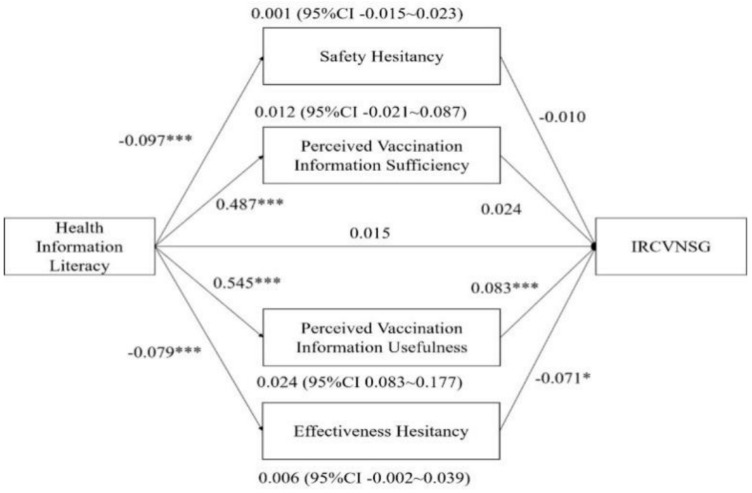 Figure 3
- —Beijing Social Science Foundation
Peer Reviews
No public reviews on file for this paper yet. If you reviewed it on a platform where reviews are public (OpenReview, ICLR, NeurIPS, ICML), you can paste yours below so the community can read it here.
Videos
No videos yet. Explain this paper in a talk, walkthrough, or lecture? Add one.
Taxonomy
TopicsVaccine Coverage and Hesitancy · Misinformation and Its Impacts · COVID-19 epidemiological studies
1. Introduction
As one of the most promising public health interventions for the prevention and control of the COVID-19 pandemic, continued progress on vaccination is critical for health and safety of people [1,2,3]. Specific groups (e.g., infants and children aged 6–23 months, pregnant women, older people over 60 years, and people with chronic and immune-compromising diseases) have generally low vaccination willingness and coverage, putting them at significant risk of infection and transmission [4,5,6,7]. Unlike non-specific groups, specific groups without intentions of receiving COVID-19 vaccination may be at high risk of widespread COVID-19 infection and also affect their cell-mediated immunity (CMI), resulting in extremely high rates of hospitalization, severe illness, and death [8,9,10,11].
Scholars have argued that subsidized vaccine costs and compulsory vaccination alone will not eliminate disease or increase vaccination and that social and public awareness and promotion of the COVID-19 vaccination play an essential role in improving vaccination coverage and protecting public health [12,13,14,15,16,17]. However, ignoring the specificity of the recommended population will make vaccination recommendations less effective and detrimental to promoting COVID-19 vaccination in specific groups [18,19]. Unfortunately, no current studies have focused on whether the intention to recommend vaccination to specific groups may differ from that of non-specific groups and whether the factors influencing the intention to recommend the COVID-19 vaccination to different populations differ. Therefore, exploring the current state and the factors that influence the intention to recommend COVID-19 vaccination to specific and non-specific groups will be vital in breaking the current bottleneck in vaccine coverage and successfully establishing a population-based immune barrier.
Based on the knowledge–attitude–practice (KAP) theory, this study aims to explore the behavioral intention and influencing factors of people’s recommendations of COVID-19 vaccines to specific and non-specific groups and build a mediating effect model through the two angles of knowledge and attitude to explore the influencing mechanism between health information literacy, vaccine hesitation, perceived vaccine information, and intentions to recommend COVID-19 vaccines.
2. Materials and Methods
2.1. Hypotheses Development
Based on the KAP theory, this study constructed a mediation effect model to explore the influencing mechanisms between health information literacy, vaccine hesitation, perceived vaccine information, and the intention to recommend COVID-19 vaccines. Table 1 shows the specific applications of the KAP theory and the proposed hypotheses.
2.2. Participants and Measures
This study combined existing established scales to design a questionnaire that included information on intention to recommend COVID-19 vaccination, health information literacy, vaccine hesitation, perceived vaccine information, and demographic characteristics. The questionnaire was validated by expert consultation and the opinions of the experts have passed the Delphi method test. Among them, the full score frequency K_j_ of experts is above 0.8, which proves the validity and importance of the questionnaire [29]. A pilot study was conducted with 30 MBA students selected prior to the formal survey. Based on the pilot study, the descriptions of some of the questions were refined to ensure that the framework and information in the questionnaire were easy to understand and answer. Table 2 shows the measures of all variables. It took approximately 10–15 min to complete the questionnaire; thus, the length of the questionnaire was appropriate.
A cross-sectional anonymous online survey of adults (aged > 18 years) was conducted in 28 provincial administrative regions of China in May 2022. The survey was carried out through a professional data collection platform (Credamo) in China. Figure 1 shows the procedures of sample selection. According to PASS16.0, a sample size of 903 achieved a minimum detectable odds ratio (OR) of 1.24 to 1.43 (power of 0.90 and alpha of 0.05, two-sided), assuming a frequency of intention to recommend the COVID-19 vaccination between 30% and 90%. Therefore, this study would have a good statistical power of at least 0.90 for associations with OR ≥ 1.24/1.43.
2.3. Data Analysis
This study used univariate logistic regression analysis to examine the crude association between background variables, influencing factors (i.e., health information literacy, safety hesitancy, effectiveness hesitancy, perceived vaccination information sufficiency, and perceived vaccination information usefulness), and two binary dependent variables (i.e., IRCVSG and IRCVNSG) and compared the differences between IRCVSG and IRCVNSG using the chi-square test. Subsequently, multivariate logistic regression analysis was used to adjust for background variables significantly associated with the dependent variable in the univariate analysis, and adjusted advantage ratios were calculated to assess the correlation between each influential factor and the two dependent variables. Finally, this study used path analysis with weighted least squares mean and variance adjusted estimates to test the hypothesized mediation model, adjusted for significant background variables. This study reported the direct and indirect effects of health information literacy on the dependent variable through safety hesitancy, vaccine efficacy hesitancy, perceived vaccination information sufficiency, and perceived vaccination information usefulness. The 95% bias-corrected confidence interval (CI) of indirect effects was estimated based on 2000 bootstrapped samples. The path’s standardized coefficients and statistical significance were displayed. The data of this study were analyzed using SPSS26.0 software. Two-sided p values below 0.05 were considered statistically significant.
3. Results
3.1. Demographics of Participants
A total of 903 participants were included for analysis (Table 3). Most of the participants were female (64.1%), were aged 18–40 (92%), received college or above education (95.9%), were married (69.1%), lived in eastern areas (70.3%), were frontline workers (46.8%), and had a monthly personal income above 5000 yuan (CNY) (75.2%).
3.2. Comparison of Intention to Recommend COVID-19 Vaccination for Different Groups
Overall, 840 (93.0%) of the participants reported an IRCVNS, while only 546 (60.5%) reported an IRCVSG (Table 3). The results of the chi-square test showed that there was significance in IRCVSG among different ages, marriage status, locations, occupations, and incomes. There was also significance in IRCVNSG among different ages and locations. The results of comparisons between IRCVSG and IRCVNSG showed that participants who were aged 18 to 40, were female, received above associate or bachelor education, lived in eastern areas, worked as management staff or on the frontline, and had a monthly personal income above 7000 yuan (CNY) had significantly different intentions between IRCVSG and IRCVNSG.
3.3. Distributions of the Independent Variables Associated with the IRCVSG/IRCVNSG
Table 4 shows the distributions of the factors associated with the IRCVSG and IRCVNSG, including health information literacy, safety hesitancy, effectiveness hesitancy, perceived vaccination information sufficiency, and perceived vaccination information usefulness. Using principal component analysis, the eight items of health information literacy were combined into health information literacy scores (Appendix A). The means and SDs of each item of health information literacy are also shown in Table 4. Among the participants, 19% (N = 171) had safety hesitancy for the COVID-19 vaccination, and 14% (N = 126) had effectiveness hesitancy for the COVID-19 vaccination. The mean levels of the perceived vaccination information sufficiency and perceived vaccination information usefulness were 3.98 (SD = 0.74) and 4.27 (SD = 0.77).
3.4. Crude Associations between the Background Variables and IRCVSG/IRCVNSG
Table 5 shows the results of the univariate logistic regression analysis. Important background factors for IRCVSG included age, marital status, location, occupation, and monthly personal income. People aged 31–40 (Orc = 1.572, 95% CI [1.186–2.084]), married (Orc = 2.342, 95% CI [1.756–3.125]) and higher-income groups have positive associations with IRCVSG, while people from the central region (Orc = 0.594, 95% CI [0.429–0.823]) and students (Orc = 0.395, 95% CI [0.272–0.574]) have negative associations with IRCVSG. The significant background factors for IRCVNSG included marriage status, occupation, and monthly personal income. Married (Orc = 2.158, 95% CI [1.288–3.615]) and high-income groups were positively associated with IRCVNSG, while students (Orc = 0.344, 95% CI [0.177–0.669]) were negatively associated with IRCVNSG.
3.5. Associations between the Independent Variables and IRCVSG/IRCVNSG
Table 6 shows the univariate logistic regression analysis results of independent variables for IRCVSG/IRCVNSG and the multivariate logistic regression results after adjusting for all other factors, including health information literacy, safety hesitancy, effectiveness hesitancy, perceived vaccination information sufficiency, and perceived vaccination information usefulness. Health information literacy was a significant factor of IRCVSG (ORa = 1.698, 95% CI [1.392–2.072]) and IRCVNSG (ORa = 2.365, 95% CI [0.22–0.59]). Safety hesitancy had significantly negative influence on IRCVSG (ORa = 0.468, 95% CI [0.331–0.663]) and IRCVNSG (ORa = 0.337,95% CI [0.196–0.577]), while effectiveness hesitancy had a significantly negative impact mainly on IRCVNSG (ORa = 0.218, 95% CI [0.125–0.380]). Perceived vaccination information sufficiency and perceived vaccination information usefulness were significantly positively associated with IRCVSG (ORa = 1.798, 95% CI [1.465–2.205]; ORa = 2.531, 95% CI [1.881–3.405]) and IRCVNSG (ORa = 1.683, 95% CI [1.388–2.039]; ORa = 3.791, 95% CI [2.733–5.269]).
3.6. Mediation Model of IRCVSG and IRCVNSG
The IRCVSG mediation model proposed in this study was shown in Figure 2. First, health information literacy had a significant positive direct effect on IRCVSG (standardized coefficient = 0.082, p < 0.01). Second, health information literacy had a significant positive effect on perceived vaccination information sufficiency (standardized coefficient = 0.487, p < 0.001) and perceived vaccination information usefulness (standardized coefficient = 0.545, p < 0.001), respectively, while perceived vaccination information sufficiency (standardized coefficient = 0.066, p < 0.05) and perceived vaccination information usefulness (standardized coefficient = 0.053, p < 0.05) had a significant positive effect on perceived vaccination information sufficiency (standardized coefficient = 0.066, p < 0.05) and perceived vaccination information usefulness (standardized coefficient = 0.053, p < 0.05) toward IRCVSG. Health information literacy had a significant positive indirect effect on IRCVSG through perceived vaccination information sufficiency (standardized coefficient = 0.032, 95% CI [0.010–0.095]) and perceived vaccination information usefulness (standardized coefficient = 0.029, 95% CI [0.003–0.087]). Third, health information literacy had a significant negative effect on safety hesitancy (standardized coefficient = −0.097, p < 0.001), respectively, while safety hesitancy (standardized coefficient = −0.119, p < 0.001) had a significant negative effect on IRCVSG. Health information literacy had a significant positive indirect effect on IRCVSG by weakening safety hesitancy (standardized coefficient = 0.012, 95% CI [0.005–0.033]). Figure 1 shows the standardized coefficients and statistical significance of the model pathways.
In the mediated model of IRCVNSG, the indirect and direct effects of health information literacy differed slightly from the IRCVSG model (Figure 3). First, health information literacy had a significant positive effect on perceived vaccination information sufficiency (standardized coefficient = 0.487, p < 0.001) and perceived vaccination information usefulness (standardized coefficient = 0.545, p < 0.001), respectively. Perceived vaccination information usefulness (standardized coefficient = 0.083, p < 0.05) had a significant positive effect on IRCVNSG but perceived vaccination information usefulness (standardized coefficient = 0.053, p < 0.05) had an insignificant effect on IRCVNSG. Health information literacy had a significant positive indirect effect on IRCVSG through perceived vaccination information usefulness (standardized coefficient = 0.029, 95% CI [0.003–0.087]). Second, health information literacy had a significant negative effect on safety hesitancy (standardized coefficient = −0.097, p < 0.001) and effectiveness hesitancy (standardized coefficient = −0.079, p < 0.001), respectively. Effectiveness hesitancy (standardized coefficient = −0.071, p < 0.001) had a significant negative effect on IRCVNSG, while vaccine effectiveness hesitancy (standardized coefficient = −0.010, p > 0.05) had an insignificant effect on IRCVNSG. Health information literacy had a significant positive indirect effect on IRCVSG by enhancing perceived vaccination information usefulness and weakening effectiveness hesitancy (standardized coefficient = 0.012, 95% CI [0.005–0.033]). In addition, the direct effect of health information literacy on IRCVNSG was not significant (standardized coefficient = 0.015, p > 0.05). It suggested that health information literacy influences IRCVNSG exclusively through perceived vaccination information usefulness and effectiveness hesitation.
4. Discussion
Based on the KAP theory, this study investigated the relationship between health information literacy, vaccine hesitancy, perceived vaccination information, and intention to recommend COVID-19 vaccination to others in the Chinese population. The findings suggested that people with higher health information literacy, lower hesitancy in vaccine safety and effectiveness, and greater perceived vaccination information sufficiency and usefulness were more likely to recommend the COVID-19 vaccination to others. Additionally, this study further explored two major mechanisms by which health information literacy affected the intention to recommend vaccination.
Compared to existing studies, this study makes the following three significant contributions. First, this study is the first to differentiate the intention to recommend vaccines according to the specificity, which has implications for the development of targeted vaccine promotion policies and advocacy strategies for different groups. Second, this study reveals the effective mechanisms that affect the perceptions of vaccines, attitudes, and intention to recommend vaccines at the source, which adds a solid theoretical foundation to explain the generation of appropriate COVID-19 infection prevention behaviors. Finally, this study extends the knowledge dimension of the literacy dimension of the KAP model to health information, highlighting that the correct use of health information is more critical than the acquisition of knowledge in the context of the information epidemic. It extends the theoretical framework for analyzing the factors of intention to recommend vaccines [31,32] and provides new research insights to explain the emergence and changes in behavioral health decisions.
At the practical level, this study revealed that facing public health emergencies should not only focus on improving health knowledge but also direct focus to the cultivation of public health information literacy and the development of health information services. Previous research has shown that people with low levels of health information literacy are more susceptible to misinformation about COVID-19 vaccination and are unable to make good decisions [10,33]. Our findings build on this and demonstrate that health information literacy is fundamental to health behavior decisions. It complemented the KAP theory.
From a health communication and health behavior perspective, we need to eliminate misinformation in vaccination and outreach to help people reduce vaccine hesitancy and increase their perception of vaccination information, thereby increasing their intentions to recommend COVID-19 vaccination. This study found that safety hesitation and effectiveness hesitation are important factors affecting the intention to recommend vaccination, which is consistent with the results of previous studies [34].
Furthermore, many studies have confirmed a significant negative association between health information literacy and concerns about vaccine safety and effectiveness [35,36]. Previous studies on influenza and human papillomavirus vaccination have shown that frequency of exposure to vaccination information is positively associated with the presence of positive beliefs about vaccines [37,38]. The results of this study also supported this view. Our findings further supported the positive impact of health information literacy on access to health information [20]. Additionally, we found that improved perceived vaccination information sufficiency and perceived vaccination information usefulness increased intention to recommend the COVID-19 vaccination. This was similar to previous studies related to vaccination [39,40,41]. These findings revealed the need for governments to improve public perception of vaccination information in promotion. Experiments have shown that the intentions to recommend vaccines increase significantly after implementing interventions to improve perceived information usefulness, such as reading academic articles about vaccines, watching interviews with physicians, and reading institutional leaflets on virus prevention [42]. In addition, it is also very important to obtain specific information about antibodies after vaccination, such as different response data at 3 months and 6 months after vaccination [43], which can help the community build health information literacy. Therefore, government and medical institutions can build online platforms that provide health information and support services with the help of professional teams to ensure that the public has access to professional advice and the necessary information support on vaccines to enhance the intention to recommend COVID-19 vaccination.
An interesting finding of this study is that weakening hesitancy about the safety of vaccination can more effectively address vaccination dilemmas in specific groups in clinical practice. This has also been proved in the related research of low- and middle-income country [44]. The results showed that safety hesitation, perceived sufficiency of vaccination information, and perceived usefulness of vaccination information played a mediating role in the recommendation of COVID-19 vaccination to a specific group, while the impact of safety hesitation was not significant in the recommendation to a non-specific group. Previous studies have reported that parents are more concerned about the safety of vaccines than the effectiveness of vaccines when vaccinating their children [23]. This study further shows that the public needs to pay more attention to the safety of COVID-19 vaccination when recommending it to specific groups and make recommendations based on full understanding of relevant information. This means that proof of vaccine safety is essential to vaccinate specific groups against COVID-19. Future studies should further demonstrate that COVID-19 vaccination poses a low health risk to specific groups, and provide timely data on the safety, effectiveness, and public health impact of COVID-19 vaccination. The implications for workplace health and work sustainability are highlighted.
There are some limitations in this study. First, this study uses a cross-sectional study design, so the path model has limited ability to explain causality between variables. Future longitudinal study methods need to be designed to further verify causality. Second, participants may not be acting out their true intentions due to social expectations, leading to a bias in self-reported results. To ensure the confidentiality of information, the questionnaire of this study was answered anonymously by Chinese citizens on a network platform. Third, the universality of this study results needs to be further verified because this study was limited to the Chinese population, and factors such as cultural and religious beliefs in different countries may have an impact on the vaccine recommendations of the population.
5. Conclusions
In conclusion, from the perspective of health information literacy, this study investigated for the first time the influencing factors of Chinese adults’ intentions to recommend COVID-19 vaccines based on the KAP theory. The study found that health information literacy can reduce vaccine hesitation and enhance the perception of vaccine information, thereby increasing the intentions to recommend COVID-19 vaccines. In addition, when the recommended target group is a specific group, the public is relatively less willing to recommend COVID-19 vaccines and will pay more attention to vaccine safety. These findings remind us that in the context of the COVID-19 pandemic, improving people’s health information literacy is particularly important for vaccine promotion and herd immunity. Safety needs to be taken seriously when promoting vaccines to specific groups. In the future, scientific research institutions should develop safer and more effective COVID-19 vaccines for specific groups and conduct further research on the impact of group vaccine promotion and group immunity on health at the theoretical level.
The reference list from the paper itself. Each links out to its DOI / PubMed record.
- 1Seshaiyer P. Mc Neely C.L. Challenges and opportunities from COVID-19 for global sustainable development World Med. Health Policy 20201244345310.1002/wmh 3.38033362943 PMC 7753342 · doi ↗ · pubmed ↗
- 2Rodrigues C.M.C. Plotkin S.A. Impact of vaccines; health, economic and social perspectives Front. Microbiol.202011152610.3389/fmicb.2020.0152632760367 PMC 7371956 · doi ↗ · pubmed ↗
- 3Shahgolzari M. Yavari A. Arjeini Y. Miri S.M. Darabi A. Nejad A.S. Keshavarz M. Immunopathology and Immunopathogenesis of COVID-19, what we know and what we should learn Gene Rep.20212510141710.1016/j.genrep.2021.10141734778602 PMC 8570409 · doi ↗ · pubmed ↗
- 4Doherty M. Schmidt-Ott R. Santos J.I. Stanberry L.R. Hofstetter A.M. Rosenthal S.L. Cunningham A.L. Vaccination of special populations: Protecting the vulnerable Vaccine 2016346681669010.1016/j.vaccine.2016.11.01527876197 · doi ↗ · pubmed ↗
- 5Kiefer M.K. Mehl R. Costantine M.M. Johnson A. Cohen J. Summerfield T.L. Venkatesh K.K. Characteristics and perceptions associated with COVID-19 vaccination hesitancy among pregnant and postpartum individuals: A cross-sectional study BJOG Int. J. Obstet. Gynaecol.20221291342135110.1111/1471-0528.1711035104382 · doi ↗ · pubmed ↗
- 6Van Hoecke A.L. Sanders J.G. An online experiment of NHS information framing on mothers’ vaccination intention of children against COVID-19Vaccines 20221072010.3390/vaccines 1005072035632477 PMC 9143012 · doi ↗ · pubmed ↗
- 7Zheng M. Zhong W. Chen X. Wang N. Liu Y. Zhang Q. Zhao X. Factors influencing parents’ willingness to vaccinate their preschool children against COVID-19: Results from the mixed-method study in China Hum. Vaccines Immunother.202218209077610.1080/21645515.2022.2090776 PMC 974638035763311 · doi ↗ · pubmed ↗
- 8Nygaard U. Holm M. Hartling U.B. Glenthøj J. Schmidt L.S. Nordly S.B. Espenhain L. Incidence and clinical phenotype of multisystem inflammatory syndrome in children after infection with the SARS-Co V-2 delta variant by vaccination status: A Danish nationwide prospective cohort study Lancet Child Adolesc. Health 2022645946510.1016/S 2352-4642(22)00100-635526537 PMC 9072929 · doi ↗ · pubmed ↗