Conspiracy of Silence in Head and Neck Cancer Diagnosis: A Scoping Review
Cristina Saldivia-Siracusa, Erison Santana Dos Santos, Wilfredo Alejandro González-Arriagada, Ana Carolina Prado-Ribeiro, Thaís Bianca Brandão, Adepitan Owosho, Marcio Ajudarte Lopes, Joel B. Epstein, Alan Roger Santos-Silva

TL;DR
This review explores how often head and neck cancer diagnoses are withheld from patients and highlights the need for better communication and patient autonomy.
Contribution
A comprehensive synthesis of evidence on diagnosis nondisclosure in head and neck cancer patients, revealing gaps in communication practices.
Findings
22.51% of head and neck cancer patients were unaware of their diagnosis.
Physicians often use vague terms to convey malignancy, and caregivers frequently support diagnosis concealment.
Patients desire personalized open communication, but disclosure is influenced by factors like age and family wishes.
Abstract
Cancer disclosure represents a complex healthcare dynamic. Physicians or caregivers may be prompted to withhold diagnosis information from patients. This study aims to comprehensively map and synthesize available evidence about diagnosis nondisclosure regarding head and neck cancer (HNC) patients. Following the Joanna Briggs Institute guidelines, a scoping review was conducted across major databases without period restriction, yielding 9238 publications. After screening and selection, a descriptive synthesis was conducted. Sixteen studies were included, primarily conducted in academic settings (75%) from Europe and Asia, with a total population of 662 patients predominantly diagnosed with brain, oral, pharyngeal, or laryngeal tumors. Remarkably, 22.51% of patients were unaware of their diagnosis. Although physicians were the main source of diagnostic information (35%), they reported to…
Genes, proteins, chemicals, diseases, species, mutations and cell lines named across the full text — each resolved to its canonical identifier and authoritative record.
Click any figure to enlarge with its caption.
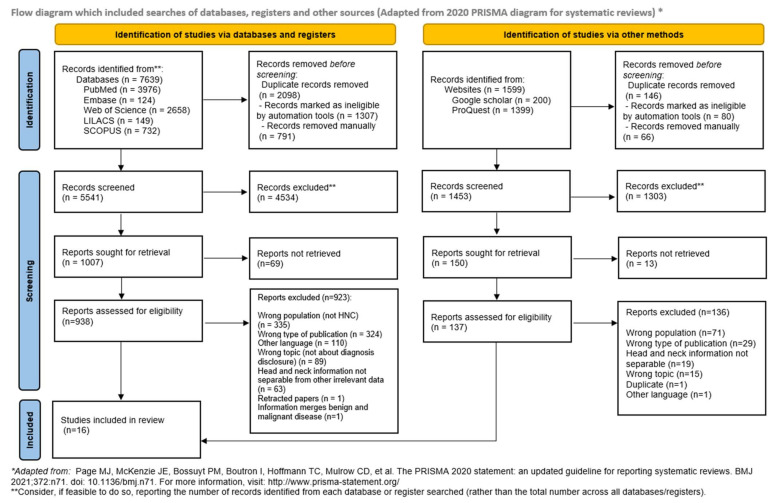 Figure 1
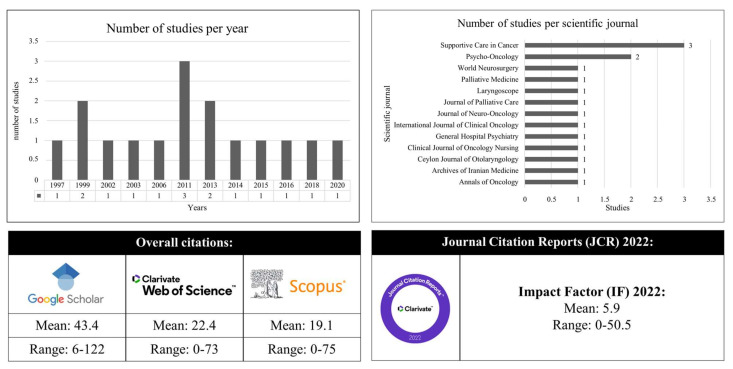 Figure 2
Peer Reviews
No public reviews on file for this paper yet. If you reviewed it on a platform where reviews are public (OpenReview, ICLR, NeurIPS, ICML), you can paste yours below so the community can read it here.
Videos
No videos yet. Explain this paper in a talk, walkthrough, or lecture? Add one.
Taxonomy
TopicsPatient-Provider Communication in Healthcare · Patient Dignity and Privacy · Palliative Care and End-of-Life Issues