Adhesive Performance of Pit and Fissure Sealants on Deproteinized Enamel with Different Proteolytic Agents: In Vitro Study
Luis Francisco García-Mota, Miguel-Ángel Fernández-Barrera, Rene Garcia-Contreras, Guillermo Grazioli, Juan Eliezer Zamarripa-Calderón, José Alejandro Rivera-Gonzaga, Carlos Enrique Cuevas-Suárez

TL;DR
This study tested how different proteolytic agents affect the bond strength of dental sealants on deproteinized enamel, finding some agents improve sealant adhesion and longevity.
Contribution
The study introduces new evidence on the effectiveness of proteolytic agents like bromelain and papain as alternatives to traditional deproteinization methods for dental sealants.
Findings
Bromelain and papain proteolytic solutions showed no cytotoxic effects on human dental pulp cells.
Sodium hypochlorite, papain, bromelain, and Tergazyme® significantly increased bond strength of sealants after 24 h and 6 months.
Dyad Flow sealant showed better bond strength after 6 months of aging, regardless of the deproteinizing agent used.
Abstract
The objective of this work was to assess the efficacy of different proteolytic agents on the bond strength of pit and fissure sealants to bovine enamel. Eighty-four bovine enamel specimens were randomly assigned in groups according to the pit and fissure sealant applied (HelioSeal F or Dyad Flow). Then, the specimens were subdivided according to the proteolytic agent used (n = 7): Group 1, distilled water (control); Group 2, 10 wt.% Tergazyme®; Group 3, 10 wt.% ZYME®; Group 4, 10% papain gel; Group 5, 10% bromelain gel; and Group 6, 5.25 wt.% sodium hypochlorite. The cell viability of the proteolytic solutions was assessed through the MTT assay. The proteolytic agents were applied on the enamel surface prior to the acid-etching procedure; then, the pit and fissure sealants were placed. The micro-shear bond strength was evaluated after 24 h or 6 months of water storing at 37 °C.…
Genes, proteins, chemicals, diseases, species, mutations and cell lines named across the full text — each resolved to its canonical identifier and authoritative record.
Click any figure to enlarge with its caption.
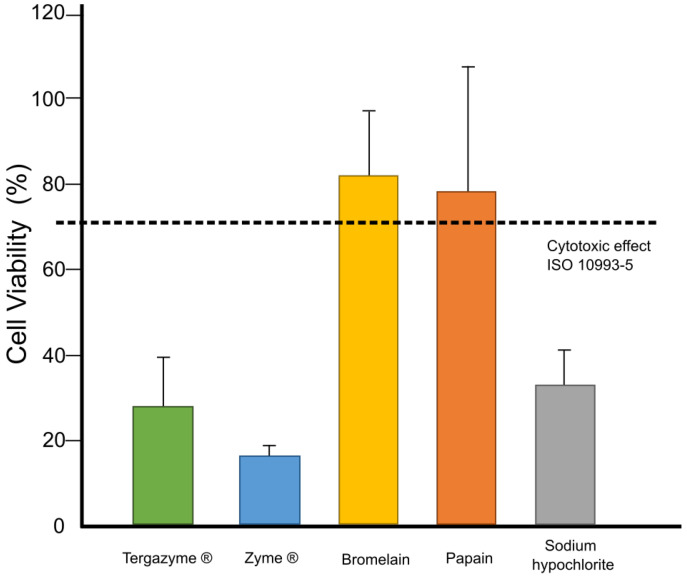 Figure 1
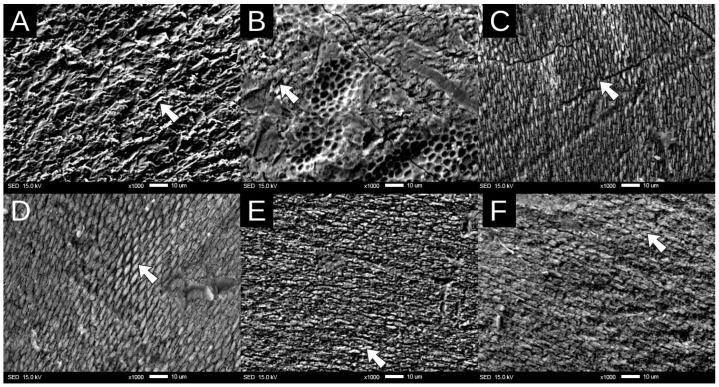 Figure 2
Peer Reviews
No public reviews on file for this paper yet. If you reviewed it on a platform where reviews are public (OpenReview, ICLR, NeurIPS, ICML), you can paste yours below so the community can read it here.
Videos
No videos yet. Explain this paper in a talk, walkthrough, or lecture? Add one.
Taxonomy
TopicsDental materials and restorations · Dental Erosion and Treatment · Dental Health and Care Utilization