Structure-Guided Design of Partial Agonists at an Opioid Receptor
Tao Che, Balazs Varga, Sarah M Bernhard, Amal El Daibani, Saheem Zaidi, Jordy Lam, Jhoan Aguilar, Kevin Appourchaux, Antonina Nazarova, Alexa Kouvelis, Shainnel Eans, Elyssa Margolis, Jonathan Fay, Amynah Pradhan, Vsevolod Katritch, Jay McLaughlin, Susruta Majumdar

TL;DR
Scientists designed a new opioid-like drug that targets a different receptor to avoid addiction and dangerous side effects.
Contribution
A structure-based approach was used to design a selective δ opioid receptor partial agonist with improved safety.
Findings
C6-Quino is a selective δOR partial agonist with activity at G-protein and arrestin pathways.
C6-Quino shows analgesic effects in chronic pain models without causing seizures or respiratory issues.
The drug's interaction with the sodium binding pocket was confirmed using cryo-EM.
Abstract
The persistence of chronic pain and continuing overdose deaths from pain-relieving opioids targeting μ opioid receptor (μOR) have fueled the need for reliable long-term analgesics which use different targets and mechanisms. The δ opioid receptor (δOR) is a potential alternative target for non-addictive analgesics to alleviate chronic pain, made more attractive by its lack of respiratory depression associated with μOR agonists. However, early δOR full agonists were found to induce seizures, precluding clinical use. Partial δOR agonists may offer more controlled activation of the receptor compared to full agonists, but the development of such ligands has been hindered by uncertainty over the molecular mechanism mediating partial agonism. Using a structure-based approach, we explored the engagement of the sodium binding pocket in δOR and developed a bitopic ligand, C6-Quino, predicted to…
Genes, proteins, chemicals, diseases, species, mutations and cell lines named across the full text — each resolved to its canonical identifier and authoritative record.
Click any figure to enlarge with its caption.
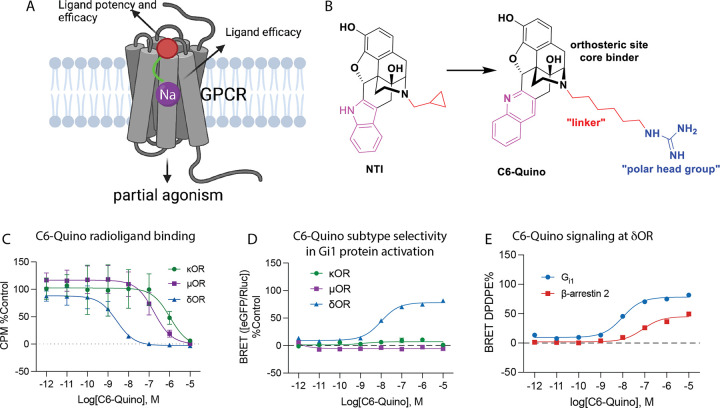 Figure 1
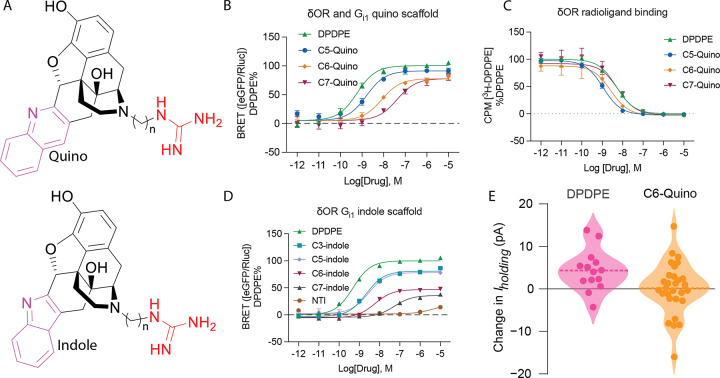 Figure 2
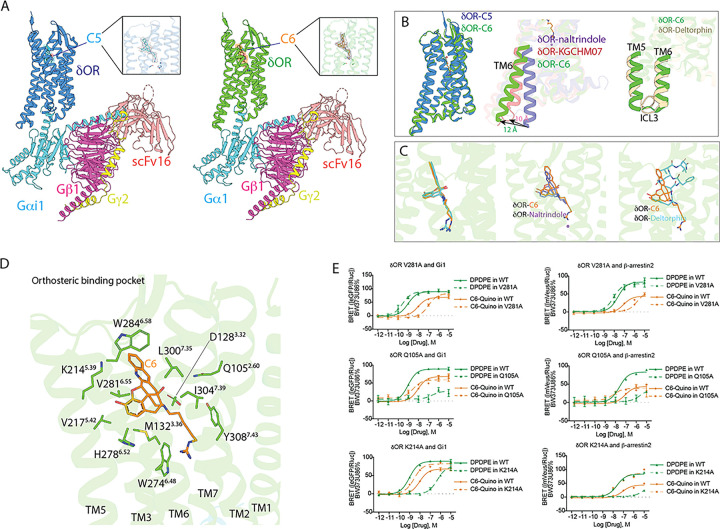 Figure 3
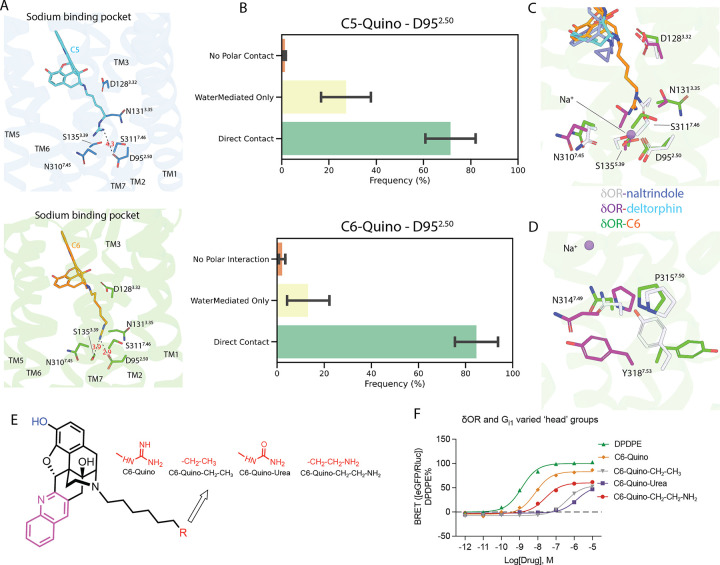 Figure 4
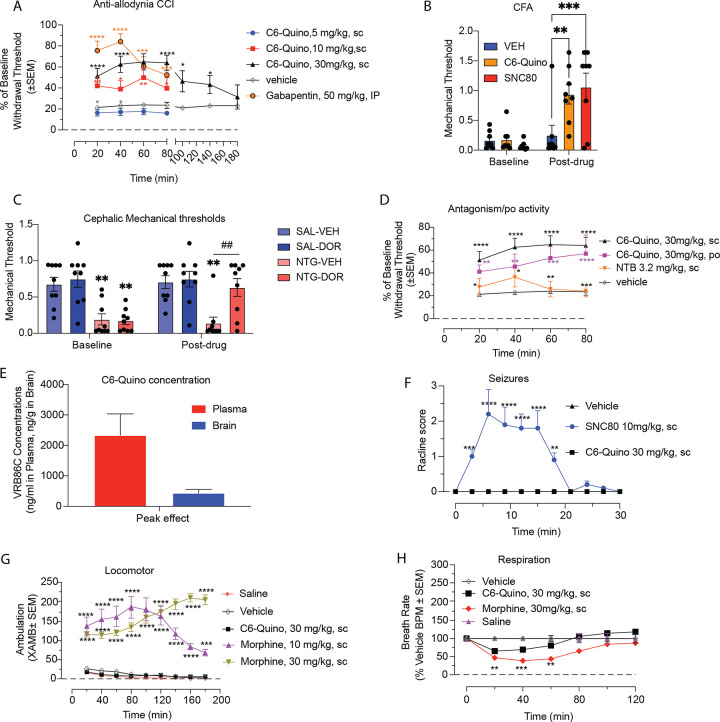 Figure 5
Peer Reviews
No public reviews on file for this paper yet. If you reviewed it on a platform where reviews are public (OpenReview, ICLR, NeurIPS, ICML), you can paste yours below so the community can read it here.
Videos
No videos yet. Explain this paper in a talk, walkthrough, or lecture? Add one.
Taxonomy
TopicsReceptor Mechanisms and Signaling · Neuropeptides and Animal Physiology · Pharmacological Receptor Mechanisms and Effects