Sex-Specific Response to A1BG Loss Results in Female Dilated Cardiomyopathy
James I. Emerson, Wei Shi, Frank L. Conlon

TL;DR
A1BG is essential for female heart function, and its loss causes dilated cardiomyopathy in females but not males.
Contribution
The study reveals a sex-specific role of A1BG in maintaining cardiac structure and function in females.
Findings
A1BG loss causes dilated cardiomyopathy in female mice but not in males.
Female hearts show altered gene activity and structural changes linked to heart function and metabolism.
A1BG interacts with sex-specific protein partners, affecting heart cell connections in females.
Abstract
Cardiac disease often manifests differently in terms of frequency and pathology between men and women. However, the mechanisms underlying these differences are not fully understood. The glycoprotein A1BG is necessary for proper cardiac function in females but not males. Despite this, the role of A1BG in the female heart remains poorly studied. To determine the sex differential function of A1BG, we generated a novel conditional A1bg allele and a novel conditional A1bg Rosa26 knockin allele. Histology, electrocardiography, transcriptional profiling (RNA-seq), transmission electron microscopy, western blot analyses, mass spectrometry, and immunohistochemistry were used to assess cardiac structure and function. The study reveals that the absence of A1BG results in significant cardiac dysfunction in female but not male mice. Gene expression underscores that A1BG plays a critical role in…
Genes, proteins, chemicals, diseases, species, mutations and cell lines named across the full text — each resolved to its canonical identifier and authoritative record.
Click any figure to enlarge with its caption.
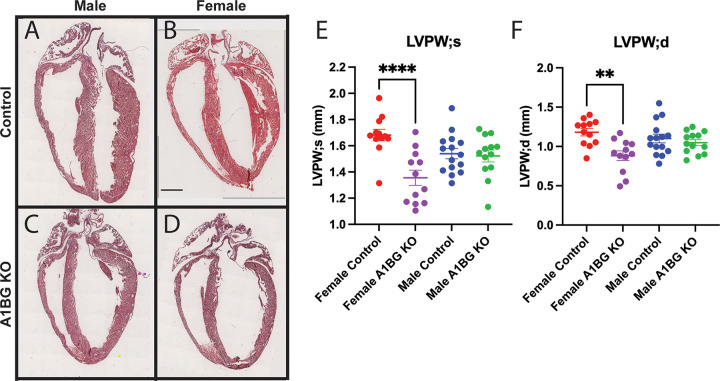 Figure 1
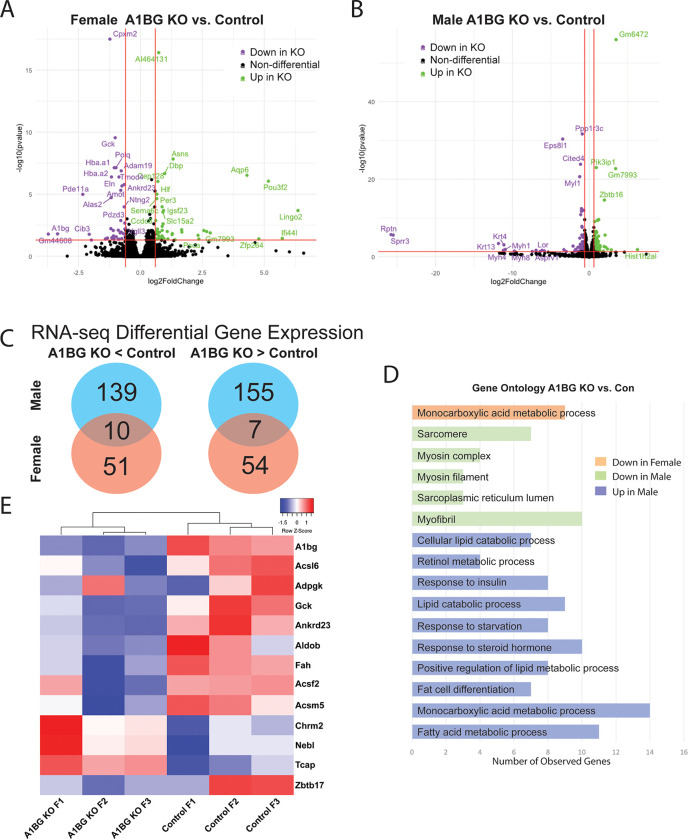 Figure 2
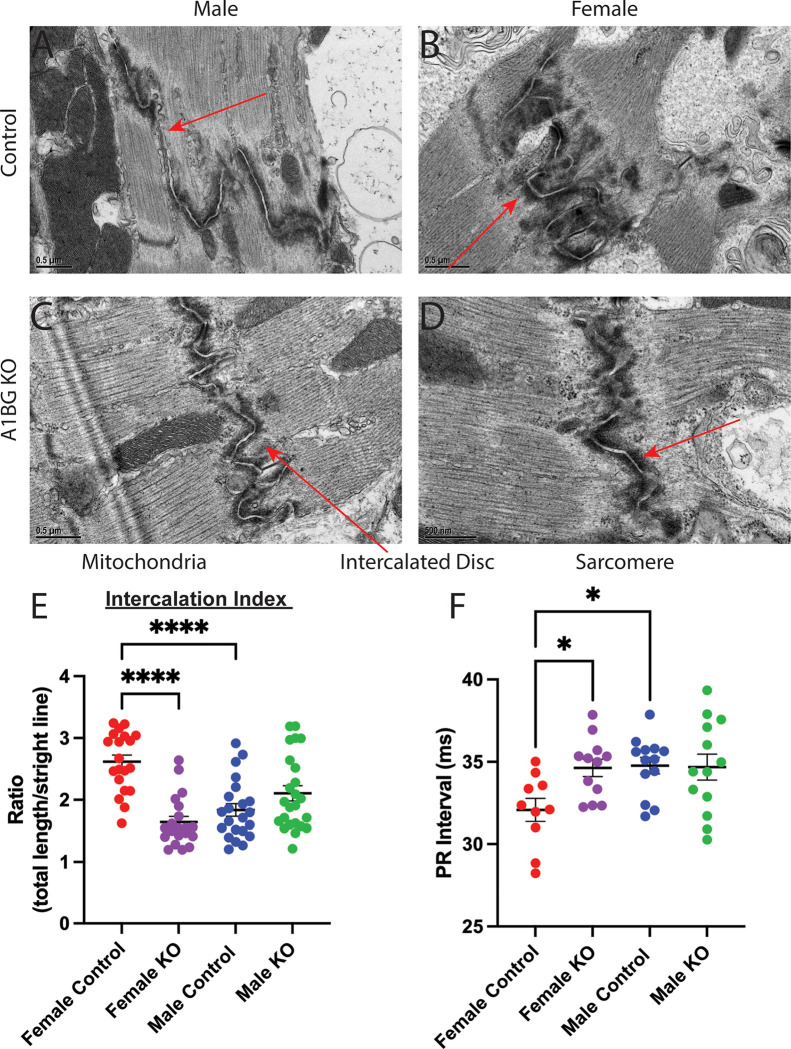 Figure 3
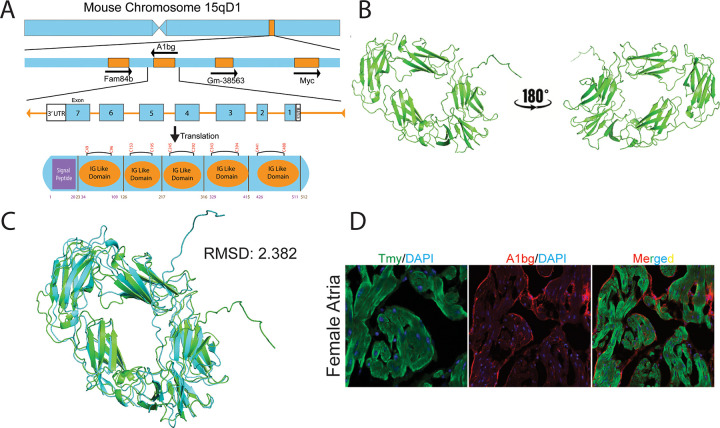 Figure 4
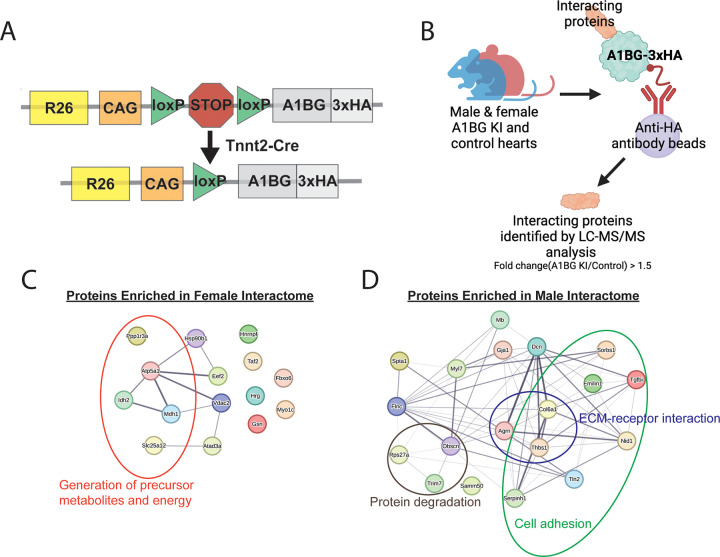 Figure 5
Peer Reviews
No public reviews on file for this paper yet. If you reviewed it on a platform where reviews are public (OpenReview, ICLR, NeurIPS, ICML), you can paste yours below so the community can read it here.
Videos
No videos yet. Explain this paper in a talk, walkthrough, or lecture? Add one.
Taxonomy
TopicsReceptor Mechanisms and Signaling · Cardiomyopathy and Myosin Studies · Monoclonal and Polyclonal Antibodies Research