Neighborhood Factors as Correlates of Alcohol Use in the N2 Cohort Study of Black Sexual Minority Men and Transgender Women
Tyrone Moline, Dustin T. Duncan, Justin Knox, Seann Regan, Christina A. Mehranbod, Cho-Hee Shrader, John Schneider, Byoungjun Kim

TL;DR
This study explores how neighborhood characteristics like poverty and disorder relate to alcohol use among Black sexual minority men and transgender women in Chicago.
Contribution
The study is one of the few to examine neighborhood factors influencing alcohol use specifically among Black sexual minority men and transgender women.
Findings
Neighborhood poverty was significantly associated with increased alcohol use.
Exposure to vacant buildings was linked to higher alcohol use.
Alcohol outlet density and violent crime did not show significant associations with alcohol use.
Abstract
Sexually minoritized men (SMM), transgender women (TW), and particularly Black SMM and Black TW may be disproportionately impacted by alcohol-related problems. Few studies have empirically examined neighborhood factors that may contribute to alcohol use, specifically among these populations. Using data from the N2 longitudinal cohort study in Chicago, IL, survey data from the second wave of longitudinal assessment (n = 126), and GPS mobility data collected during study enrollment were used to evaluate neighborhood alcohol outlet availability, neighborhood disorder, and neighborhood poverty as correlates for individual alcohol use. Neighborhood exposures were measured using 200-m derived activity space areas, created from GPS data, and with publicly accessible geospatial contextual data. Separate multi-variable quasi-poison regression models tested for association between neighborhood…
Genes, proteins, chemicals, diseases, species, mutations and cell lines named across the full text — each resolved to its canonical identifier and authoritative record.
Click any figure to enlarge with its caption.
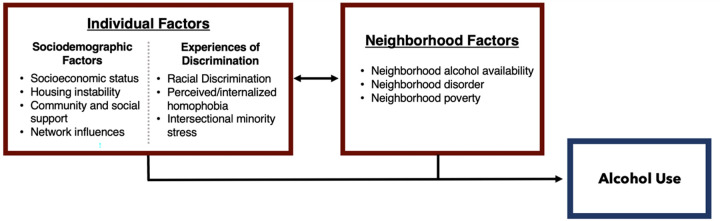 Figure 1
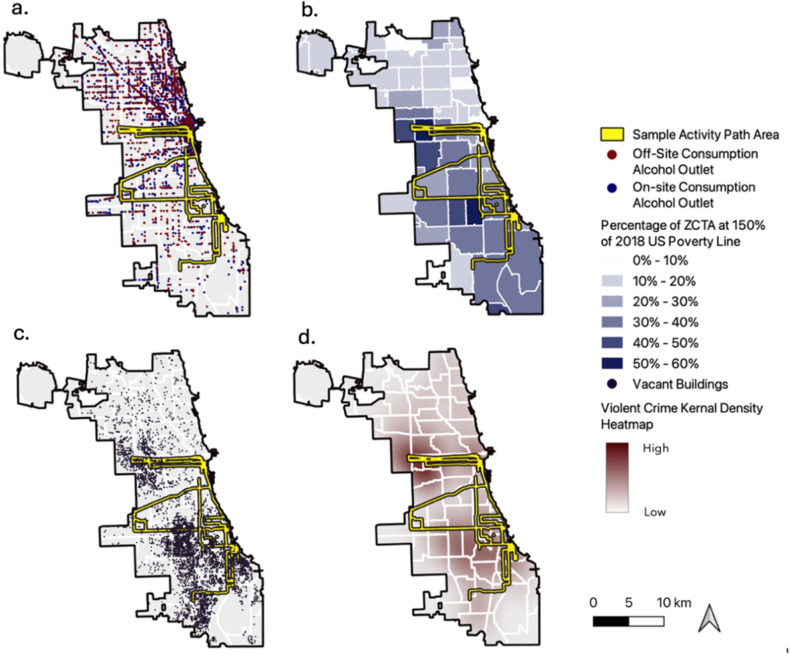 Figure 2
Peer Reviews
No public reviews on file for this paper yet. If you reviewed it on a platform where reviews are public (OpenReview, ICLR, NeurIPS, ICML), you can paste yours below so the community can read it here.
Videos
No videos yet. Explain this paper in a talk, walkthrough, or lecture? Add one.
Taxonomy
TopicsLGBTQ Health, Identity, and Policy · Health disparities and outcomes · Urban, Neighborhood, and Segregation Studies