The nasopharyngeal microbiome in South African children with lower respiratory tract infection: a nested case-control study of the Drakenstein Child Health Study
Shantelle Claassen-Weitz, Yao Xia, Lesley Workman, Luke Hannan, Sugnet Gardner-Lubbe, Kilaza S Mwaikono, Stephanie Harris Mounaud, William C. Nierman, Samantha Africa, Fadheela Patel, Felix Sizwe Dube, Veronica Allen, Lemese Ah Tow Edries, Heather J. Zar, Mark Patrick Nicol

TL;DR
This study explores how viruses and bacteria in the nose of South African infants are linked to lower respiratory infections, finding similar patterns to those in high-income countries.
Contribution
The study identifies specific viral and bacterial associations with LRTI in South African infants, revealing conserved patterns across different regions.
Findings
Respiratory Syncytial Virus (RSV) was strongly associated with LRTI in infants.
Haemophilus influenzae was identified as a major bacterial driver of LRTI, interacting with viruses.
Gram-positive bacteria like Dolosigranulum and Corynebacterium may protect against LRTI.
Abstract
Lower respiratory tract infection (LRTI) is a leading cause of infant morbidity and mortality globally. LRTI may be caused by viral or bacterial infections, individually or in combination. We investigated associations between LRTI and infant nasopharyngeal (NP) viruses and bacteria in a South African birth cohort. In a case-control study of infants enrolled in the Drakenstein Child Health Study (DCHS), LRTI cases were identified prospectively and age-matched with controls from the cohort. NP swabs were tested using quantitative real-time polymerase chain reaction (qPCR) and 16S rRNA gene amplicon sequencing. We calculated adjusted Conditional Odds Ratios (aORs) for qPCR targets and used mixed effects models to identify differentially abundant taxa between LRTI cases and controls and explore viral-bacterial interactions. Respiratory Syncytial Virus (RSV) [aOR: 5.69, 95% CI:…
Genes, proteins, chemicals, diseases, species, mutations and cell lines named across the full text — each resolved to its canonical identifier and authoritative record.
Click any figure to enlarge with its caption.
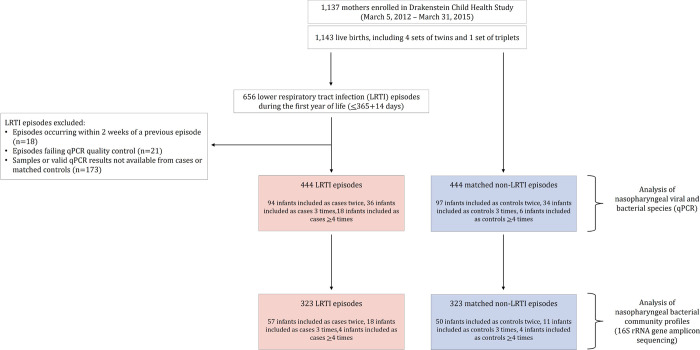 Figure 1
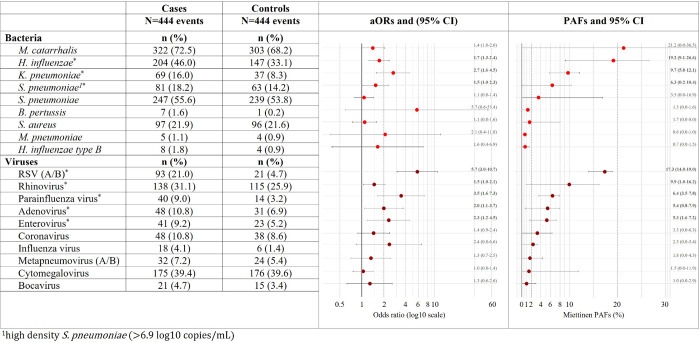 Figure 2
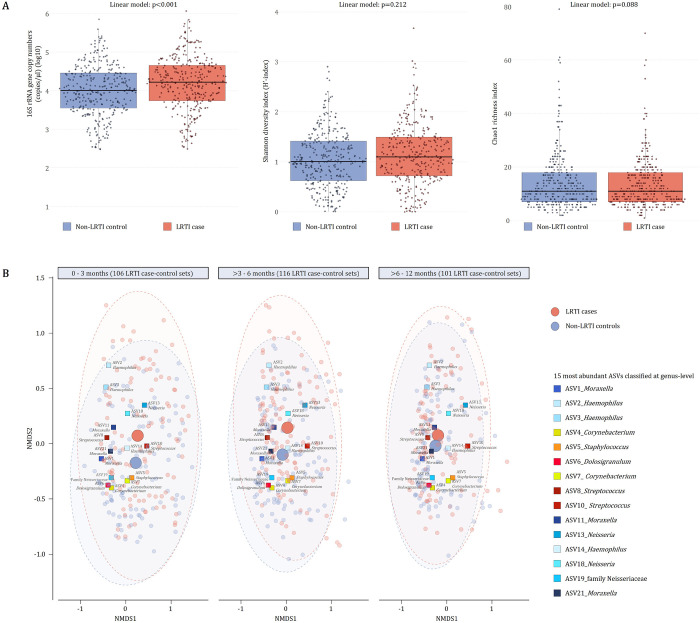 Figure 3
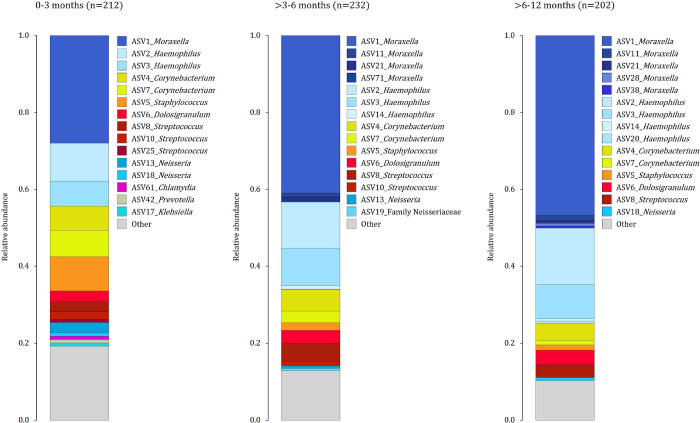 Figure 4
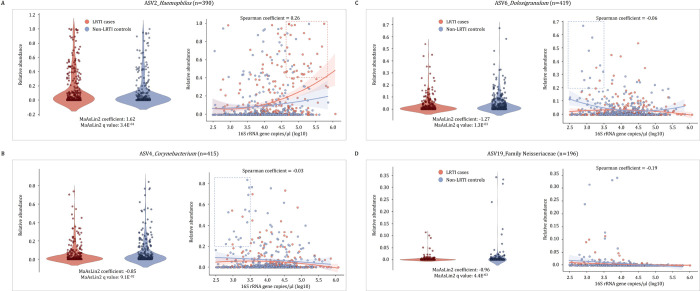 Figure 5
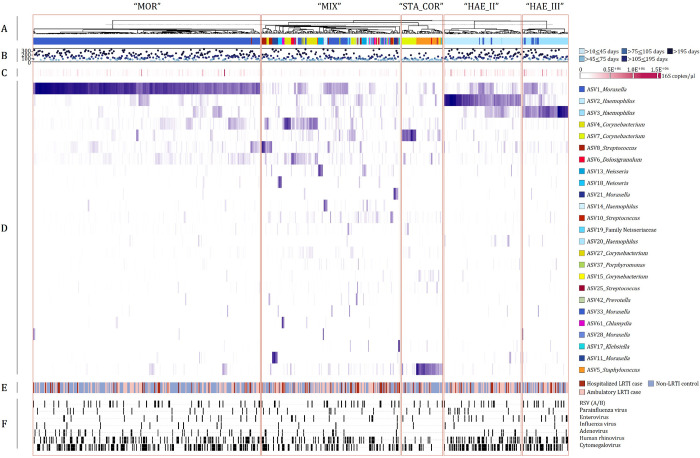 Figure 6
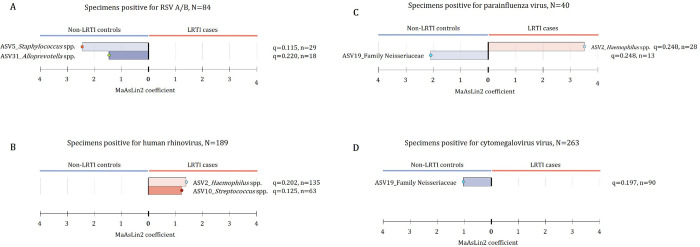 Figure 7
Peer Reviews
No public reviews on file for this paper yet. If you reviewed it on a platform where reviews are public (OpenReview, ICLR, NeurIPS, ICML), you can paste yours below so the community can read it here.
Videos
No videos yet. Explain this paper in a talk, walkthrough, or lecture? Add one.
Taxonomy
TopicsPediatric health and respiratory diseases · Respiratory viral infections research · Pneumonia and Respiratory Infections