Rapid assay development for low input targeted proteomics using a versatile linear ion trap
Brian Searle, Ariana Shannon, Rachael Teodorescu, No-Joon Song, Lilian Heil, Cristina Jacob, Philip Remes, Zihai Li, Mark Rubinstein

TL;DR
This paper introduces a cost-effective method for targeted proteomics using a hybrid quadrupole-linear ion trap instrument, enabling accurate protein quantification from very small samples.
Contribution
A new workflow for rapid targeted proteomics assay development using a hybrid quadrupole-LIT instrument without high-mass accuracy.
Findings
Quantification was consistent across three orders of magnitude in a matched-matrix background.
Low-level proteins like transcription factors and cytokines were measured with linearity below two orders of magnitude.
Results matched high-dimensional flow cytometry data for CD4+ and CD8+ T cell subsets from 1 ng samples.
Abstract
Advances in proteomics and mass spectrometry enable the study of limited cell populations, where high-mass accuracy instruments are typically required. While triple quadrupoles offer fast and sensitive low-mass accuracy measurements, these instruments are effectively restricted to targeted proteomics. Linear ion traps (LITs) offer a versatile, cost-effective alternative capable of both targeted and global proteomics. Here, we describe a workflow using a new hybrid quadrupole-LIT instrument that rapidly develops targeted proteomics assays from global data-independent acquisition (DIA) measurements without needing high-mass accuracy. Using an automated software approach for scheduling parallel reaction monitoring assays (PRM), we show consistent quantification across three orders of magnitude in a matched-matrix background. We demonstrate measuring low-level proteins such as transcription…
Genes, proteins, chemicals, diseases, species, mutations and cell lines named across the full text — each resolved to its canonical identifier and authoritative record.
Click any figure to enlarge with its caption.
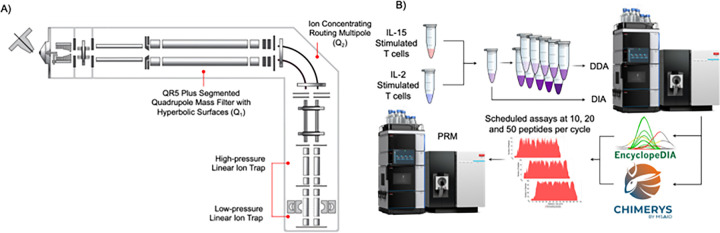 Figure 1
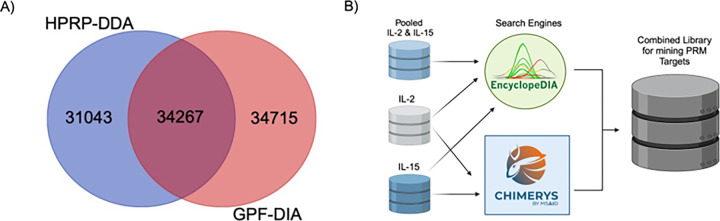 Figure 2
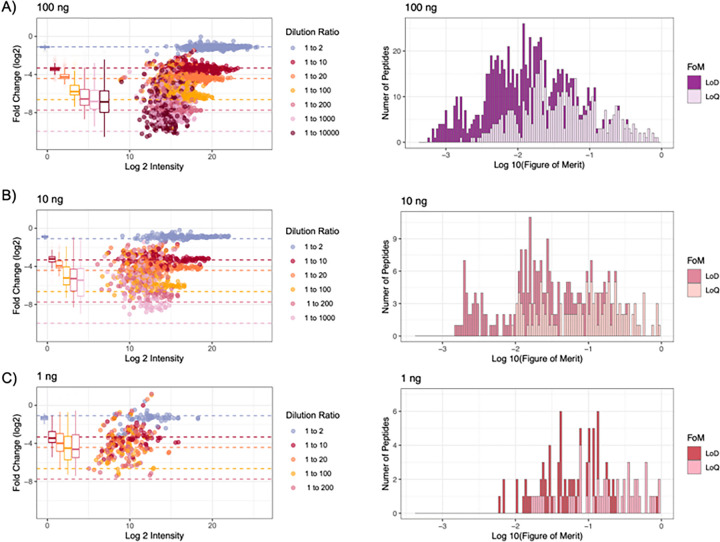 Figure 3
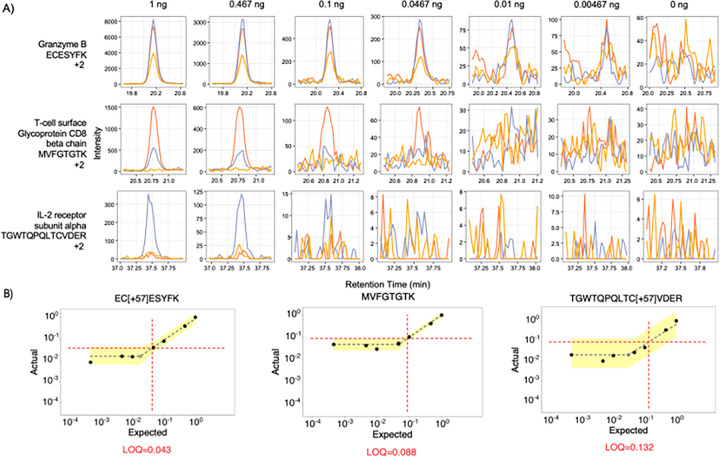 Figure 4
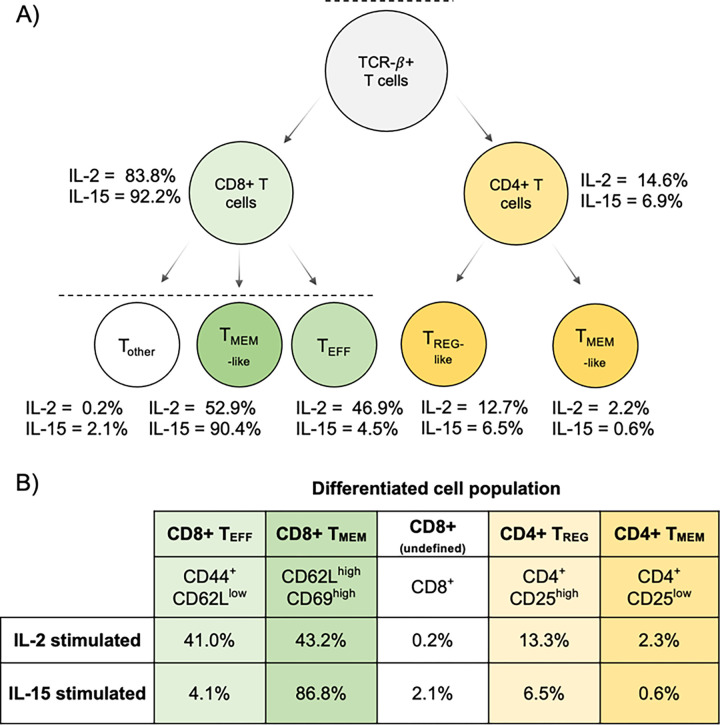 Figure 5
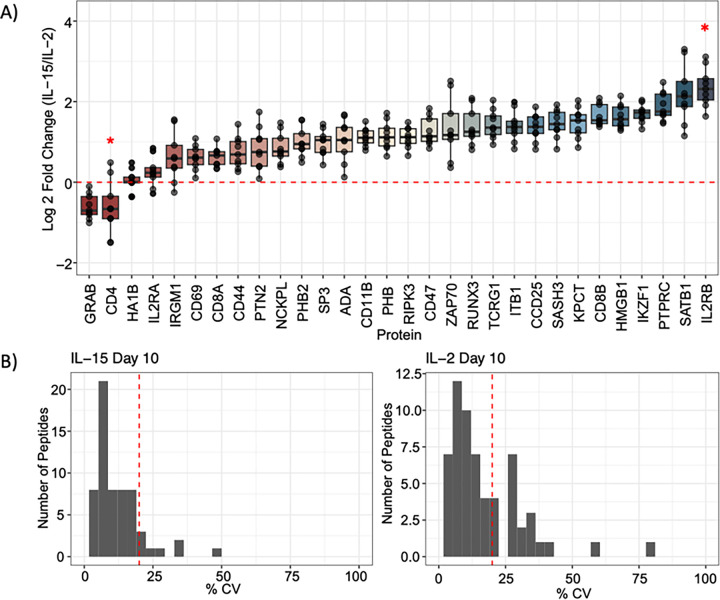 Figure 6
Peer Reviews
No public reviews on file for this paper yet. If you reviewed it on a platform where reviews are public (OpenReview, ICLR, NeurIPS, ICML), you can paste yours below so the community can read it here.
Videos
No videos yet. Explain this paper in a talk, walkthrough, or lecture? Add one.
Taxonomy
TopicsAdvanced Proteomics Techniques and Applications · Mass Spectrometry Techniques and Applications · Advanced Biosensing Techniques and Applications