The role of co-occurring conditions and genetics in the associations of eating disorders with attention-deficit/hyperactivity disorder and autism spectrum disorder
Liselotte Petersen, Gitte Christiansen, Hannah Chatwin, Zeynap Yilmaz, Diana Schendel, Cynthia Bulik, Jakob Grove, Isabell Brikell, Birgitte Semark, Katrine Holde, Mohamed Abdulkadir, Christopher Hubel, Clara Albiñana, Bjarni Vilhjálmsson, Anders Borglum, Ditte Demontis

TL;DR
Eating disorders are strongly linked with ADHD and autism, partly due to shared mood and anxiety issues and genetic factors.
Contribution
This study identifies genetic and familial links between eating disorders, ADHD, and autism, mediated by mood and anxiety disorders.
Findings
ADHD and ASD diagnoses are associated with significantly increased risk of eating disorders.
Mood or anxiety disorders mediate 44–100% of the link between ADHD/ASD and eating disorders.
ASD polygenic scores are positively associated with anorexia nervosa risk.
Abstract
Eating disorders (EDs) commonly co-occur with other psychiatric and neurodevelopmental disorders including attention-deficit/hyperactivity disorder (ADHD) and autism spectrum disorder (ASD); however, the pattern of family history and genetic overlap among them requires clarification. This study investigated the diagnostic, familial, and genetic associations of EDs with ADHD and ASD. The nationwide population-based cohort study included all individuals born in Denmark, 1981–2008, linked to their siblings and cousins. Cox regression was used to estimate associations between EDs and ADHD or ASD, and mediation analysis was used to assess the effects of intermediate mood or anxiety disorders. Polygenic scores (PGSs) were used to investigate the genetic association between anorexia nervosa (AN) and ADHD or ASD. Significantly increased risk for any ED was observed following an ADHD [hazard…
Genes, proteins, chemicals, diseases, species, mutations and cell lines named across the full text — each resolved to its canonical identifier and authoritative record.
Click any figure to enlarge with its caption.
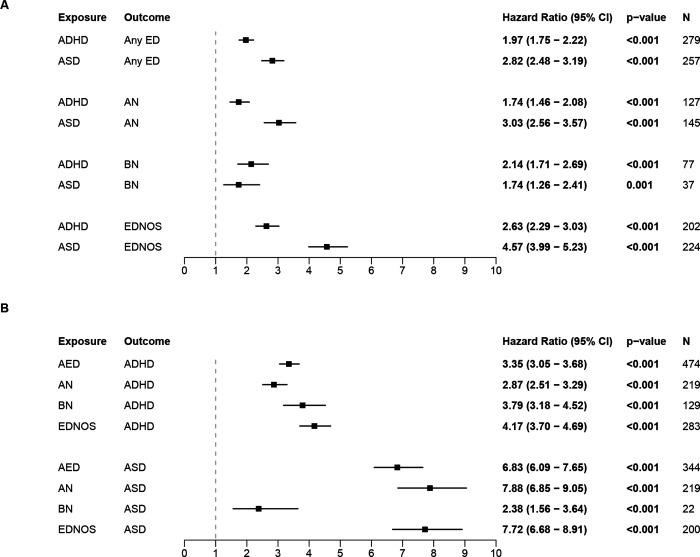 Figure 1
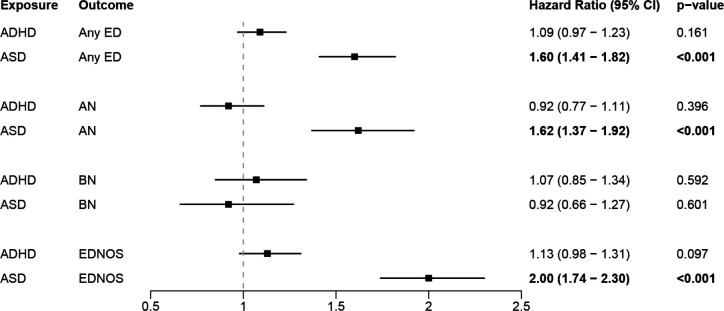 Figure 2
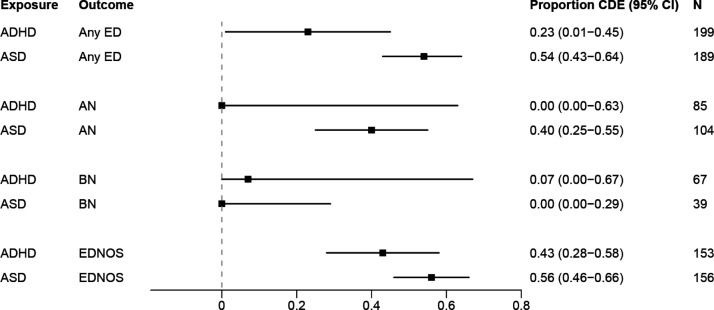 Figure 3
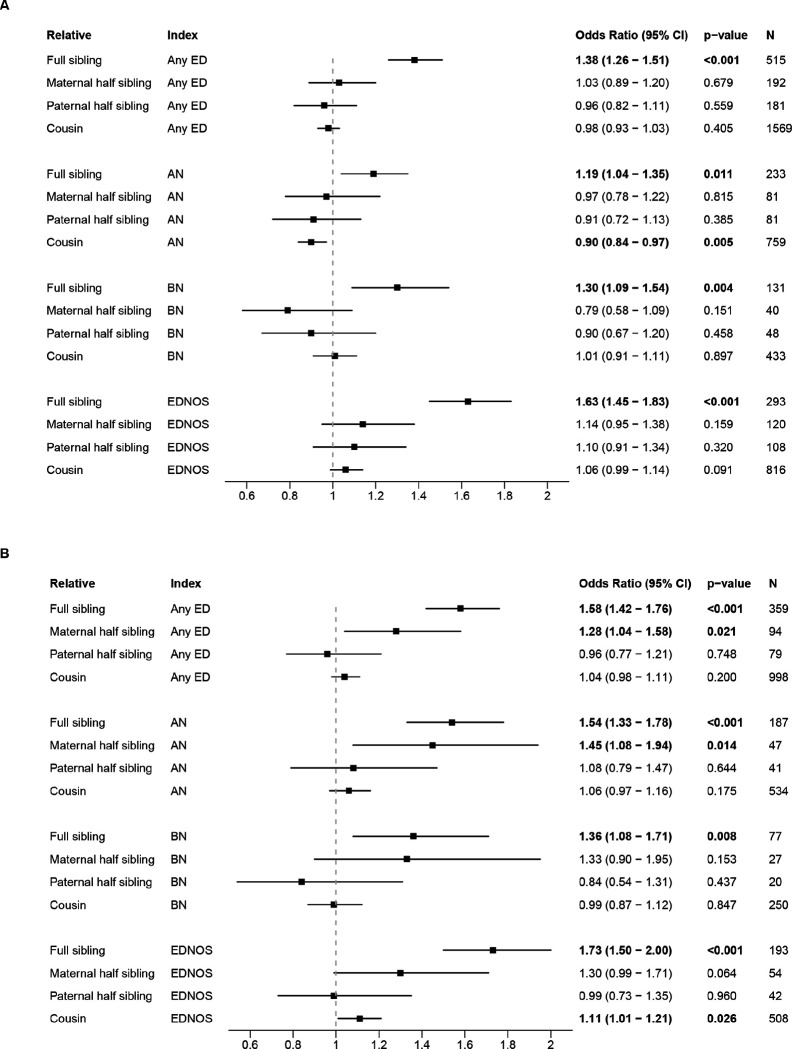 Figure 4
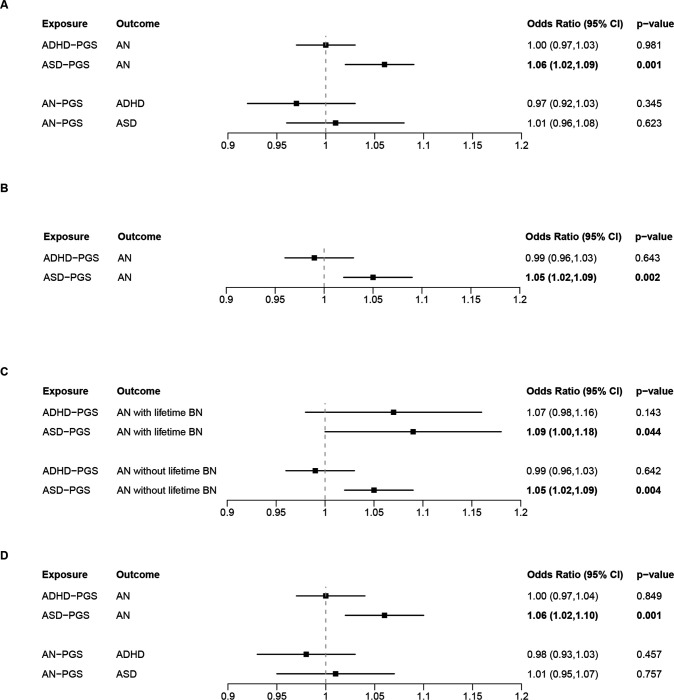 Figure 5
Peer Reviews
No public reviews on file for this paper yet. If you reviewed it on a platform where reviews are public (OpenReview, ICLR, NeurIPS, ICML), you can paste yours below so the community can read it here.
Videos
No videos yet. Explain this paper in a talk, walkthrough, or lecture? Add one.
Taxonomy
TopicsEating Disorders and Behaviors · Child Nutrition and Feeding Issues · Autism Spectrum Disorder Research