Structural basis for transcription activation through cooperative recruitment of MntR
Haoyuan Shi, Yu Fu, Vilmante Kodyte, Amelie Andreas, Ankita J. Sachla, Keiki Miller, Ritu Shrestha, John D. Helmann, Arthur Glasfeld, Shivani Ahuja

TL;DR
This study reveals how MntR activates gene expression by cooperatively binding to multiple DNA sites in response to manganese levels.
Contribution
The paper provides the first structural insight into cooperative DNA binding by MntR for transcription activation.
Findings
Four MntR dimers bind to four low-affinity DNA sites across the mneP promoter region.
Cooperative binding is facilitated by polar and non-polar contacts between MntR dimers.
Structural and functional data explain how MntR activates manganese efflux gene expression.
Abstract
The manganese transport regulator (MntR) from B. subtilis is a dual regulatory protein that responds to heightened Mn2+ availability in the cell by both repressing the expression of uptake transporters and activating the expression of efflux proteins. Recent work indicates that, in its role as an activator, MntR binds several sites upstream of the genes encoding Mn2+ exporters, leading to a cooperative response to manganese. Here, we use cryo-EM to explore the molecular basis of gene activation by MntR and report a structure of four MntR dimers bound to four 18-base pair sites across an 84-base pair regulatory region of the mneP promoter. Our structures, along with solution studies including mass photometry and in vivo transcription assays, reveal that MntR dimers employ polar and non-polar contacts to bind cooperatively to an array of low-affinity DNA-binding sites. These results…
Genes, proteins, chemicals, diseases, species, mutations and cell lines named across the full text — each resolved to its canonical identifier and authoritative record.
Click any figure to enlarge with its caption.
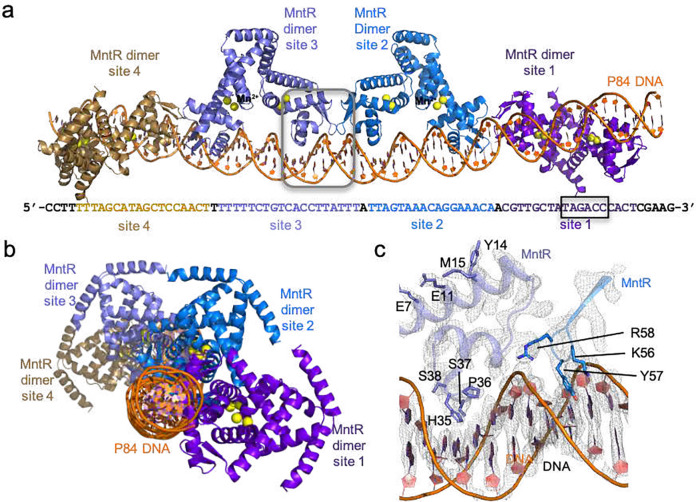 Figure 1
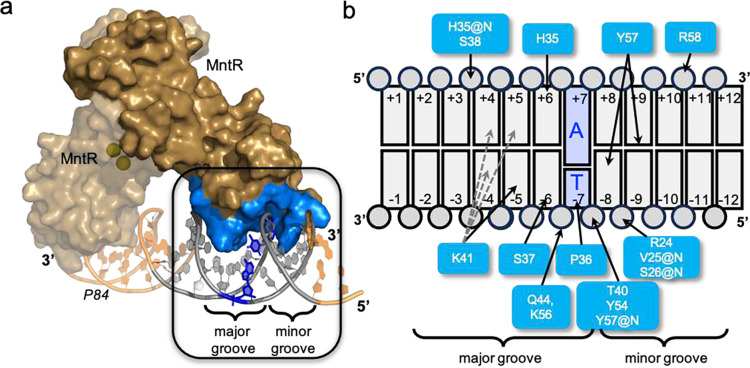 Figure 2
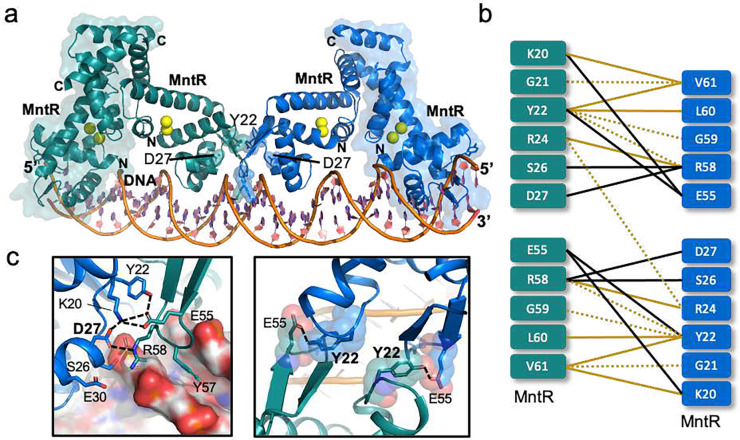 Figure 3
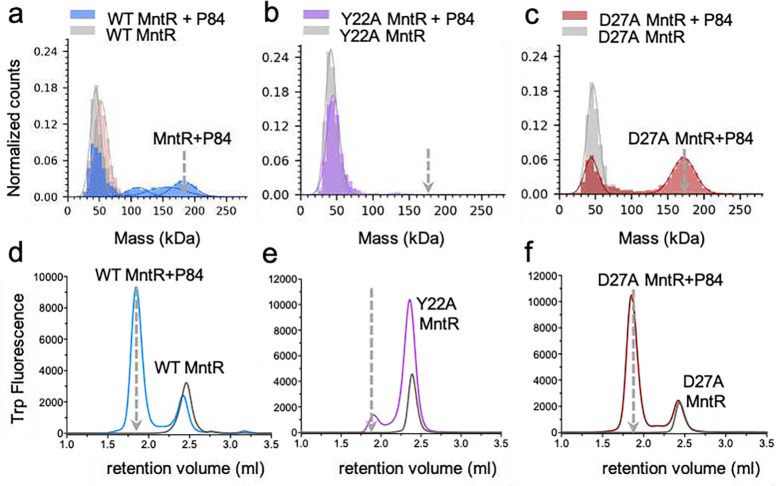 Figure 4
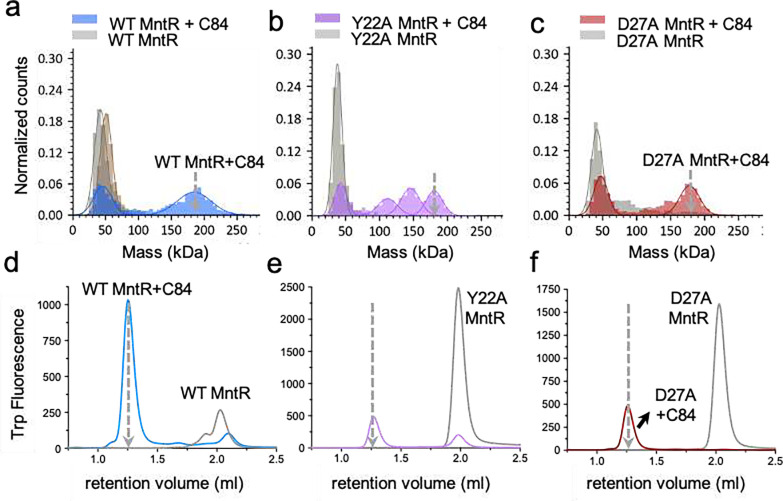 Figure 5
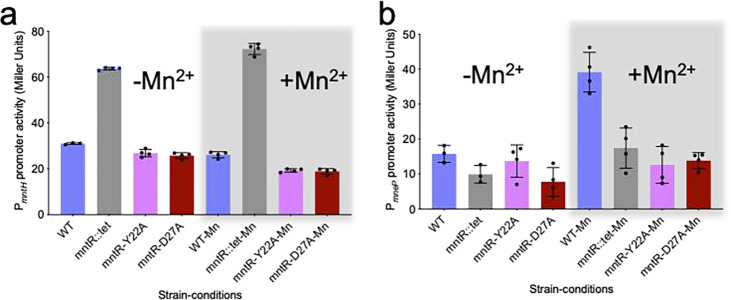 Figure 6
Peer Reviews
No public reviews on file for this paper yet. If you reviewed it on a platform where reviews are public (OpenReview, ICLR, NeurIPS, ICML), you can paste yours below so the community can read it here.
Videos
No videos yet. Explain this paper in a talk, walkthrough, or lecture? Add one.
Taxonomy
TopicsAnimal Genetics and Reproduction