Structural Characterization of Disulfide-Linked p53-Derived Peptide Dimers
Magdalena C. DiGiorno, Nisansala Vithanage, Clara G. Victorio, Dale F. Kreitler, Victor K. Outlaw, Nicholas Sawyer

TL;DR
This paper explores how disulfide bonds in p53-derived peptides form stable dimers with specific structural features that could be useful for drug design.
Contribution
The study reveals a tunable molecular architecture in disulfide-linked p53-derived peptide dimers with implications for protein targeting and drug development.
Findings
Leu6 and Leu10 are critical for forming stable disulfide-linked dimers.
X-ray crystallography shows a leucine-rich LxxLL dimer interface with canonical packing.
Higher-order oligomerization is mediated by Phe3, Trp7, and Leu10 residues.
Abstract
Disulfide bonds provide a convenient method for chemoselective alteration of peptide and protein structure and function. We previously reported that mild oxidation of a p53-derived bisthiol peptide (CTFANLWRLLAQNC) under dilute non-denaturing conditions led to unexpected disulfide-linked dimers as the exclusive product. The dimers were antiparallel, significantly α-helical, resistant to protease degradation, and easily reduced back to the original bisthiol peptide. Here we examine the intrinsic factors influencing peptide dimerization using a combination of amino acid substitution, circular dichroism (CD) spectroscopy, and X-ray crystallography. CD analysis of peptide variants suggests critical roles for Leu6 and Leu10 in the formation of stable disulfide-linked dimers. The 1.0 Å resolution crystal structure of the peptide dimer supports these data, revealing a leucine-rich LxxLL dimer…
Genes, proteins, chemicals, diseases, species, mutations and cell lines named across the full text — each resolved to its canonical identifier and authoritative record.
Click any figure to enlarge with its caption.
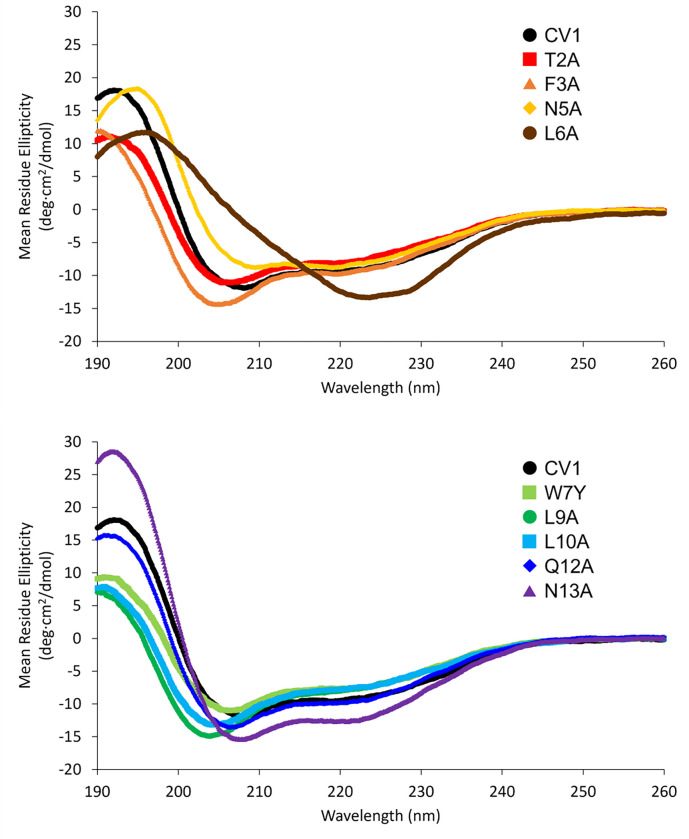 Figure 1
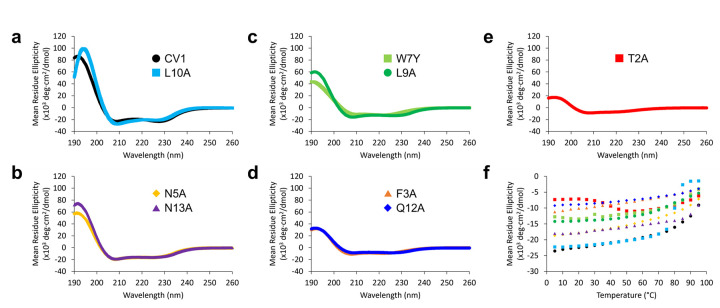 Figure 2
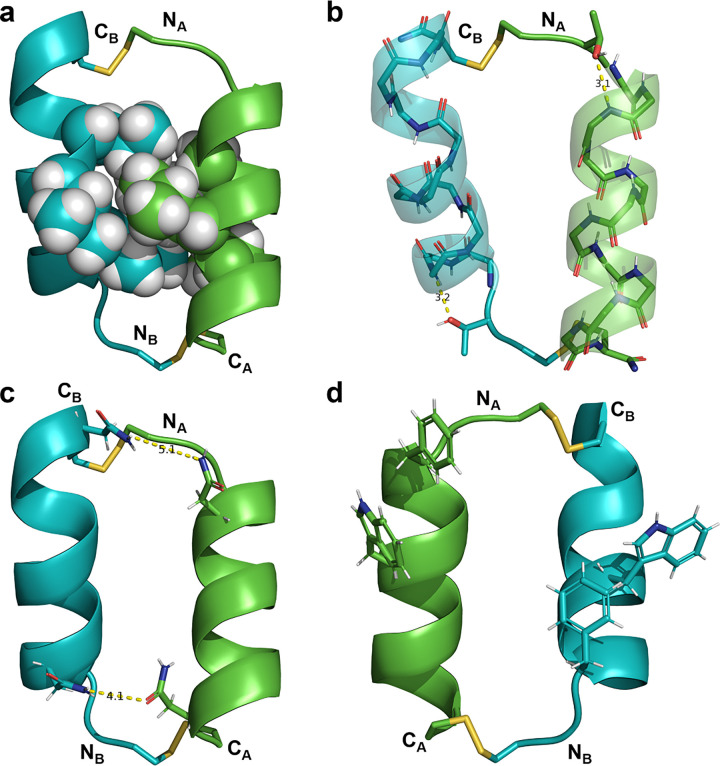 Figure 3
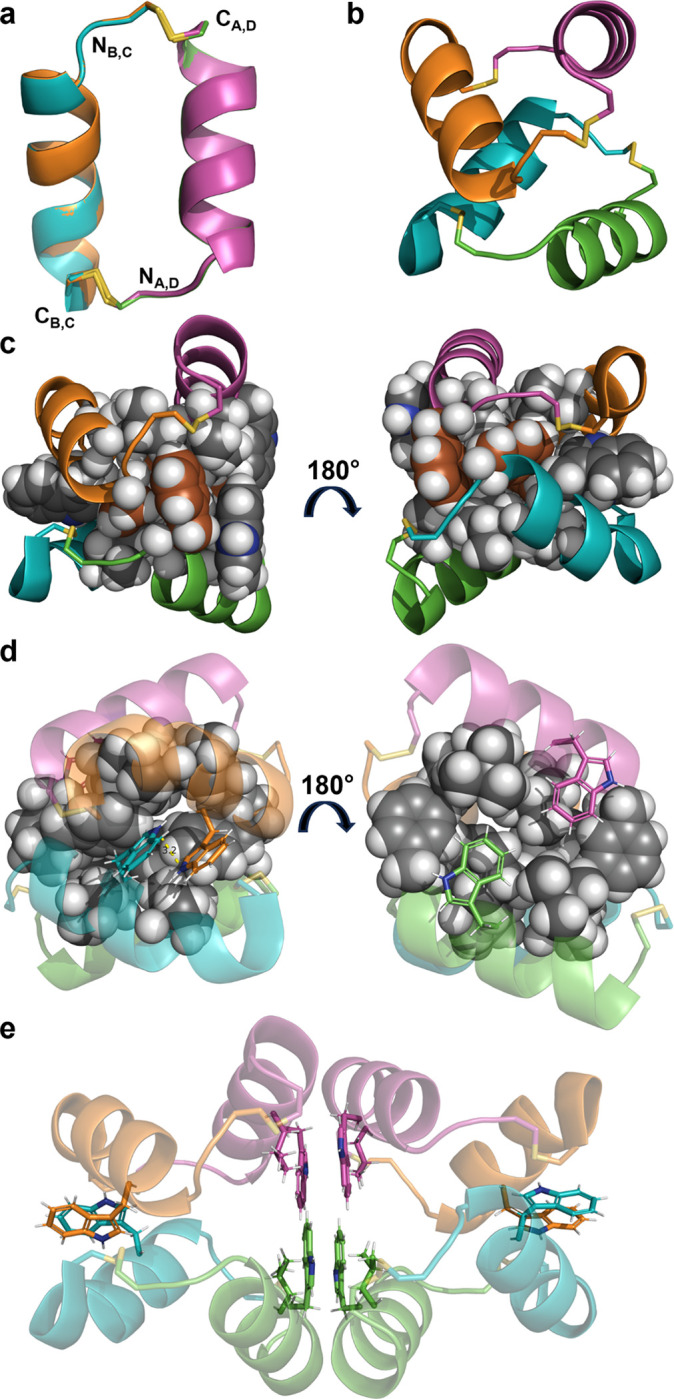 Figure 4
Peer Reviews
No public reviews on file for this paper yet. If you reviewed it on a platform where reviews are public (OpenReview, ICLR, NeurIPS, ICML), you can paste yours below so the community can read it here.
Videos
No videos yet. Explain this paper in a talk, walkthrough, or lecture? Add one.
Taxonomy
TopicsChemical Synthesis and Analysis · Click Chemistry and Applications · Cancer-related Molecular Pathways