Loss of Tuberous Sclerosis Complex 2 confers inflammation via dysregulation of Nuclear factor kappa-light-chain-enhancer of activated B cells
Darius K. McPhail, Mohammad A.M. Alzahrani, Katie R. Martin, Brian L. Calver, Adrian J. Harwood, Jeffrey P. MacKeigan, David M. Davies, Andrew R. Tee

TL;DR
This study shows that loss of TSC2 leads to inflammation via NF-κB and suggests combining NF-κB inhibitors with mTOR inhibitors could improve TSC treatment.
Contribution
The study identifies NF-κB-driven autocrine signaling in TSC2-deficient cells and proposes NF-κB inhibition as a novel therapeutic strategy.
Findings
NF-κB-regulated genes are enriched in TSC patient tumors and cell models.
TSC2 deficiency causes NF-κB and STAT3 activation through IL-6 autocrine signaling.
Combined mTORC1 and NF-κB inhibition prevents anchorage-independent growth and colony regrowth in TSC2-deficient cells.
Abstract
Aberrant activation of mTORC1 is clearly defined in TSC, causing uncontrolled cell growth. While mTORC1 inhibitors show efficacy to stabilise tumour growth in TSC, they are not fully curative. Disease facets of TSC that are not restored with mTOR inhibitors might involve NF-κB. The study aimed to characterise NF-κB in the context of TSC. Enrichment of NF-κB-regulated genes was observed in TSC patient tumours, SEN/SEGAs, cortical tubers and a TSC tumour-derived cell line (621 – 101). Highlighting an inflammatory component of TSC, TSC cell models showed an elevated level of NF-κB and STAT3 activation. Herein, we report a dysregulated inflammatory phenotype of TSC2-deficient cells where NF-κB promotes autocrine signalling involving IL-6. Of importance, mTORC1 inhibition does not block this inflammatory signal to promote STAT3, while NF-κB inhibition was much more effective. Combined…
Genes, proteins, chemicals, diseases, species, mutations and cell lines named across the full text — each resolved to its canonical identifier and authoritative record.
Click any figure to enlarge with its caption.
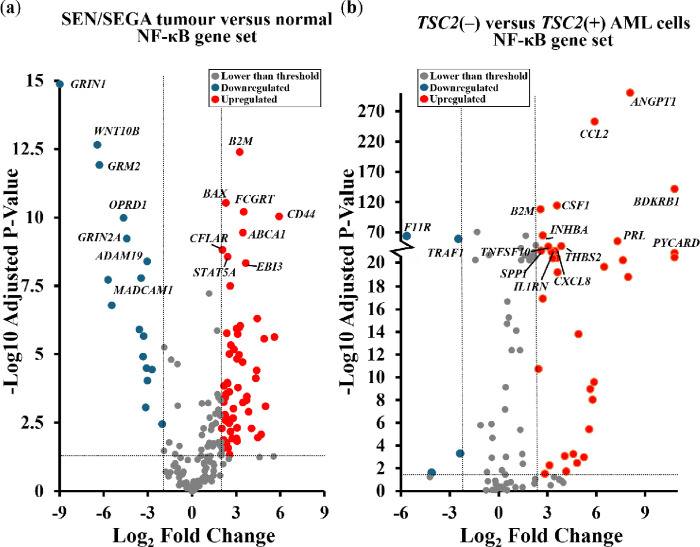 Figure 1
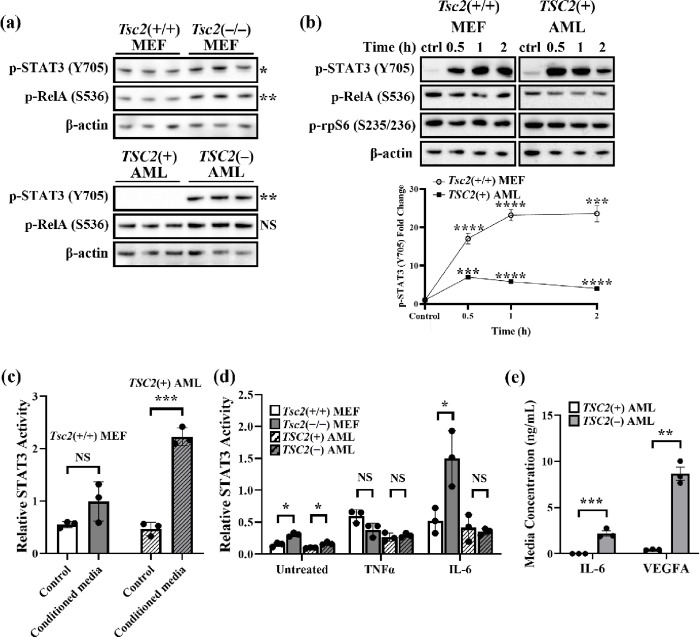 Figure 2
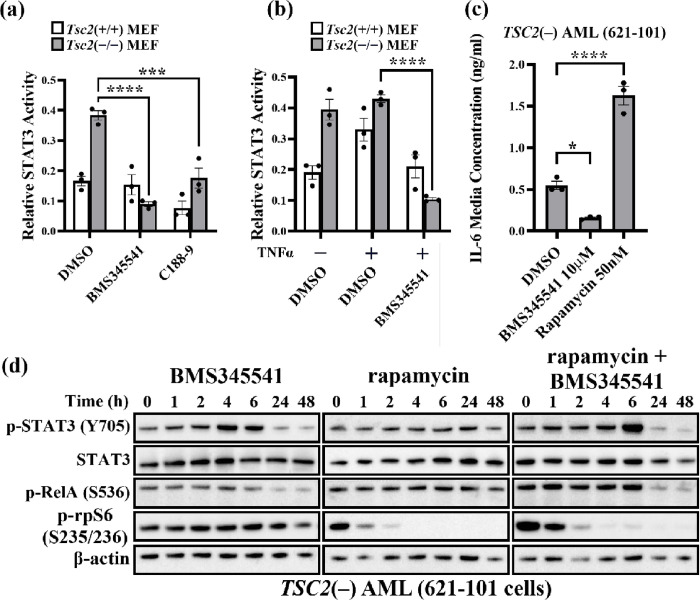 Figure 3
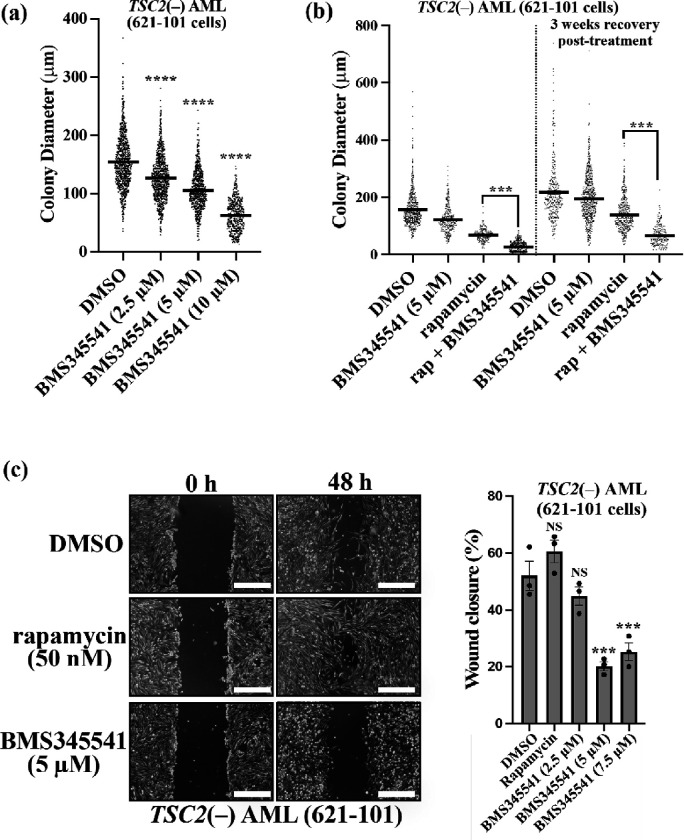 Figure 4
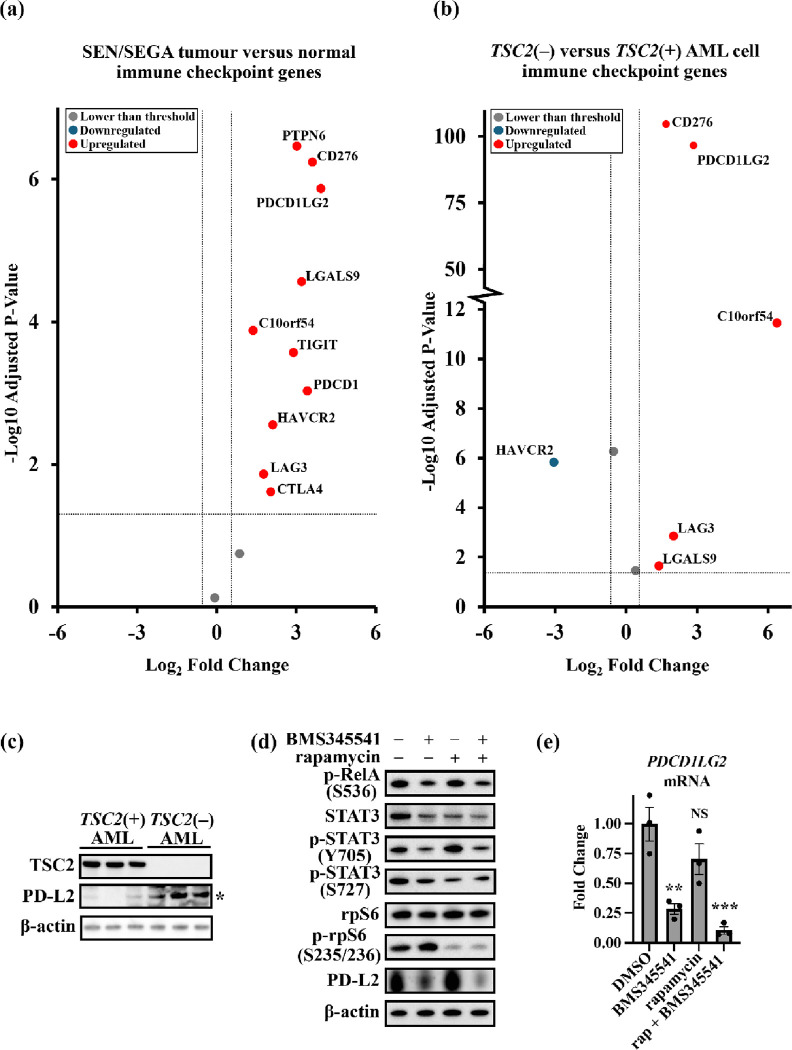 Figure 5
Peer Reviews
No public reviews on file for this paper yet. If you reviewed it on a platform where reviews are public (OpenReview, ICLR, NeurIPS, ICML), you can paste yours below so the community can read it here.
Videos
No videos yet. Explain this paper in a talk, walkthrough, or lecture? Add one.
Taxonomy
TopicsTuberous Sclerosis Complex Research · Mast cells and histamine · Chronic Myeloid Leukemia Treatments