Learning Causes of Functional Dynamic Targets: Screening and Local Methods
Ruiqi Zhao, Xiaoxia Yang, Yangbo He

TL;DR
This paper introduces new methods to identify direct and indirect causes of dynamic targets that change over time using screening and local learning techniques.
Contribution
The novelty lies in combining screening and structural learning to identify both direct and indirect causes up to a given distance in functional dynamic targets.
Findings
The proposed screening method effectively selects variables significantly correlated with the target.
The local method successfully identifies direct and indirect causes up to a specified distance.
Theoretical and synthetic experiments confirm the correctness and effectiveness of the methods.
Abstract
This paper addresses the challenge of identifying causes for functional dynamic targets, which are functions of various variables over time. We develop screening and local learning methods to learn the direct causes of the target, as well as all indirect causes up to a given distance. We first discuss the modeling of the functional dynamic target. Then, we propose a screening method to select the variables that are significantly correlated with the target. On this basis, we introduce an algorithm that combines screening and structural learning techniques to uncover the causal structure among the target and its causes. To tackle the distance effect, where long causal paths weaken correlation, we propose a local method to discover the direct causes of the target in these significant variables and further sequentially find all indirect causes up to a given distance. We show theoretically…
Genes, proteins, chemicals, diseases, species, mutations and cell lines named across the full text — each resolved to its canonical identifier and authoritative record.
Click any figure to enlarge with its caption.
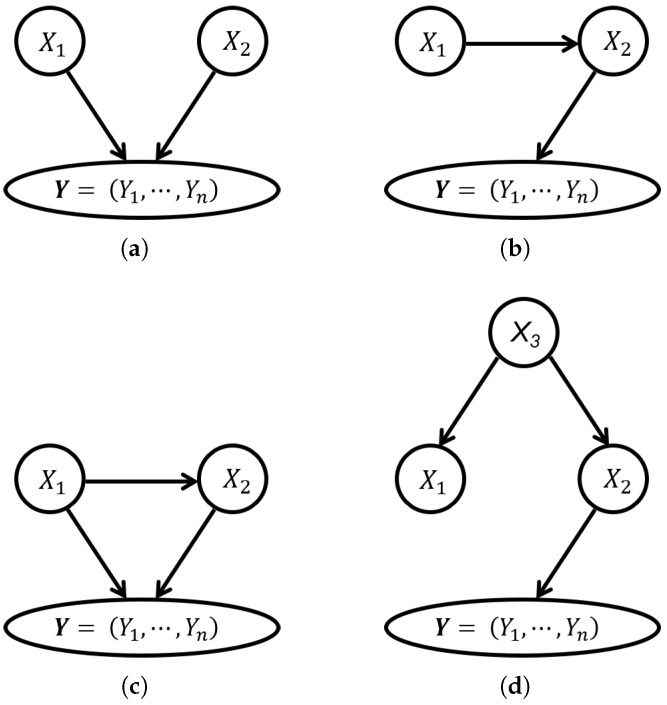 Figure 1
 Figure 2
 Figure 3
 Figure 4
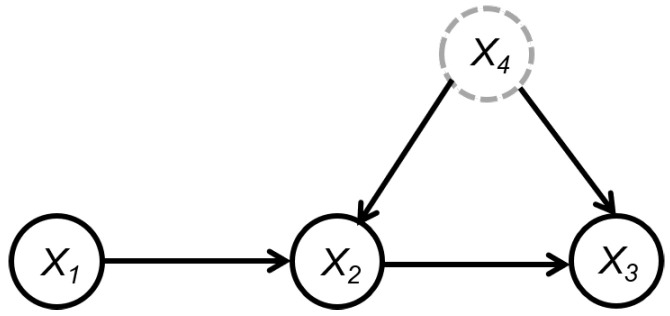 Figure 5
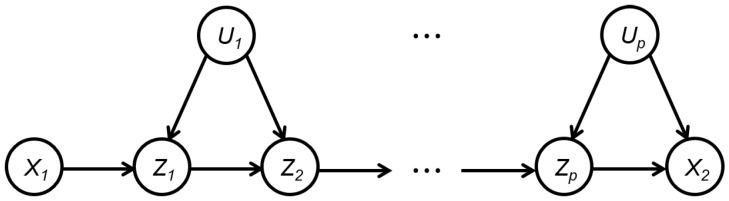 Figure 6
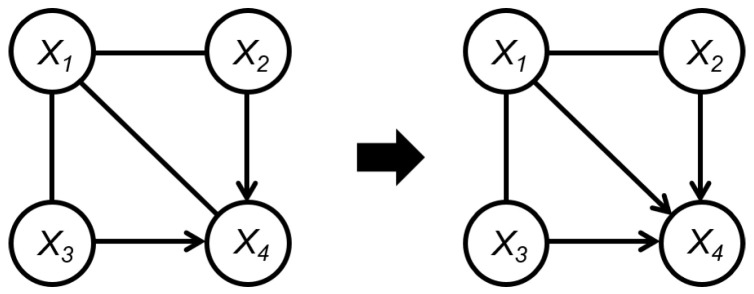 Figure 7
Peer Reviews
No public reviews on file for this paper yet. If you reviewed it on a platform where reviews are public (OpenReview, ICLR, NeurIPS, ICML), you can paste yours below so the community can read it here.
Videos
No videos yet. Explain this paper in a talk, walkthrough, or lecture? Add one.
Taxonomy
TopicsBayesian Modeling and Causal Inference · Imbalanced Data Classification Techniques · Machine Learning and Data Classification