Residual effect of sequential 4-channel neuromuscular electrical stimulation evaluated by high-resolution manometry
Jiwoon Lim, Sung Eun Hyun, Hayoung Kim, Ju Seok Ryu

TL;DR
This study shows that a new type of electrical stimulation during swallowing can improve throat muscle function, with possible lasting effects.
Contribution
The study introduces sequential 4-channel NMES and evaluates its residual effects on swallowing physiology using HRM.
Findings
Sequential 4-channel NMES significantly improved HRM parameters like pressure and area in the velopharynx and mesopharynx.
Improvements in pressure and area variables showed a tendency to persist after NMES, though not statistically significant.
NMES application on suprahyoid and infrahyoid muscles during swallowing enhances oropharyngeal function as measured by HRM.
Abstract
High-resolution manometry (HRM) can quantify swallowing pathophysiology to evaluate the status of the pharynx. Sequential 4-channel neuromuscular electrical stimulation (NMES) was recently developed based on the normal contractile sequences of swallowing-related muscles. This study aimed to examine the effects of sequential 4-channel NMES for compensatory application during swallowing and to observe the residual effects after the application of NMES using HRM. Sequential 4-channel NMES significantly improved the HRM parameters, with respect to the maximal pressure and area of the velopharynx (VP), maximal pressure and area of the mesopharynx (MP), and upper esophageal sphincter (UES) activation and nadir duration. Furthermore, the improvement in the pressure and area variables of the VP and MP showed a tendency to maintain even when measured after NMES, but there are no significant…
Genes, proteins, chemicals, diseases, species, mutations and cell lines named across the full text — each resolved to its canonical identifier and authoritative record.
Click any figure to enlarge with its caption.
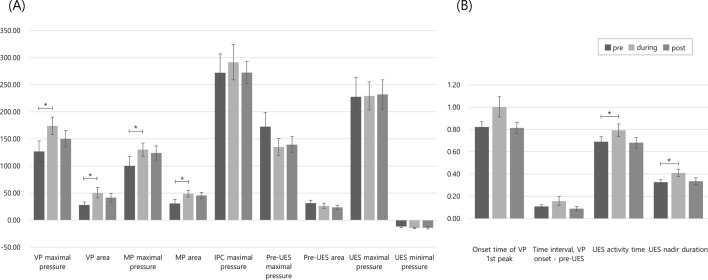 Figure 1
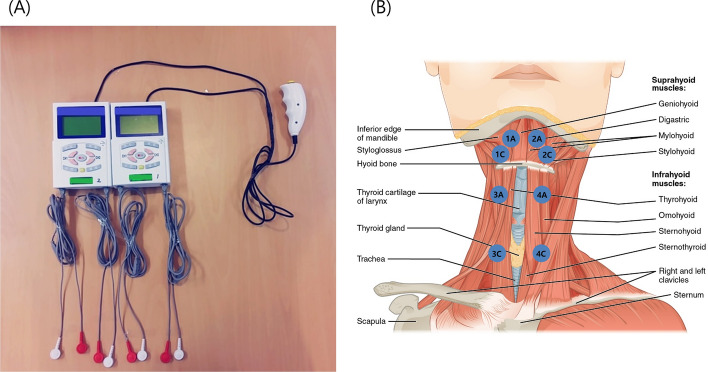 Figure 2
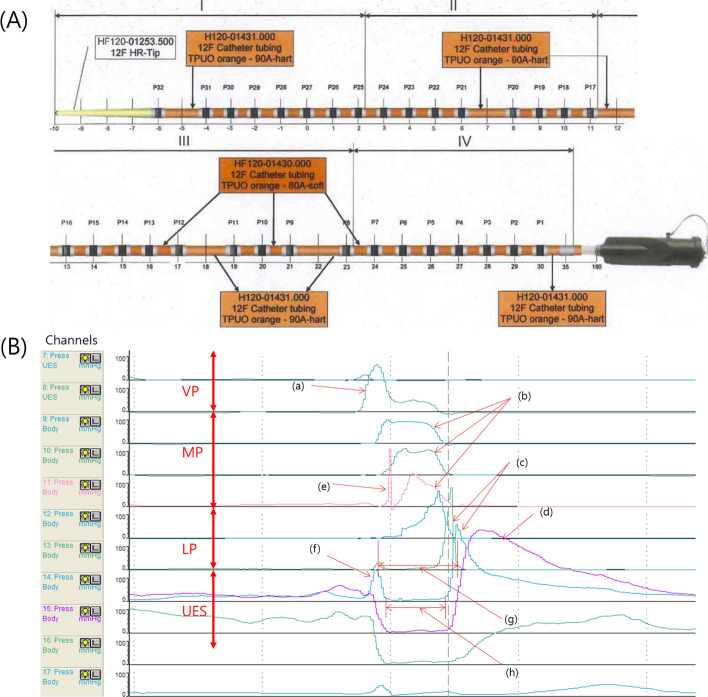 Figure 3
Peer Reviews
No public reviews on file for this paper yet. If you reviewed it on a platform where reviews are public (OpenReview, ICLR, NeurIPS, ICML), you can paste yours below so the community can read it here.
Videos
No videos yet. Explain this paper in a talk, walkthrough, or lecture? Add one.
Taxonomy
TopicsMuscle activation and electromyography studies · Advanced Sensor and Energy Harvesting Materials · EEG and Brain-Computer Interfaces