Cardiorespiratory Fitness and Its Place in Medicine
Robert Ross, Jonathan Myers

TL;DR
Cardiorespiratory fitness is a strong predictor of health outcomes and should be routinely measured in healthcare.
Contribution
The paper reinforces the clinical importance of cardiorespiratory fitness and its non-exercise estimation methods.
Findings
CRF predicts morbidity and mortality beyond traditional risk factors.
Non-exercise CRF estimates correlate with all-cause mortality.
Exercise improves CRF in line with health guidelines.
Abstract
The evidence that cardiorespiratory fitness (CRF) predicts morbidity and mortality independent of commonly obtained risk factors is beyond dispute. Observations establishing that the addition of CRF to algorithms for estimating cardiovascular disease risk reinforces the clinical utility of CRF. Evidence suggesting that non-exercise estimations of CRF are associated with all-cause mortality provides an opportunity to obtain estimates of CRF in a cost-effective manner. Together with the observation that CRF is substantially improved in response to exercise consistent with guideline recommendations underscores the position that CRF should be included as a routine measure across all health care settings. Here we provide a brief overview of the evidence in support of this position.
Genes, proteins, chemicals, diseases, species, mutations and cell lines named across the full text — each resolved to its canonical identifier and authoritative record.
Click any figure to enlarge with its caption.
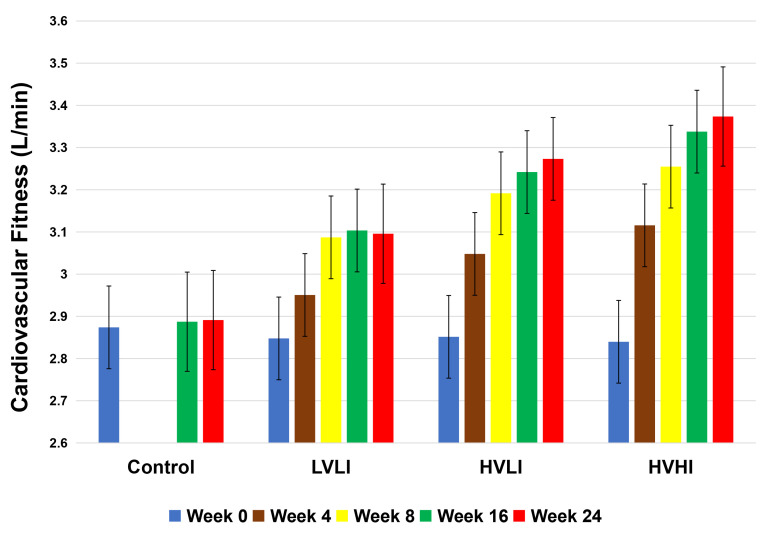 Figure 1
Peer Reviews
No public reviews on file for this paper yet. If you reviewed it on a platform where reviews are public (OpenReview, ICLR, NeurIPS, ICML), you can paste yours below so the community can read it here.
Videos
No videos yet. Explain this paper in a talk, walkthrough, or lecture? Add one.
Taxonomy
TopicsGeological and Geophysical Studies Worldwide · Archaeological and Geological Studies · Geological and Tectonic Studies in Latin America