Noninvasive Evaluation of Angiogenesis and Therapeutic Response after Hindlimb Ischemia with an Integrin-Targeted Tracer by PET
Zhongchan Sun, Weibin He, Shuang Xia, Guang Tong, Lin Zeng, Ling Xue, Junqing Yang, Ning Tan, Pengcheng He

TL;DR
This study uses a special PET tracer to noninvasively track blood vessel growth and treatment response in a mouse model of limb ischemia.
Contribution
The study introduces a one-step labeled RGD tracer for PET imaging to monitor angiogenesis and therapeutic response in hindlimb ischemia.
Findings
18F-PRGD2 tracer showed specific binding to αvβ3 integrin and detected angiogenesis as early as 3 days after surgery.
VEGF treatment increased tracer uptake and angiogenesis, confirming the tracer's ability to monitor therapeutic response.
The tracer's simple synthesis and in vivo performance suggest potential for future clinical use in ischemic diseases.
Abstract
Peripheral arterial disease (PAD) can severely compromise limb vitality and function. Angiogenesis plays an important role in healing of ischemic lesions. Radiolabeled RGD (Arg-Gly-Asp) peptides specifically targeting αvβ3 integrin are promising tracers for imaging angiogenesis. In this study, we investigated the application of a one-step labeled RGD in evaluation of angiogenesis and therapy response in a mouse model of hindlimb ischemia (HI) by positron emission tomography (PET). HI was induced by ablation of the femoral artery in mice. PET imaging using 18F-AlF-NOTA-PRGD2 (18F-PRGD2) tracer was performed at day 0 (pre-surgery) and days 3, 7, 14, and 21 after surgery to evaluate hindlimb angiogenesis longitudinally and noninvasively. The control peptide RAD (Arg-Ala-Asp) labeled with a similar procedure and a block agent were used to confirm the specific binding of…
Genes, proteins, chemicals, diseases, species, mutations and cell lines named across the full text — each resolved to its canonical identifier and authoritative record.
Click any figure to enlarge with its caption.
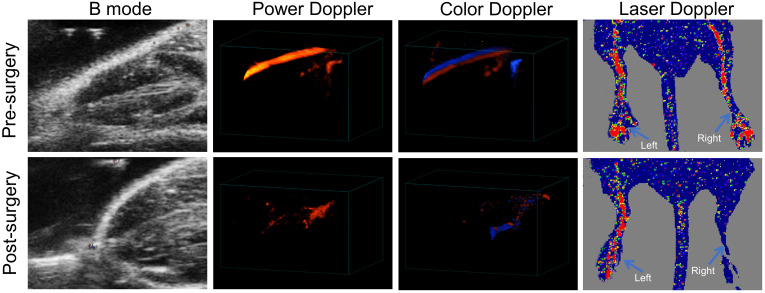 Figure 1
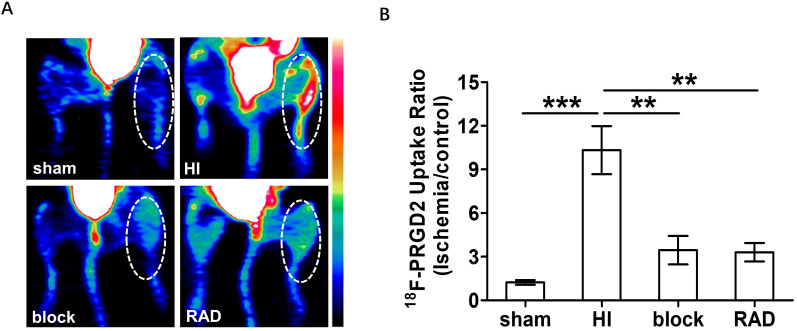 Figure 2
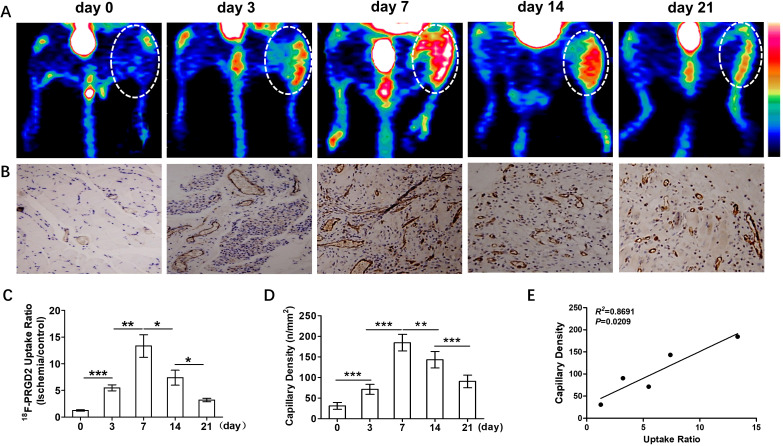 Figure 3
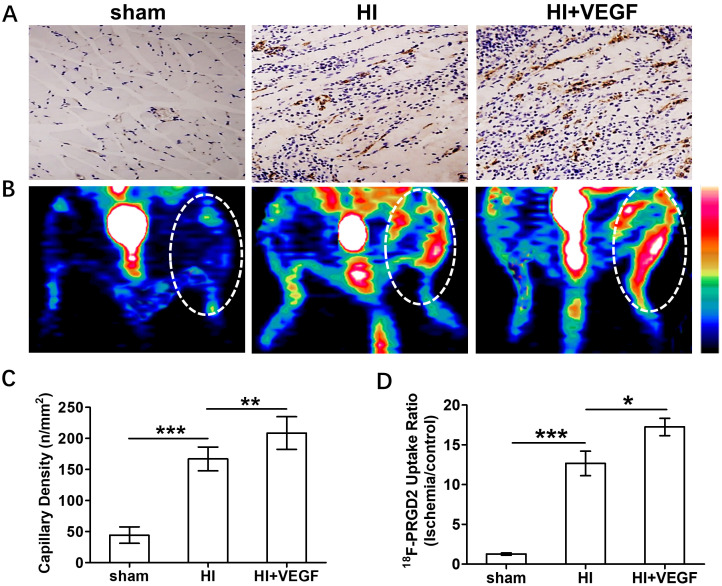 Figure 4
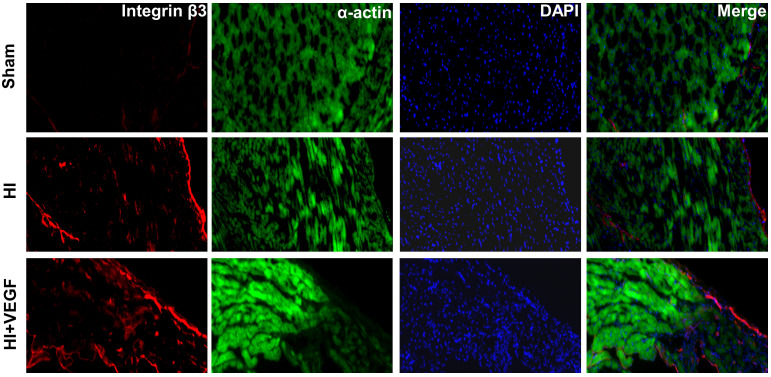 Figure 5
Peer Reviews
No public reviews on file for this paper yet. If you reviewed it on a platform where reviews are public (OpenReview, ICLR, NeurIPS, ICML), you can paste yours below so the community can read it here.
Videos
No videos yet. Explain this paper in a talk, walkthrough, or lecture? Add one.
Taxonomy
TopicsCell Adhesion Molecules Research · Angiogenesis and VEGF in Cancer · Protease and Inhibitor Mechanisms