Considering the Possible Role of Pharmacists According to the Presence or Absence of Lifestyle-Related Diseases at the Time of Coronary CT Examination and Trends of Medication Use for These Diseases by Medical Doctors
Erika Miura-Takahashi, Kohei Tashiro, Yuhei Shiga, Yuto Kawahira, Sara Higashi, Yuki Otsu, Hidetoshi Kamimura, Shin-ichiro Miura

TL;DR
The study explores how pharmacists can help manage lifestyle-related diseases in patients with coronary artery disease by analyzing medication use and disease control.
Contribution
Highlights pharmacists' potential role in optimizing drug combinations for lifestyle-related diseases in coronary CT patients.
Findings
Patients with lifestyle-related diseases had a significantly higher rate of coronary artery disease.
Control of hypertension, dyslipidemia, and diabetes was poor despite medication use.
Pharmacists are suggested to advise on drug combinations to improve disease management.
Abstract
Background: Because patients often already have coronary artery disease (CAD) at the time of a coronary artery computed tomography angiography (CCTA) examination, we examined the medications prescribed by medical doctors for lifestyle-related diseases and investigated what possible role pharmacists can play in prescribing. Methods: Patients (n = 1357) who underwent CCTA examination were divided into two groups according to the presence or absence of lifestyle-related diseases [hypertension (HTN), dyslipidemia (DL) and diabetes mellitus (DM)], and the relationship between the presence or absence of CAD was examined. Results: The rate of CAD was significantly higher in patients with HTN, DL or DM than in patients without these diseases. The blood pressure in the HTN group was 140 ± 20/79 ± 13 mmHg, the low-density lipoprotein cholesterol value in the DL group was 119 ± 35 mg/dL, and the…
Genes, proteins, chemicals, diseases, species, mutations and cell lines named across the full text — each resolved to its canonical identifier and authoritative record.
Click any figure to enlarge with its caption.
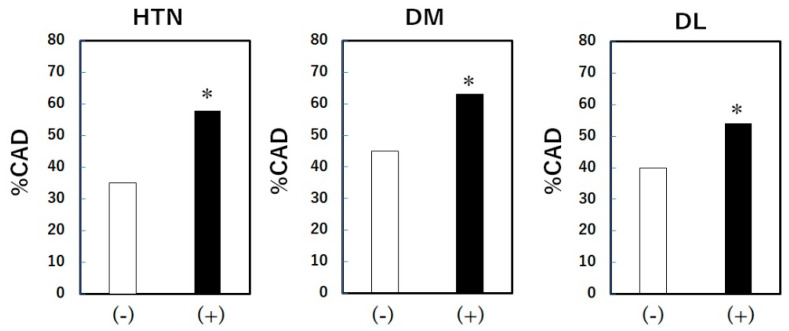 Figure 1
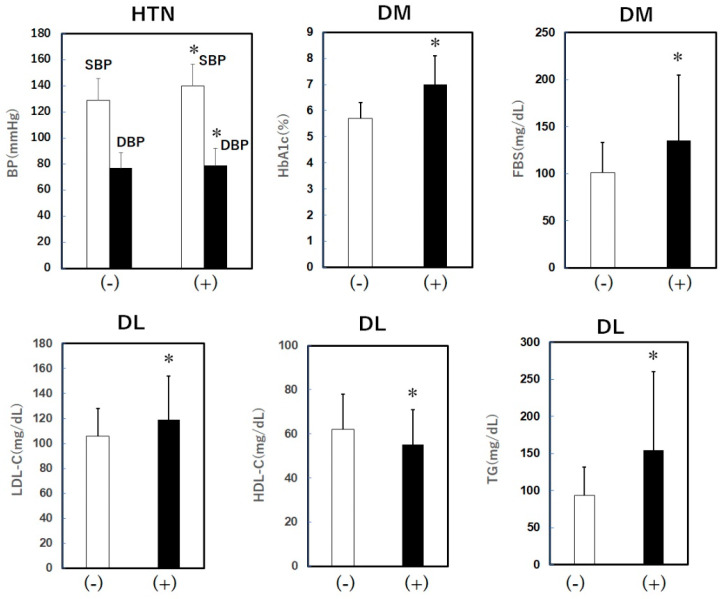 Figure 2
Peer Reviews
No public reviews on file for this paper yet. If you reviewed it on a platform where reviews are public (OpenReview, ICLR, NeurIPS, ICML), you can paste yours below so the community can read it here.
Videos
No videos yet. Explain this paper in a talk, walkthrough, or lecture? Add one.
Taxonomy
TopicsPharmacy and Medical Practices · Blood Pressure and Hypertension Studies · Pharmaceutical Practices and Patient Outcomes