Learned Attentional Strategies in Word Holistic Processing
Paulo Ventura, Isabel Leite, Alexandre Pereira, Francisco Cruz

TL;DR
The study shows that people can learn to process words holistically based on the usefulness of word parts in a given task.
Contribution
It introduces evidence that holistic word processing can be influenced by learned attentional strategies.
Findings
Participants engage more in holistic processing when irrelevant word parts are systematically helpful.
The study supports a learned attentional account for holistic word processing.
Statistical learning influences how individuals process word parts based on task context.
Abstract
Previous research has shown that, like faces, words are processed either holistically or through the automatic representation of their parts combined. The automaticity assumed to underlie the holistic processing of words presupposes that individuals have a relatively low level of control over these processes. However, they may also be capable of learning from their environments whether processing words as a whole is the most efficient processing strategy—which would require at least some control over the corresponding processes. In fact, previous research supports this latter account in the context of the holistic processing of faces: when provided a task in which participants should ignore half of a stimuli (the irrelevant part) and pay selective attention to the other half (the target part), the participants become better at ignoring the irrelevant part when it is commonly misleading…
Genes, proteins, chemicals, diseases, species, mutations and cell lines named across the full text — each resolved to its canonical identifier and authoritative record.
Click any figure to enlarge with its caption.
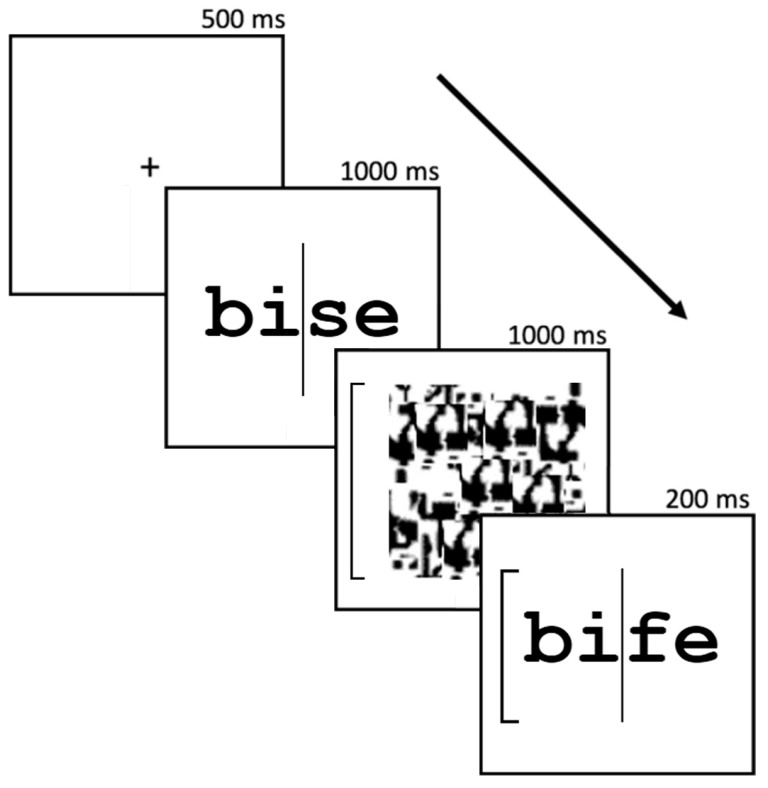 Figure 1
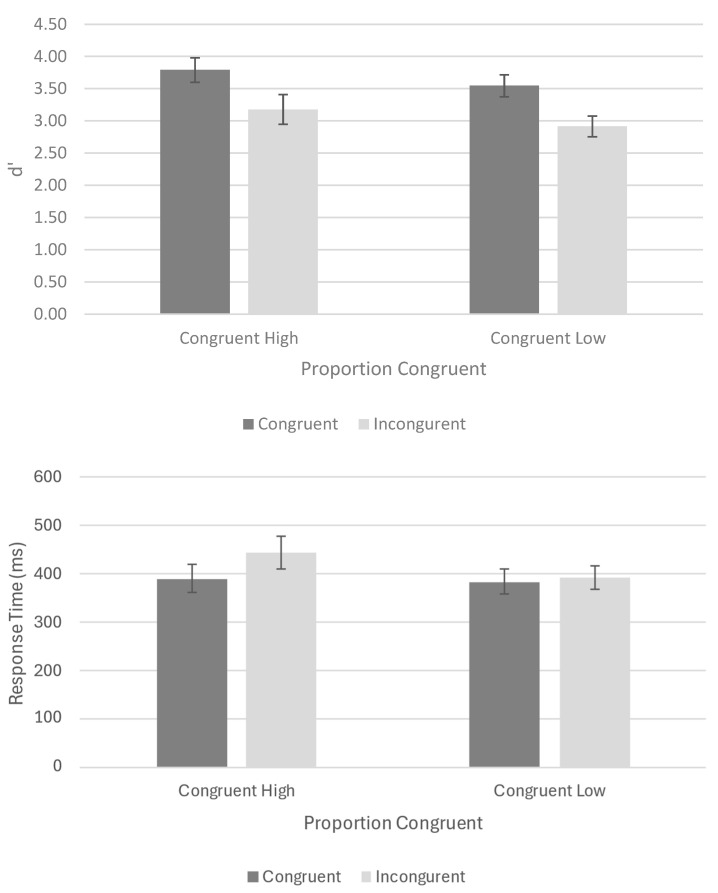 Figure 2
Peer Reviews
No public reviews on file for this paper yet. If you reviewed it on a platform where reviews are public (OpenReview, ICLR, NeurIPS, ICML), you can paste yours below so the community can read it here.
Videos
No videos yet. Explain this paper in a talk, walkthrough, or lecture? Add one.
Taxonomy
TopicsFace Recognition and Perception · Multisensory perception and integration · Psychology of Moral and Emotional Judgment